
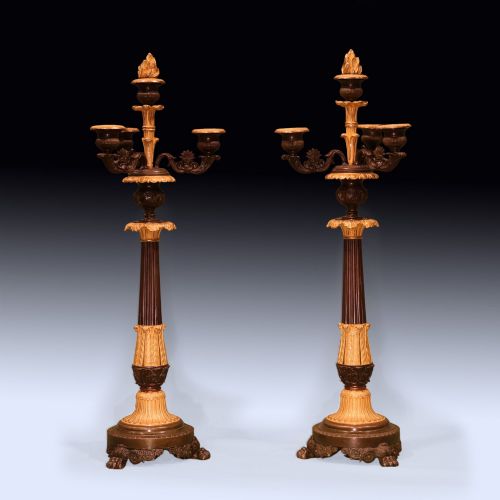


Regency Style Candlesticks
Regency style candlesticks are classical lighting fixtures that bring symmetry and architectural weight to a room.
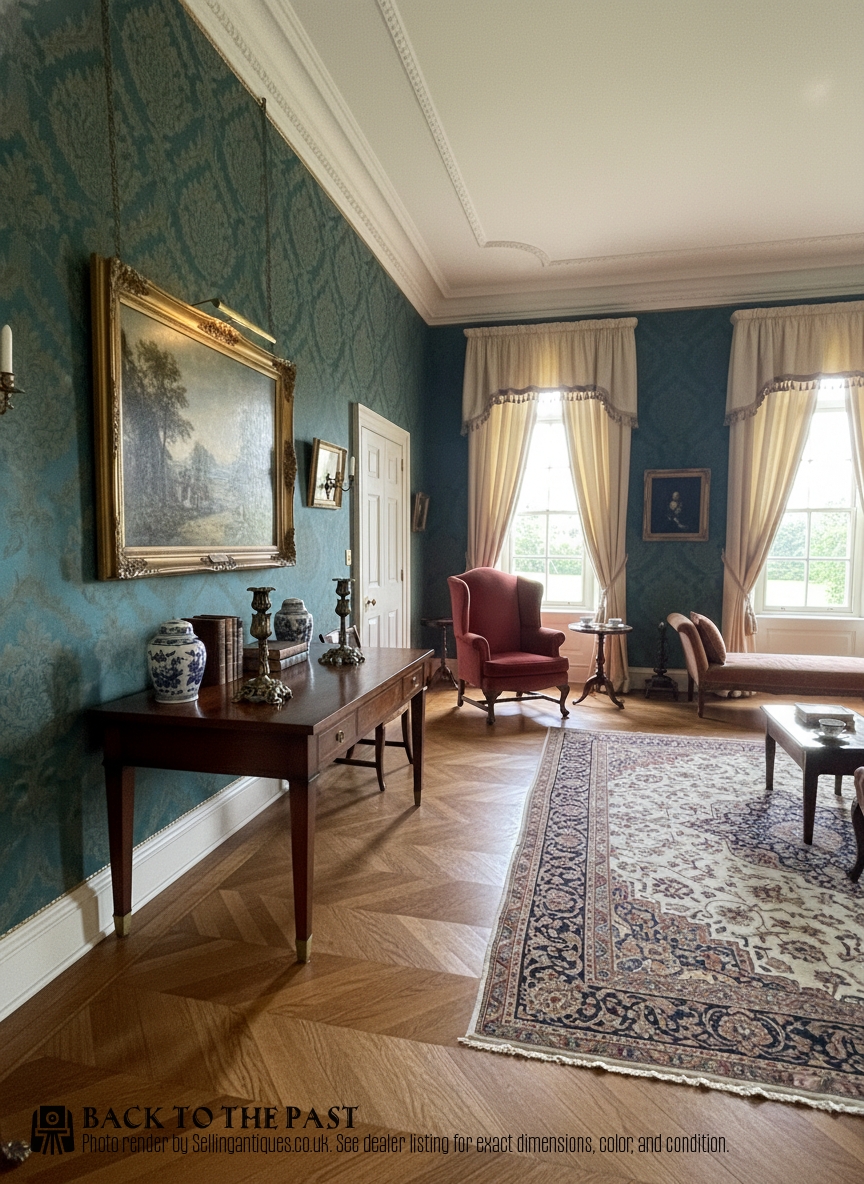
Regency Style Candlesticks
Regency style candlesticks draw on classical antiquity, using architectural forms and symmetrical designs that echo ancient Greece and Rome. When searching for regency style candlesticks, buyers encounter pieces ranging from authentic early nineteenth century examples to later revivals.
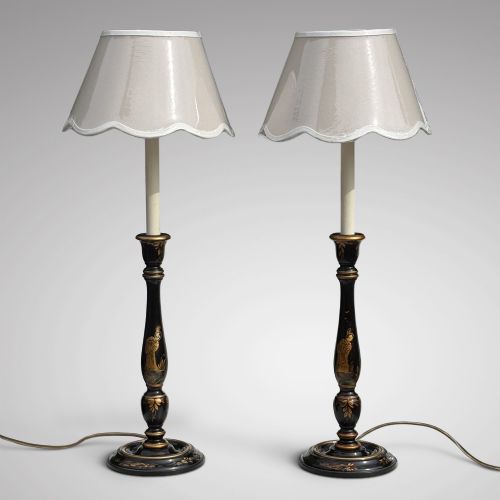
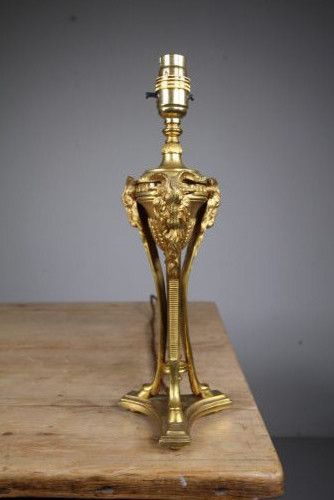
The selection includes single candlesticks, multi light candelabra, and table lamps adapted from older lighting fixtures. Bronze, ormolu, and brass dominate the forms, frequently paired with marble bases or enriched with patinated finishes.
Origin periods span the Georgian and Regency eras through to later nineteenth century Victorian interpretations and twentieth century revivals. Forms vary from simple column candlesticks to elaborate figural pieces incorporating griffins, mermen, and rams heads.
How they were made
Foundry work relied on bronze and brass casting, producing crisp architectural details and figural elements. Ormolu provided contrasting golden highlights through the application of finely ground high karat gold to bronze surfaces.
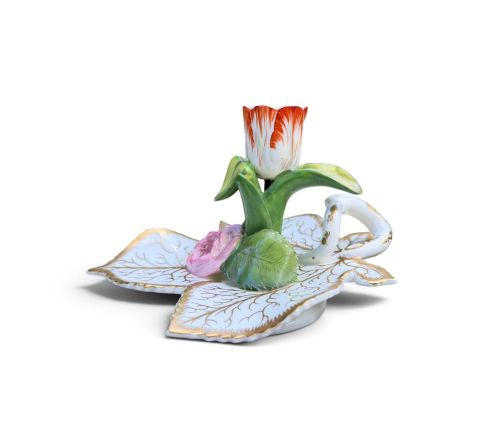
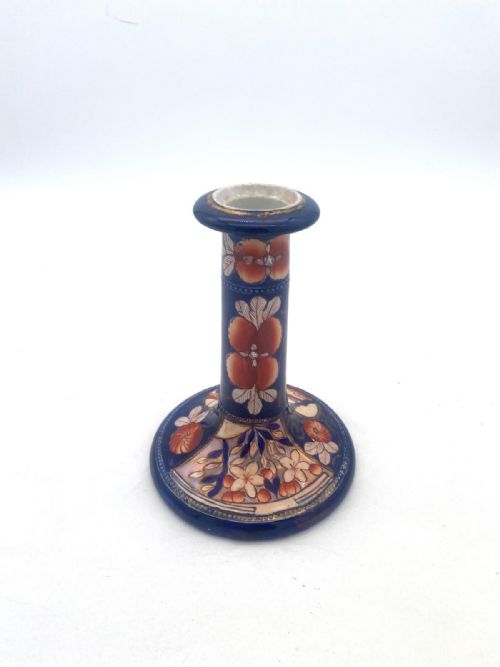
Patinated bronze added dark, moody tones to central shafts and figures, contrasting with bright ormolu mounts. Marble bases supplied solid foundations and weight, while enamel and porcelain elements introduced colour and pattern to chambersticks and domestic items.
What varies in quality
Weight and construction integrity dictate durability. Solid bronze assemblies with secure physical joints and well maintained gilding outlast plated or hollow substitutes that show wear through to base metals.
Galle·Thomas Hope·Masons Ironstone·Minton
The Regency Style Candlesticks Glossary
- Ormolu
- Gilded bronze, where finely ground gold is applied to a bronze base using mercury. This technique creates a rich golden finish that resists tarnishing.
- Patinated bronze
- Bronze treated with chemical solutions to produce a darkened surface. It provides a deliberate contrast to bright gilt or ormolu mounts.
- Athenienne
- A classical tripod stand or burner adapted during the Regency period for domestic lighting. These pieces take inspiration from ancient ritual tripods.
- Candelabra
- A branched candlestick holding multiple lights. These larger fixtures often feature removable branches to function as single candlesticks.
- Chamberstick
- A short candlestick fitted with a wide drip pan and a side handle. These portable items lit the way to bed in unlit hallways.
Regency Style Candlesticks: Frequently Asked Questions
How do I identify Regency style candlesticks?
Look for classical motifs such as acanthus leaves, paw feet, rams heads, and architectural columns. Materials typically combine dark patinated bronze with bright ormolu.
Authentic pieces from the period show hand finishing and substantial weight in the cast components. Later revivals often adopt similar neoclassical vocabulary but use different casting methods.
What is the difference between candlesticks and candelabra?
Candlesticks hold a single candle in a vertical socket atop a central shaft. Candelabra feature branched arms designed to hold two or more candles simultaneously.
Many period candelabra include removable branches, allowing them to convert back into single candlesticks when desired.
Where should I place these in a room?
These pieces suit mantelpieces, sideboards, and entrance hall tables where their symmetrical forms create a balanced focal point. Pair them carefully with surrounding antiques to maintain period harmony.
Ensure tall candelabra or converted lamps sit on stable, level surfaces away from heavy foot traffic.
Were these originally wired for electricity?
Period lighting originally burned wax, tallow, or oil before later adaptation for electric bulbs. Many surviving examples have been converted into table lamps.
Conversions range from reversible setups that preserve the original socket to permanent alterations made during the twentieth century.