




Ornate Metal Candleholders
Ornate metal candleholders bring sculptural presence to a room, spanning weighty Regency brass and flamboyant French rococo revival ormolu.
Ornate Metal Candleholders
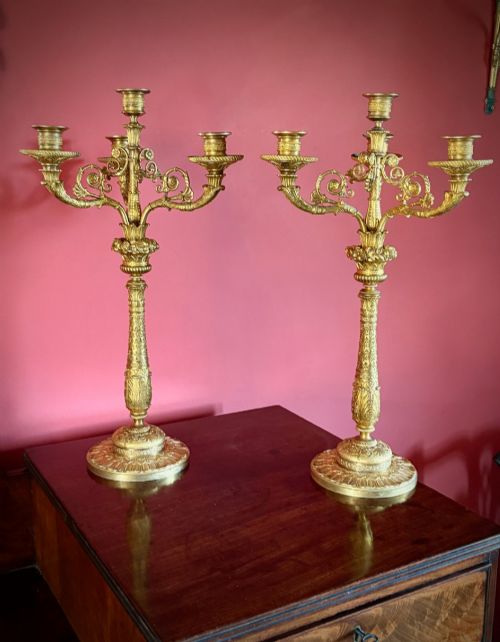
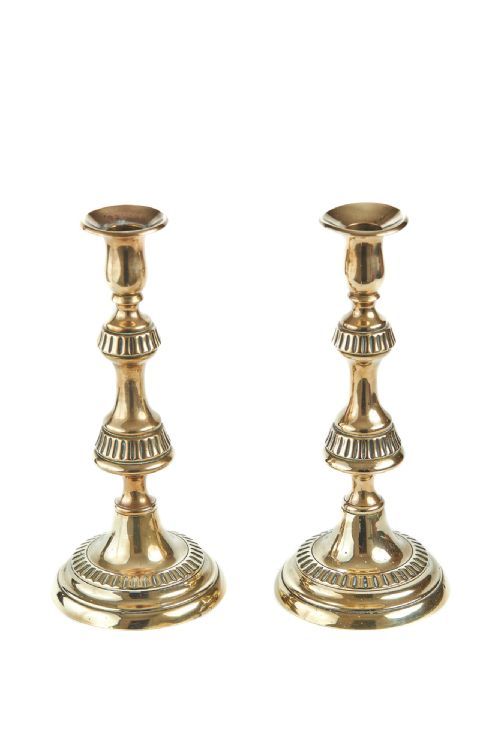
When you search for ornate metal candleholders, you encounter functional illumination shaped by demanding decorative movements. The selection here ranges from restrained Regency brass pairs to elaborate French neoclassical ormolu candelabra and Venetian gilt bronze pieces.
The objects take the form of single candlesticks, branching candelabra, table lights, and occasionally wall mirrors with metallic frames. Most pieces appear in matched pairs or larger sets, intended for symmetrical placement on mantelpieces and side tables.
How they were made
Maker's hands shaped these items using foundational foundry methods including casting in brass, bronze, and copper. Molten metal poured into intricate moulds allowed artisans to capture sweeping scrolls, foliage, and figural details associated with rococo and Victorian styles.
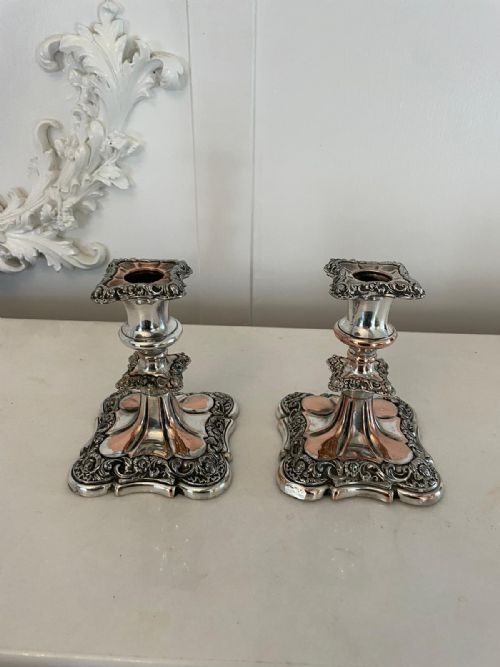
Surface finishes received careful attention through silver plating, mercury gilding for ormolu, and the application of Sheffield plate over a base metal core. These treatments provided a rich, reflective lustre designed to catch the flickering light of candles.
The listings span periods from the eighteenth century through to nineteen hundred, encompassing Regency, Victorian, and French neoclassical aesthetics.
What varies in quality
Quality reveals itself in the crispness of the chased detail and the weight of the casting. Superior examples display sharply rendered ornament where every leaf and scroll retains distinct definition rather than a soft, blurred finish.
Proportion and stability separate standard production from exceptional work. A well-balanced base and harmonious proportions between stem, nozzle, and drip pan indicate a maker who considered both visual rhythm and structural integrity.
Blagden, Hodgson & Co
The Ornate Metal Candleholders Glossary
- Ormolu
- Gilt bronze, where a finely ground gold-mercury amalgam is applied to a bronze base and heated to drive off the mercury. This technique creates a rich, matte golden surface seen on high-end French decorative objects.
- Candelabra
- A branched candlestick holding multiple lights on separate arms. These pieces offer a grander scale and greater illumination than single candlesticks.
- Sheffield Plate
- An early form of plated metal created by fusing a thin sheet of silver to a thicker copper core under heat and pressure. It is identified by subtle copper bleed-through along high-wear edges.
- Rococo Revival
- A nineteenth-century design style drawing on eighteenth-century French rococo motifs such as asymmetric C-scrolls, shellwork, and naturalistic foliage. This movement favoured heavy, elaborate casting in brass and bronze.
Ornate Metal Candleholders: Frequently Asked Questions
How do I clean tarnished brass candleholders?
Clean tarnished brass gently using warm soapy water and a soft cloth to remove surface dirt, avoiding harsh chemical dips that strip historic patination. Preserving the mellow ageing of the metal maintains the character of nineteenth-century pieces.
Dry the metal thoroughly after washing to prevent water spots and future corrosion. A light application of microcrystalline wax can protect the surface without altering its appearance.
How do I spot silver-plated pieces?
Examine the candlesticks under good light to locate areas where the upper silver layer has worn thin, revealing a warm copper or base metal tone beneath. This characteristic wear often appears on high points and edges handled frequently.
Sheffield plate items often show distinct manufacturing seams or colour variations where the fused metals meet. Checking the underside can also reveal baseline metal characteristics typical of nineteenth-century plating methods.
How do I distinguish Regency from Victorian styles?
Regency metal candleholders tend to display clean architectural lines, classical proportions, and restrained classical ornamentation inspired by ancient Greece and Rome. They frequently utilise heavy cast brass with simple geometric or foliate details.
Victorian pieces embrace heavier, more exuberant ornamentation with deep relief casting, asymmetrical rococo scrolls, and complex figural elements. The decoration is much denser and often combines multiple surface finishes within a single design.