




Regency Style Bronze Lamps
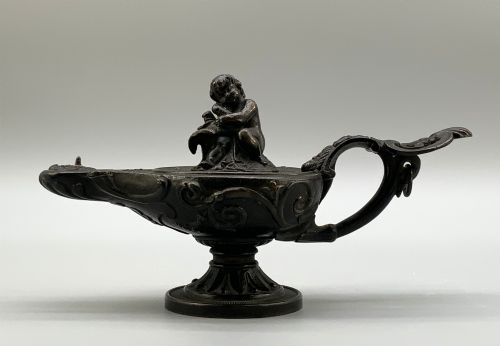
These regency style bronze lamps bring architectural gravity and classical metalwork into a room, combining patinated surfaces with gilt highlights.
Regency Style Bronze Lamps
When you search for regency style bronze lamps, you encounter lighting fixtures that draw upon nineteenth-century neoclassical design, featuring dark patinated metal contrasted with bright gilt details. The examples on this page span table lamps, oil lamps, chandeliers, floor lamps, and wall lights originating across the nineteenth, twentieth, and Edwardian periods.
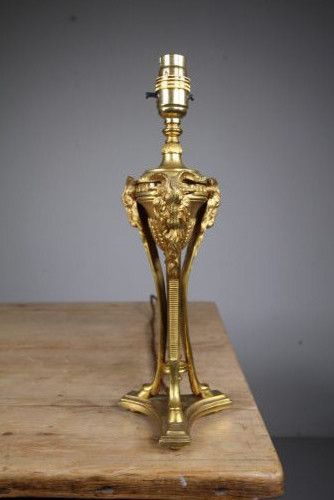
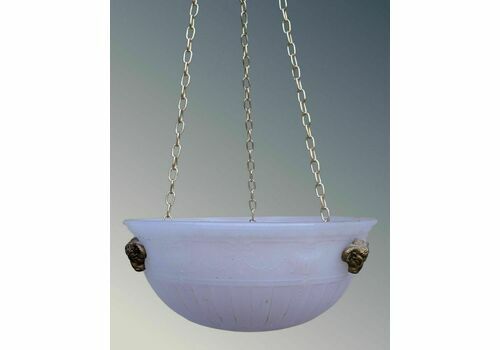
Table lamps and candlestick conversions dominate the selection, often taking the form of architectural columns, classical urns, or figural supports like Atlas figures, rams heads, and eagles. You will also find hanging chandeliers, pendant lighting, and wall light brackets incorporating cut glass drops and fabric shades alongside the core metal structures.
The aesthetic leans heavily on Neoclassical, French Empire, William IV, and Grand Regency styles. These pieces range from authentic nineteenth-century items to later twentieth-century interpretations produced around 1920 and 1930 that emulate the earlier Regency manner.
Materials and construction
The physical weight and presence of these pieces rely on cast bronze, patinated bronze, and brass, frequently enhanced with ormolu and gilt bronze accents. Secondary materials such as glass, cut glass drops, crystal, faux lapis lazuli, and mahogany columns appear in specific pieces to add texture and colour variation.
Foundry work combined casting and chasing, where metal components were shaped and then hand-finished to create the contrast between dark patinated surfaces and bright gilded highlights. Mounts, rams heads, and figural elements were cast separately and fixed to the main bodies using traditional mechanical fasteners.
Atlas manages to shoulder the weight of an empire while quietly holding up the reading light.
Assessing quality and execution
The treatment of the metal surfaces dictates the visual hierarchy within this group. Fine pieces maintain a balanced contrast between the deep tone of patinated bronze and the rich lustre of fire-gilt ormolu, rather than relying on uniform modern paint or bright commercial plating.
The Regency Style Bronze Lamps Glossary
- Ormolu
- Gilt bronze produced by applying a mercury-gilding process to a bronze base, resulting in a durable, bright gold finish.
- Patinated bronze
- Bronze that has been treated chemically or naturally to darken the surface and create a protective, aged skin.
- Neoclassical
- A style spanning the eighteenth and nineteenth centuries that revived classical Greek and Roman motifs, architectural orders, and symmetry.
- Grand Tour
- Souvenirs and antiquities acquired by wealthy travellers in Europe during the nineteenth century, often inspiring figural and architectural lamp designs.
Regency Style Bronze Lamps: Frequently Asked Questions
How do I identify a true period lamp?
Examine the construction methods, casting weight, and wear patterns on the bronze and ormolu components. Nineteenth-century examples typically show hand-finished chasing and heavy cast metal parts.
Compare the wiring holes and interior fittings with known manufacturing standards of the period. Later reproductions from the 1920s or 1930s often use different assembly techniques and lighter metal alloys.
What is the difference between bronze and spelter?
Bronze is an alloy of copper and tin that yields a heavy, durable material capable of retaining sharp casting details. Spelter is a softer, zinc-based alloy used as a cheaper alternative for decorative figures and lamps.
Spelter feels lighter in the hand and is more prone to surface cracking or bending. Bronze maintains structural integrity and accepts fire-gilding and patination much more effectively than spelter.
How should I clean gilt bronze and ormolu?
Dust the metal surfaces gently with a soft, dry brush or microfiber cloth to remove everyday particles. Avoid abrasive polishes, water, or chemical cleaners that can strip the delicate gilt layer from the bronze underneath.
If the piece requires deeper conservation, seek a professional restorer who specialises in historical metalwork to prevent damaging the original patina.