

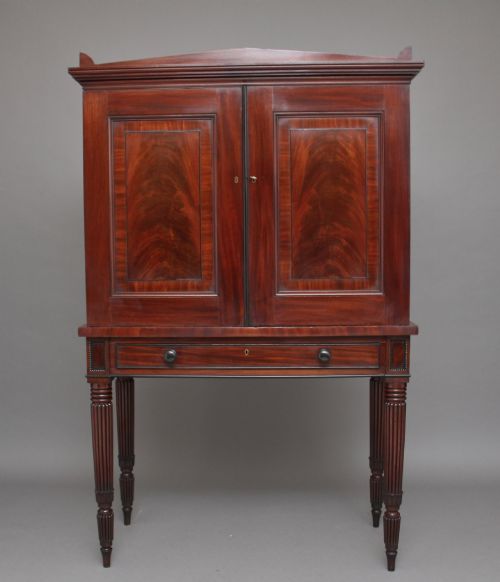
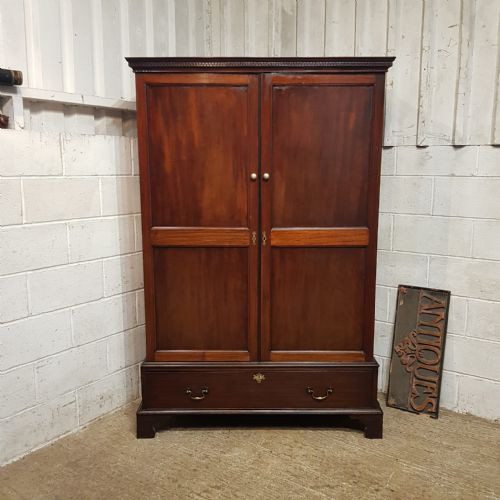


Regency Standing Cupboard
A regency standing cupboard brings architectural grace and generous storage to a room, uniting functional timber cabinetry with refined classical styling.
Regency Standing Cupboard
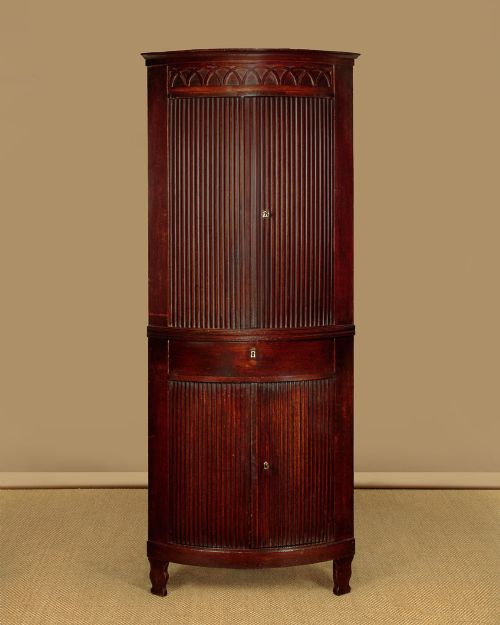
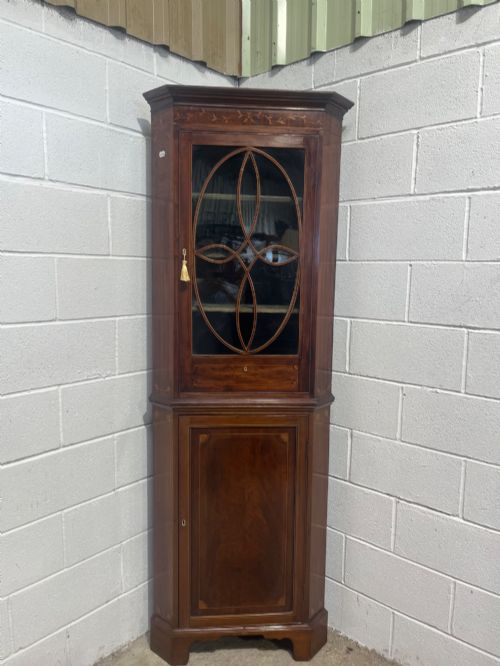
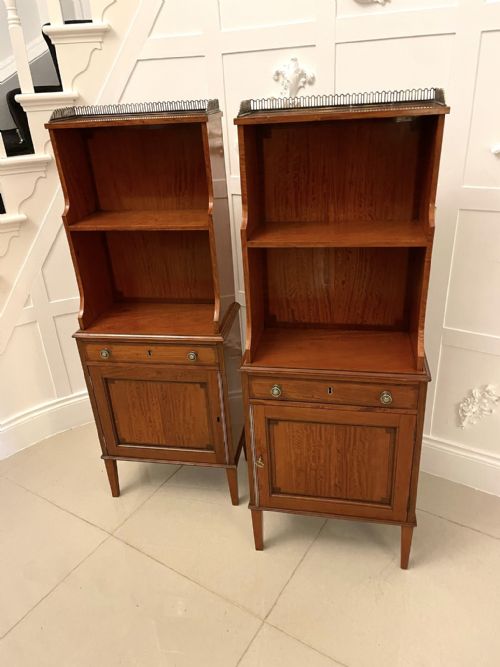
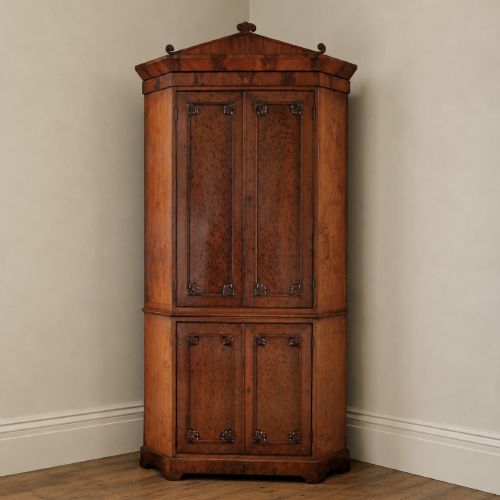
A regency standing cupboard encompasses floor-standing furniture designed for storage and display, spanning corner cupboards, bookcases, and pedestal cabinets.
The pieces appearing on this page draw predominantly from the nineteenth century and the Georgian, Regency, and William IV periods.
Bookcases, corner cupboards, and cabinets on stands dominate the forms, reflecting the domestic requirements of period interiors.
How they were made
Cabinet makers utilised dense hardwoods such as mahogany and flame mahogany, often accentuating the timber with satinwood or yew wood details.
Brass hardware, glass panels, and painted finishes or lacquer work complete the surface decoration of these floor-standing pieces.
Listings feature mahogany, flame mahogany, yew wood, satinwood, brass, and glass across 19th century and Georgian periods.
What varies in quality
The distinction between ordinary and exceptional pieces lies in the selection of figured veneers and the crispness of classical mouldings.
Finishes ranging from original grained paint to polished mahogany demonstrate the original workshop standards.
Gillows
The Regency Standing Cupboard Glossary
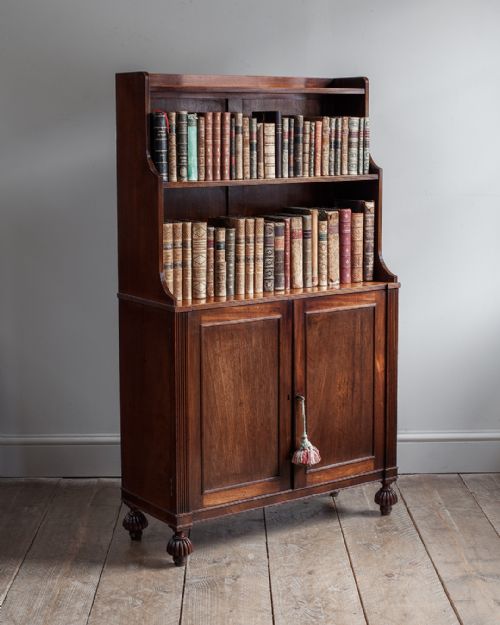
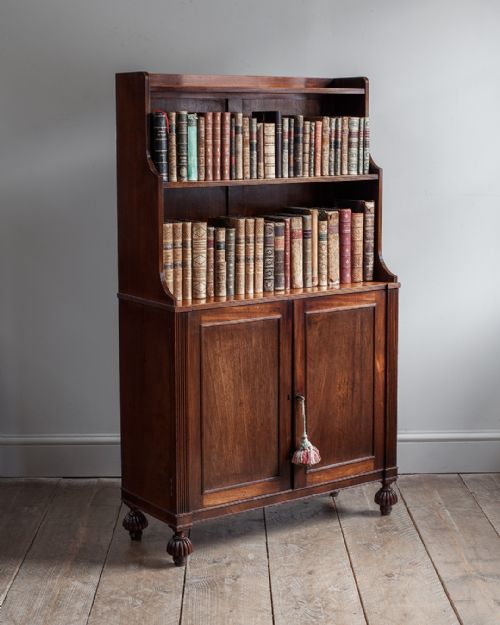
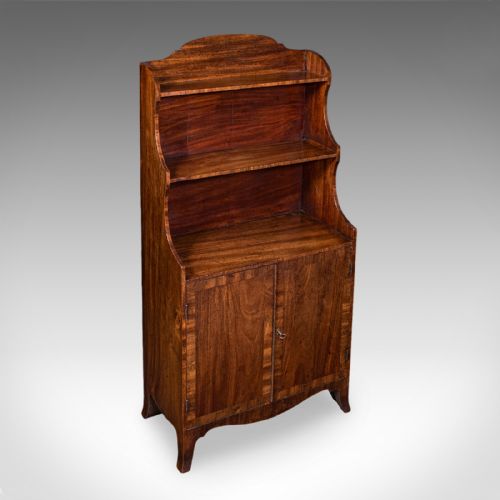
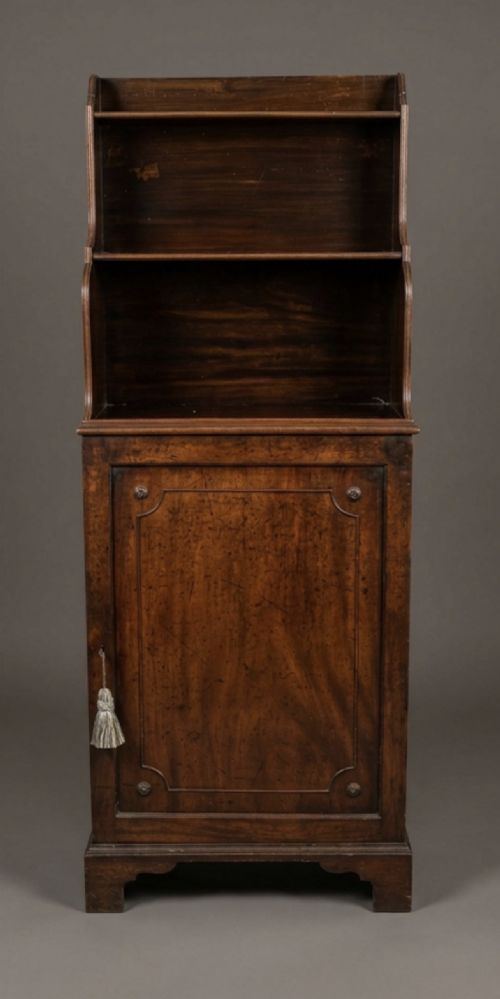
- Waterfall bookcase
- A set of graduated open shelves stepped back from top to bottom. These tiered wooden shelves were popular for displaying small books and ornaments.
- Astragal glazed
- Glass secured within slender wooden bars forming geometric panes. This traditional joinery technique keeps large glass doors light and visually balanced.
- Pedestal cabinet
- A tall, freestanding cupboard usually square or hexagonal in plan. Such single-door pieces often served as bedside stands or sculpture supports.
- Chinoiserie
- European imitation of traditional Chinese artistic motifs and lacquer techniques. Artisans applied hand-painted or penwork designs to create exotic cabinet surfaces.
- Breakfront
- A cabinet facade where the central section projects forward from the flanking wings. This architectural arrangement adds depth and visual rhythm to larger bookcases.
Regency Standing Cupboard: Frequently Asked Questions
Where should a standing cupboard go?
These tall cupboards suit corners, alcoves, or flanking walls where floor space allows vertical storage. Their enclosed shelving keeps contents tidy while presenting a polished timber facade to the room.
Larger breakfront or double height examples need substantial wall space to breathe. Smaller pedestal cabinets and bedside versions fit neatly beside seating or sleeping furniture.
How do I spot a Regency piece?
Regency furniture draws inspiration from classical antiquity, featuring clean architectural lines, restrained mouldings, and balanced proportions. Look for symmetrical forms, brass accents, and fine timber grains rather than heavy carving.
Pieces from this era often incorporate specific functional types like waterfall bookcases and pedestal cabinets on stands. The joinery and timber selection match the early nineteenth century style.
Can I store books in them?
Many standing cupboards combine open shelving with enclosed lower cabinets, making them natural homes for books and journals. Waterfall bookcases and open top cabinets were specifically designed for accessible book storage.
Enclosed cupboard sections protect fragile volumes from dust and direct sunlight. Adjustable wooden shelves accommodate varying book heights safely.
How do I care for mahogany?
Maintain mahogany timber by dusting regularly with a soft, dry cloth and avoiding silicone polishes. Keep the wood away from direct heat sources and strong sunlight to prevent warping and fading.
Occasional applications of traditional beeswax nourish the grain and preserve the polished finish. Gentle care protects the original patina developed over centuries.