


Regency Spring Driven Clock
A regency spring driven clock sits heavily on the bracket or mantel, keeping steady time through an internal fusee or spring mechanism.
Regency Spring Driven Clock
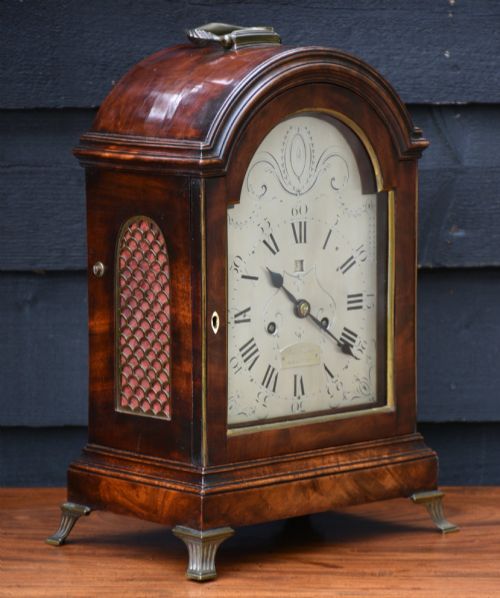
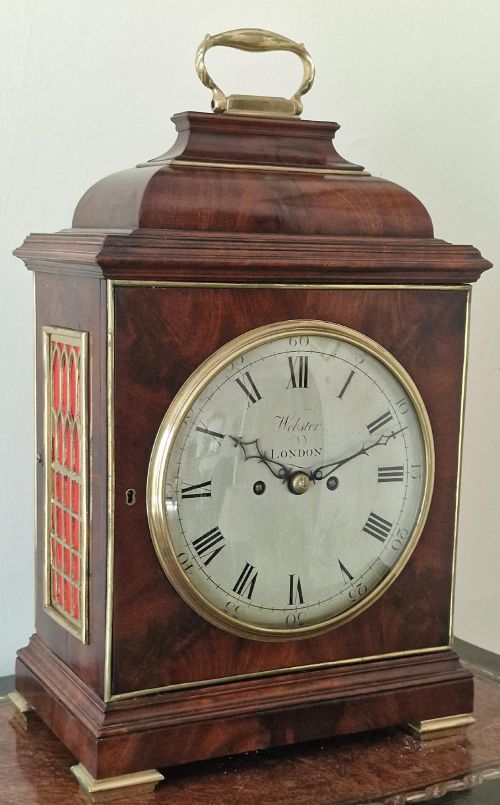
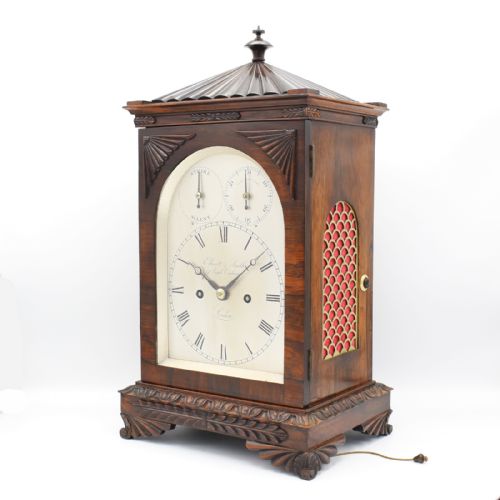
A regency spring driven clock is a domestic timekeeper housed in a substantial wooden case designed for a bracket, table, or mantelpiece. These pieces primarily date from the Georgian, Regency, and nineteenth-century periods, capturing an era of refined cabinet work.
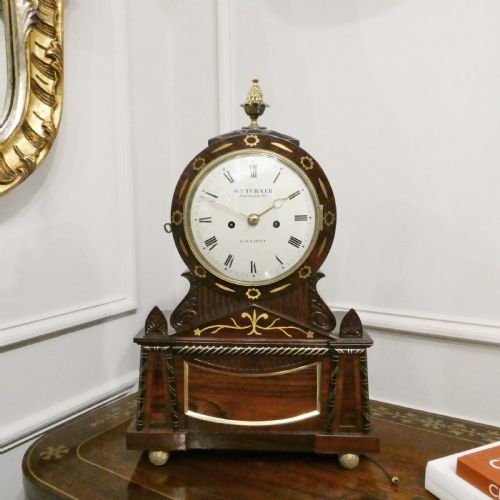
The forms span straightforward mantel clocks, lancet-topped designs, and complex bracket clocks equipped with striking movements. Mahogany and rosewood cases dominate the selection, often accented with brass mounts, inlay, or ebony details.
Makers from London and provincial towns alike signed these dials, ranging from renowned firms to local watchmakers. Buyers encounter various regional interpretations, from grand London library clocks to smaller provincial table clocks.
Materials and construction
Dials are constructed from painted enamel or engraved silvered brass, protected behind hinged glass doors set within cast brass bezels. The internal movements rely on steel and brass gears driven by coiled springs, frequently regulated by a fusee chain or cord.
Several makers operated from multiple London addresses, proving that early clockmakers moved house just as often as their customers.
Indicators of quality
Quality rests in the crispness of the cabinet joinery, the choice of figured timber veneers, and the precision of the brass inlay or mounts. Finer examples display restrained proportions and harmonious brass detailing that complement rather than crowd the wood grain.
Within the movement, the complexity of the gear train and the reputation of the maker elevate a piece. Engraved backplates, signature placement on the dial, and sound acoustic striking trains distinguish top-tier workshop output from standard production.
Webster, London·Ellicott & Smith·Turner of London·L. Vick of Stroud·Seller of Reading·Thomas Moss·Cording of London·Wilkinson Leicester·J Kingerley Manchester·Paul Philip Barraud·Hyde of Salisbury·Louis Recordon·Leplastrier of London·Brockbanks of London·John McGregor·Desbois & Wheeler·Purvis of London·Plumbly & Tupman·Leith of London·Charles Valogne
The Regency Spring Driven Clock Glossary
- Bracket clock
- A portable table clock designed to sit on a matching wall bracket or directly on a surface. These often incorporate striking mechanisms and robust carrying handles.
- Fusee
- A conical pulley used in spring-driven clocks to equalize the diminishing power of the mainspring as it unwinds. This mechanism helps maintain consistent timekeeping.
- Lancet top
- A distinctive arched case shape resembling a lancet window, popular during the Regency period. This profile gives mantel clocks a slender, vertical emphasis.
- Verge escapement
- An early type of escapement mechanism that controls the release of the gear train using a crown wheel and pallet foliot. It regulates the beat of the clock.
- Silvered dial
- A brass clock face treated with a silver solution and engraved with numerals and maker details. The resulting matte finish reduces glare and highlights the lettering.
Regency Spring Driven Clock: Frequently Asked Questions
Where should a bracket clock sit?
These clocks sit securely on a sturdy mantelpiece, sideboard, or dedicated wall bracket where vibrations remain minimal. Placing them on a level surface ensures the pendulum or balance wheel maintains an even beat.
Historically, owners positioned them in principal rooms where guests could hear the strike and read the dial easily. Their substantial wooden cases require stable humidity to protect the timber veneers and internal brasswork.
How does a spring driven clock work?
A tightly coiled mainspring stores mechanical energy when wound with a key, driving the gear train as it slowly uncoils. The fusee regulates this force so the wheels turn at a steady rate regardless of spring tension.
An escapement mechanism then releases the gear train in controlled increments, moving the hands forward while an audible tick marks the progression of time.
What is the difference between a bracket clock and a mantel clock?
Bracket clocks historically featured sturdy carrying handles and flat bases designed to sit upon a wall-mounted bracket to project sound. Mantel clocks generally appeared later, designed specifically to rest directly on fireplace mantels.
Over time, the terms began to overlap as bracket clocks transitioned from wall supports to table surfaces. Both share similar spring-driven movements and architectural wooden cases.
How do I identify a Regency period clock?
Regency clocks typically display restrained classical proportions, dark exotic wood veneers like rosewood or mahogany, and crisp brass inlay. Case designs often incorporate Egyptian Revival motifs, lancet arches, or brass ball feet.
Signatures on enamel or silvered dials pointing to London makers active around the early nineteenth century further confirm the period. Movement construction using fusee spring drives aligns with the engineering standards of this era.