


Regency Arched Top Clock
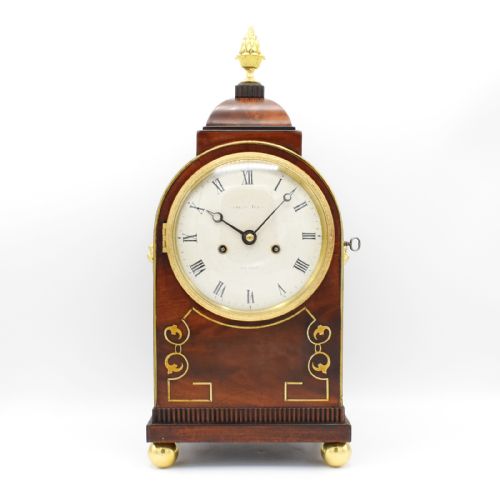
A regency arched top clock brings tactile presence to a room, driven by brass fusee movements and housed in rich mahogany.
Regency Arched Top Clock
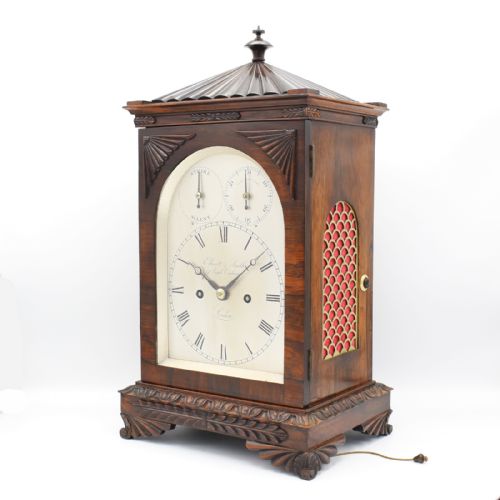
When you search for a regency arched top clock, you are looking at timepieces that span the Regency, Georgian, and Victorian periods, often taking the form of mantel, table, or bracket clocks. The most common format on this page is the bracket clock housed in mahogany, though examples in rosewood, ebony, and burr mahogany also appear.
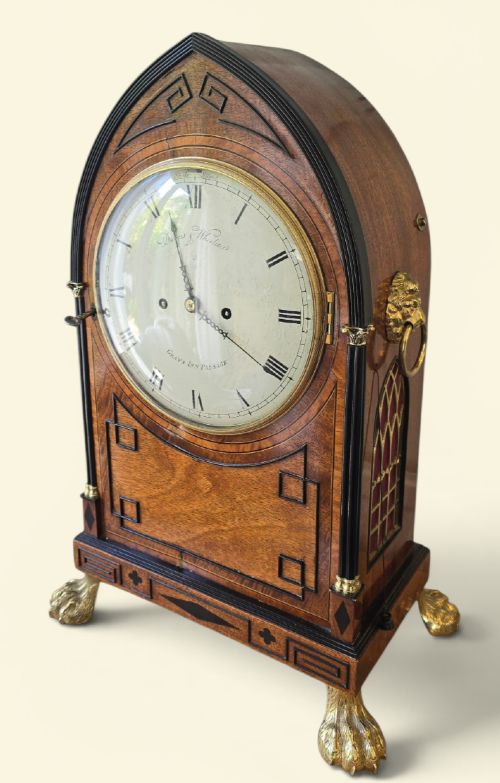
Makers working in London and provincial towns such as Southampton, Salisbury, Leicester, and Wick produced these pieces during the nineteenth century. The arched or lancet top profile defines the aesthetic, frequently complemented by brass inlay and brass mounts.
While most entries are compact bracket or table clocks designed for sitting on a shelf or surface, the selections occasionally extend to longcase clocks sharing the same distinctive arched top silhouette.
How they were made
Cases rely on dense timbers such as mahogany, rosewood, and ebony, sometimes enhanced by burr mahogany veneers and detailed brass inlay. Glass protects the dial face, while internal movements incorporate brass components driven by fusee mechanisms.
Dial faces feature enamel work paired with delicate hands, and certain movements utilise silk suspension threads or verge escapements. London workshops and regional makers constructed these mechanisms to drive eight-day striking or time-only functions.
Makers span urban London workshops and regional outposts in Scotland, the south coast, and the Midlands.
What varies in quality
The refinement of the cabinetwork dictates the visual hierarchy, distinguishing plain timber cases from those featuring elaborate brass mounts, precise inlay, or exotic veneers like ebony and rosewood. The choice of wood grain directly influences the visual weight and presence of the piece.
The reputation of the maker inscribed on the dial or movement adds historical depth, with London names often carrying distinct weight compared to provincial makers. Movement complexity, such as twin fusee trains or striking capabilities, further separates standard timepieces from more ambitious workshop output.
Charles Pratt London·Ellicott & Smith·Desbois & Wheeler·S Simpson Southampton·Cording of London·Hyde of Salisbury·Louis Recordon·John McGregor Wick·Perigal & Duterrau·Ganthony of London·French Royal Exchange·Leith of London
The Regency Arched Top Clock Glossary
- Fusee
- A conical pulley used in clock movements to maintain an even pull as the mainspring unwinds. This mechanism helps the clock keep accurate time throughout its running cycle.
- Verge escapement
- An early type of escapement mechanism regulating the speed of a clock. It works in conjunction with a balance spring or pendulum to control the gear train.
- Lancet top
- An architectural case silhouette shaped like a pointed lancet arch. This profile defines the upper portion of many bracket and mantel clocks.
- Bracket clock
- A portable timekeeper originally designed to sit upon a matching wall bracket or table surface. They frequently feature carrying handles and glazed side panels.
- Twin fusee
- A movement incorporating two separate fusee cones, typically dividing the timekeeping train from the striking train. This setup allows both functions to run with regulated power.
Regency Arched Top Clock: Frequently Asked Questions
Where did these clocks go?
These pieces sat upon mantelpieces, brackets, or tables in drawing rooms and libraries, serving as both timekeepers and focal points of interior decoration.
Provincial and London households alike relied on them to structure daily domestic life before the widespread adoption of mass-produced clocks.
How do I wind them?
Wind the movement carefully using the appropriate key through the dial holes, taking care not to over-wind the mainspring.
Fusee movements require a steady hand and should be handled with respect for their delicate brass teeth and historical mechanisms.
Can I trust the movement?
Many examples retain their original fusee mechanisms and run reliably, though historical movements benefit from professional mechanical assessment.
Working status varies by piece, so checking specific listings clarifies whether a clock is currently operational.
How do I date them?
Stylistic markers such as brass inlay, case timber, and lancet arches help narrow down the period of manufacture alongside the maker's signature.
Datings often span the Regency and wider nineteenth century, reflecting the active decades of the recorded London and regional workshops.