


Regency Spirit Decanter
A regency spirit decanter brings heavy lead crystal and brilliant hand-cutting to the sideboard, offering an authentic taste of early nineteenth-century hospitality.
Regency Spirit Decanter
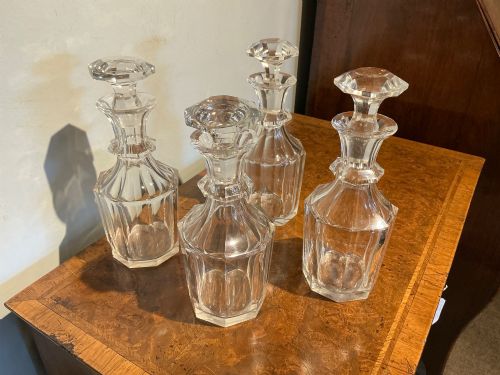
A regency spirit decanter is a heavy, functional glass vessel designed to hold potable spirits on the dining table or sideboard during the late Georgian and Regency periods. The forms appearing here span straightforward serving bottles, three-ring vessels, and ship's decanters built with wide, stable bases to counter rolling at sea.
Most examples originate from the broader Regency and Georgian eras, alongside later nineteenth-century interpretations that maintain the classic profiles. Buyers encounter these pieces both singly and in matched pairs, sometimes accompanied by matching glassware, silver labels, or cruet stands.
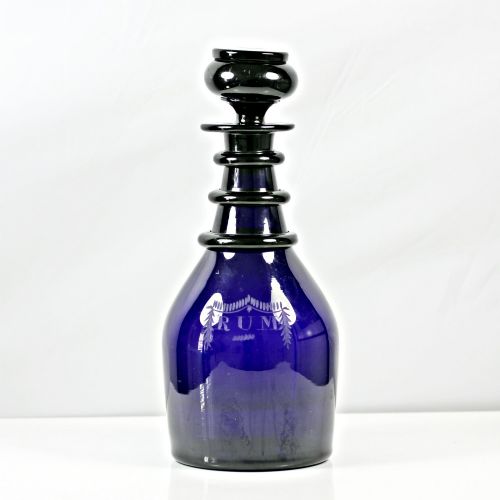
The materials recorded across these items centre heavily on cut glass, lead crystal, and cobalt glass, occasionally accented with gold leaf, silver, or sterling silver labels. Certain pieces feature hand-painted details or distinctive hues such as Bristol blue.
Materials and Techniques
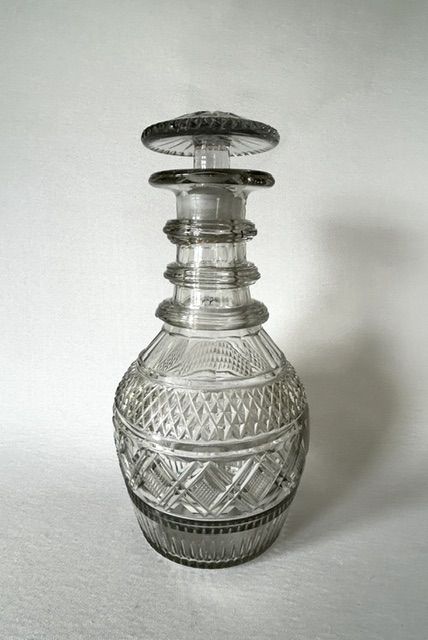
Glassmakers of the period utilised lead crystal and heavy glass blanks, which allowed deeper, sharper facets to be carved into the material. Artisans employed cutting wheels to create horizontal neck rings, vertical pillar cuts, and prismatic patterns that caught the candlelight.
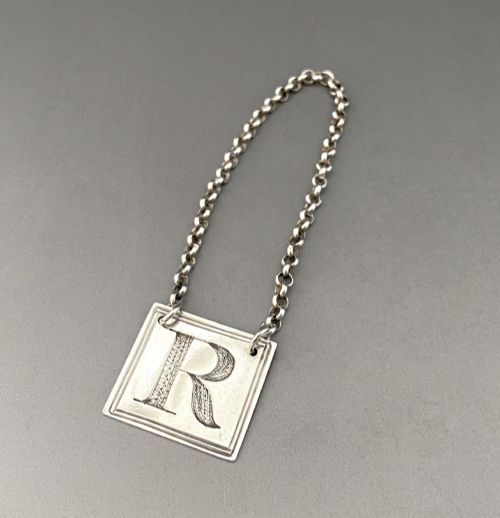
Specialised vessels also incorporated applied elements like silver and Old Sheffield Plate hardware, sterling silver bottle labels, and delicate gold leaf gilding. Cobalt blue and Bristol blue glass required specific metallic oxide colourants added to the molten batch before blowing and shaping.
Ship's decanters were deliberately engineered with wide, bottom-heavy profiles so sailors could enjoy a dram without chasing a rolling bottle across the cabin floor.
Distinctions in Quality
The weight and clarity of the metal set the foundation, with heavy lead crystal offering a more resonant ring and greater brilliance than standard utility glass. Crispness in the wheel-cut facets dictates visual success, where sharp, clean edges separate superior workmanship from softer, worn grinding.
Proportion and matching stoppers elevate certain items, particularly in pairs or sets where original stoppers match the collar and body cutting exactly. The presence of hand-painted decoration or precious metal accents similarly marks out more ambitious studio output from standard production pieces.
The Regency Spirit Decanter Glossary
- Lead crystal
- A heavy, brilliant form of glass containing lead oxide that increases refractive index and makes deep cutting possible. This material defines the substantial feel of period barware.
- Ship's decanter
- A form featuring a wide, conical base that prevents tipping aboard a moving vessel. This practical silhouette ensured spirits remained secure during maritime travel.
- Neck ring
- A series of raised horizontal bands encircling the neck of a decanter, typically numbering three on Regency examples. These rings provided a secure grip for wet hands during pouring.
- Bristol blue
- A deep cobalt-coloured glass traditionally associated with West Country production from the late eighteenth and early nineteenth centuries. It provided a striking contrast to clear crystal and silver labels.
- Toddy lifter
- A small glass vessel used to transfer hot punch or spirits from a bowl to a drinking glass. It operates on the principle of thumb pressure holding liquid in the bulb.
- Old Sheffield Plate
- A composite material made by fusing a thin sheet of silver to a copper base. This technique preceded modern electroplating and appears on nineteenth-century cruet stands.
Regency Spirit Decanter: Frequently Asked Questions
Are these decanters safe for modern use?
Most glass decanters from the Regency period remain perfectly functional for holding and serving spirits today. Lead crystal can leach trace amounts of lead over very long storage periods, so storing liquor in them permanently is best avoided.
Using them for immediate serving during dinner or drinks parties poses no practical health risk. Inspect the interior first to ensure no stubborn residue remains from previous centuries.
How do I tell a Regency decanter from a Victorian one?
Regency decanters typically display deeper, sharper hand-cutting, heavier lead weight, and distinctive three-ring necks or wide-based ship profiles. Pontil marks on the base are usually rougher and ground flat by hand rather than machine polished.
Victorian variations often lean toward lighter moulded glass, busier overall patterns, or thinner walls. Comparing the weight and the crispness of the facet edges usually clarifies the period.
Why do some decanters have matching labels?
Decanter labels made from silver or Old Sheffield Plate identify specific contents like rum, gin, or whiskey during formal dining. They hung from chains around the neck to prevent guests from pouring the wrong spirit.
Finding a label paired with its original vessel adds historical context to the set. Many labels were added later, so matching silver hallmarks helps date the pairing.