


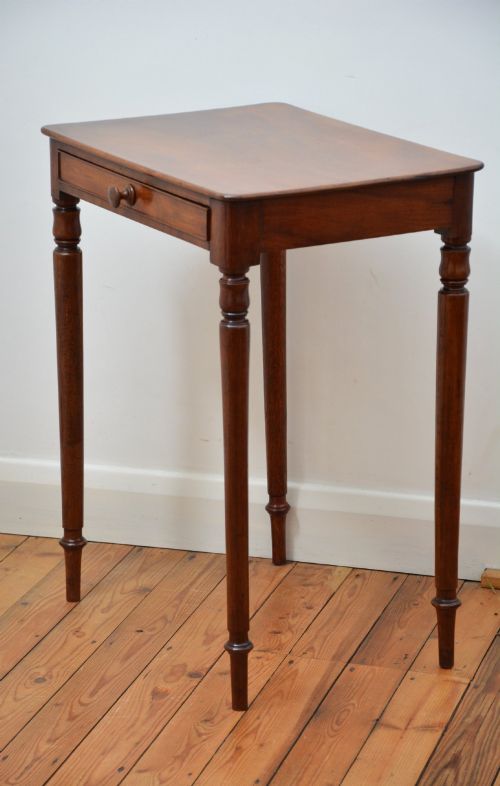


Regency Single Drawer Table
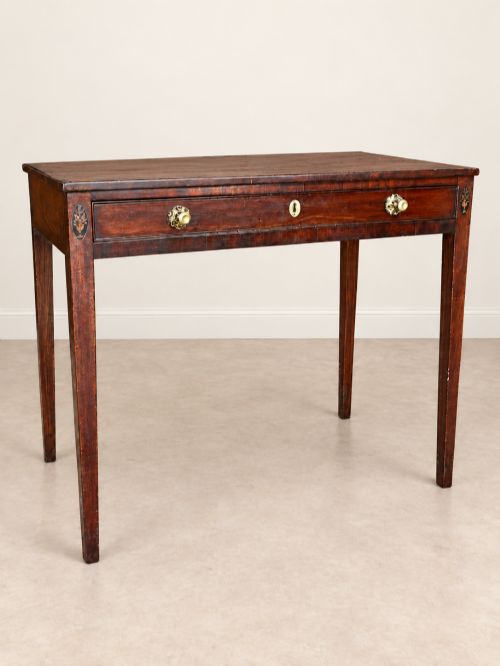
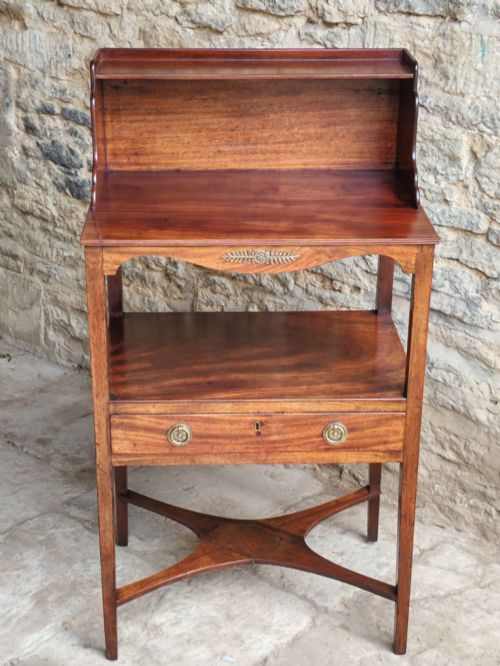
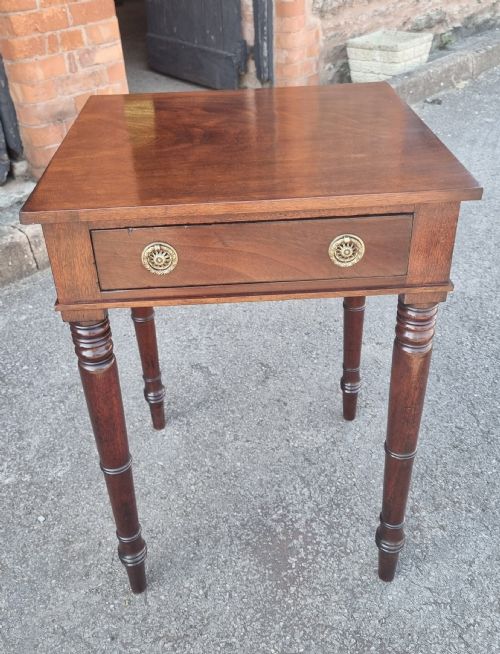
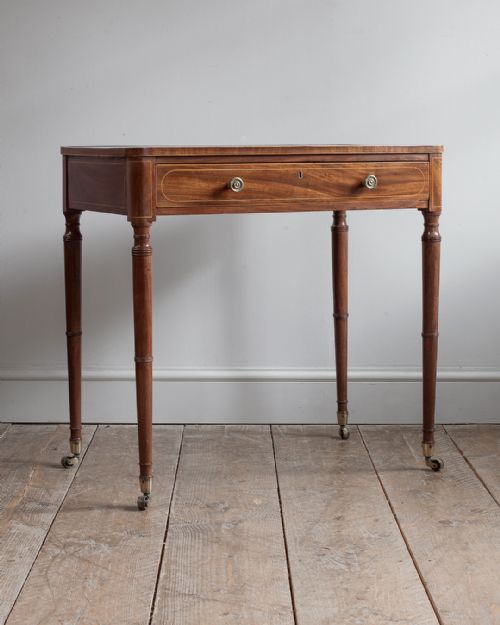
These pieces are a regency single drawer table, built for domestic service and prized for clean lines and neat proportions.
Regency Single Drawer Table
A regency single drawer table serves primarily as a side, lamp, or writing table within a room, offering a compact surface and a single compartment. When you search this phrase, you look at items spanning the Georgian, Regency, William IV, and Victorian periods.
The versions you meet most often on this page take the form of side tables or occasional tables constructed from mahogany, frequently with a rectangular or bow-fronted top. Side tables and writing desks dominate the selection, appearing alongside lamp tables and occasional pieces.
Origins stretch across the nineteenth century into revival periods, though the core of what you encounter remains firmly rooted in the Georgian and Regency eras. Pieces range from plain utility designs to finer examples incorporating drop leaves or satinwood inlay.
How they were made
Makers relied heavily on mahogany as the primary timber, complemented by rosewood, oak, birch, and pine used for secondary framing and drawer linings. Boxwood inlay, satinwood, and ebonised wood provide contrast and decorative banding on select surfaces.
Cabinetmakers integrated brass fittings, notably for handles and castors, alongside traditional joinery techniques suited to tables of modest proportions. Timber selection focused on grain figure, visible in bow fronts and rectangular tops.
Several tables include drop leaves, ready to expand whenever a book or a lamp needs a little extra elbow room.
What varies in quality
The refinement of the timber and the crispness of details like boxwood inlay or ebony stringing set the better examples apart from standard utility pieces. Proportion and timber selection dictate the visual strength of a table.
Hardware choice, such as original axe head handles or castors, influences the integrity of a piece. Subtle details in the shaping of the bow front or the execution of the drawer construction mark the difference between workshop output.
The Regency Single Drawer Table Glossary
- Bow-fronted
- A convex curved front to the table, which softens the rectangular profile and adds elegance to the form.
- Pembroke table
- A small table with hinged drop leaves on either side, often featuring a single drawer.
- Satinwood
- A light-coloured exotic timber used for contrasting stringing and inlay work on dark carcases.
- Ebonised
- Wood treated to imitate ebony, providing dark, contrasting highlights to the primary timber.
- Axe head handle
- A distinctive handle shape resembling the head of an axe, commonly found on drawers from the early nineteenth century.
Regency Single Drawer Table: Frequently Asked Questions
What is a regency single drawer table used for?
These tables function well as bedside surfaces, lamp stands, or compact writing desks in smaller spaces. The single drawer provides convenient storage for small household items.
The modest footprint allows them to sit easily beside seating or against hallway walls without crowding the room.
How do I spot a genuine period piece?
Examine the secondary timbers inside the drawer and check for traditional construction methods appropriate to the early nineteenth century. Timber shrinkage and hand-cut joints offer strong clues to age.
Compare the hardware and overall proportions against documented examples from the Georgian and Regency eras.
How do I care for mahogany furniture?
Keep wooden surfaces away from direct sunlight and heat sources to prevent timber splitting or fading. Regular dusting with a dry cloth maintains the finish.
Apply a traditional wax polish occasionally to nourish the grain and protect the surface from minor scuffs.
What is the difference between side and occasional tables?
Side tables typically stand against a wall and were designed for display or serving purposes in formal rooms. Occasional tables suggest a more flexible use around the home as movable stands.
Both forms share similar construction methods and proportions within the evidence.