

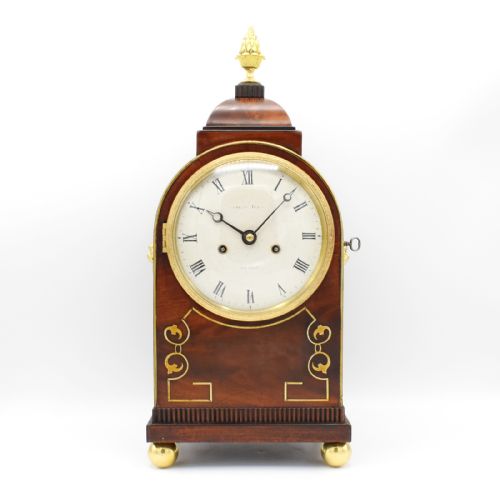


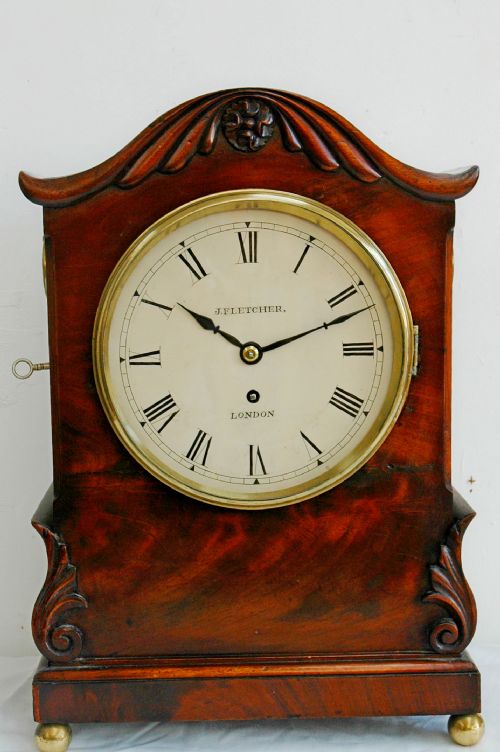


Regency Shelf Clock
These regency shelf clock designs combine mahogany, rosewood, and gilt bronze, bringing disciplined proportion and mechanical precision to any interior surface.
Regency Shelf Clock
A regency shelf clock sits on mantels, brackets, and tables, functioning as both a portable timepiece and a focal point of room architecture. When searching for a regency shelf clock, buyers encounter formats spanning compact library clocks to substantial bracket and mantel clocks.
The materials seen in these pieces include mahogany, rosewood, and ebonised wood, frequently decorated with brass inlay or ormolu mounts. Originating predominantly from the Regency period alongside later Victorian and 19th-century interpretations, these items range from architectural architectural forms to chamfer top and pagoda top variations.
Forms vary from straightforward table clocks to repeaters and twin fusee bracket clocks. Collectors also meet styles extending from Georgian roots through William IV and Gothic Revival to Chinoiserie.
Materials and construction
Cabinetmakers constructed these clock cases using dense hardwoods such as mahogany and rosewood, frequently applying brass inlay, ormolu, and gilt bronze mounts to accentuate the timber grain. Ebonised wood and pollard oak also appear, providing darker, contrasting tones suited to formal interiors.
Movements rely upon fusee mechanisms, including single and twin chain fusee systems, designed to maintain even tension as the mainspring unwinds. Dials feature enamel beneath glass panels, framed by brass bezels and protected within sturdy timber or cast bronze housings.
Regency Shelf Clock Retail Price Guide 2026
Typical asking prices for regency shelf clock among the pieces listed under this phrase on Sellingantiques today, from the lower quarter to the upper quarter. They describe what is for sale here now, not the wider market.
Listings feature mahogany, rosewood, brass, and ormolu applied across Regency, Georgian, and Victorian periods.
Evaluating craftsmanship and execution
The refinement of brass inlay and the crispness of ormolu mounts distinguish superior examples from standard production. Cabinet timber selection, such as figured rosewood or dense mahogany, dictates the visual depth of the case.
Clockwork complexity, demonstrated by single or twin fusee movements and repeating capability, separates simpler timepieces from high-grade horological instruments. The integration of maker signatures on dials or backplates further reinforces distinction.
Charles Pratt London·Seller of Reading·John Bull of Bedford·Barrett London·J Kingerley Manchester·Pennington of Camberwell London·Walker and Hall·William Hardy London·McCabe London·Desbois Wheeler·DeLa Salle And Christie London·Bently Beck London
The Regency Shelf Clock Glossary
- Fusee
- A conical pulley used in mechanical clocks to equalise the torque of the mainspring as it runs down. This mechanism ensures consistent driving force to the escapement for accurate timekeeping.
- Bracket clock
- A portable timekeeper originally designed to sit upon a matching wall bracket or a furniture shelf. These clocks frequently feature sturdy carrying handles and sophisticated striking movements.
- Ormolu
- Gilded bronze produced by applying a mercury and gold amalgam to a bronze base. The process yields a rich, durable metallic surface common on decorative mounts.
- Chinoiserie
- A decorative style reflecting European interpretations of Chinese artistic traditions. It appears on selected clock cases through painted or lacquered motifs.
Regency Shelf Clock: Frequently Asked Questions
Where should I place a regency shelf clock?
These clocks suit prominent mantelpieces, console tables, and dedicated wall brackets where their proportions can be appreciated.
Ensure the surface is level to allow the pendulum or balance to operate without friction.
How do fusee movements function?
A fusee uses a conical drum and a cord or chain to regulate the power delivered from the mainspring.
As the spring unwinds and loses tension, the chain moves to a wider section of the cone to maintain consistent drive.
What is the difference between a bracket clock and a mantel clock?
Bracket clocks historically required a matching wall bracket and often featured carrying handles on top for portability.
Mantel clocks evolved as larger, static ornaments designed specifically to sit directly upon fireplace mantels.
How do I identify Regency period pieces?
Regency items exhibit restrained classical proportions, precise brass inlay, and a preference for dark tropical hardwoods.
Maker signatures on the dial and the presence of single or twin fusee movements help confirm period authenticity.