




Regency Scroll Couch
A regency scroll couch brings architectural symmetry and graceful lines to a room, offering a long, reclining seat designed for daytime repose.
Regency Scroll Couch
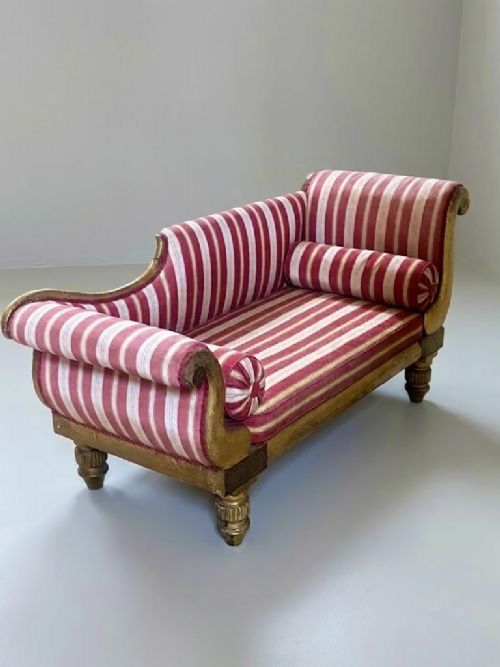
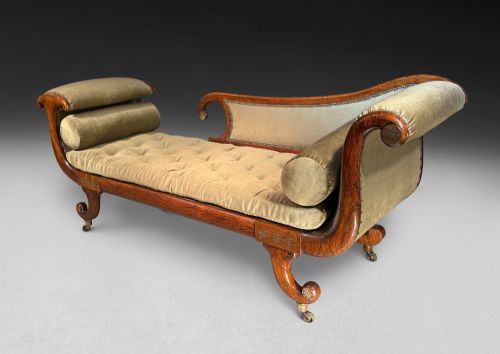
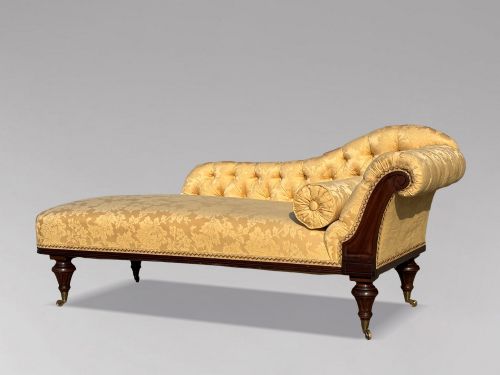
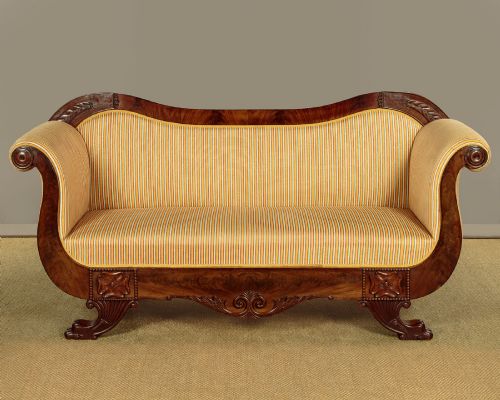
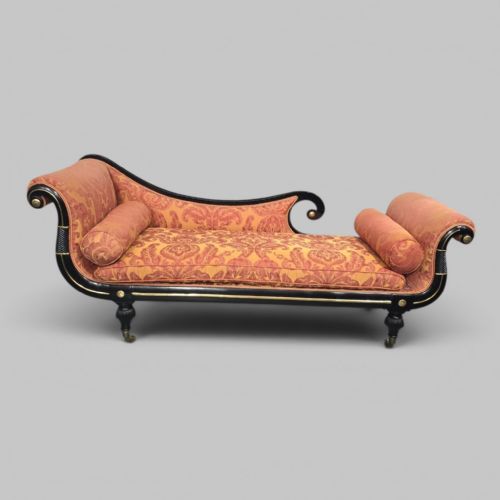
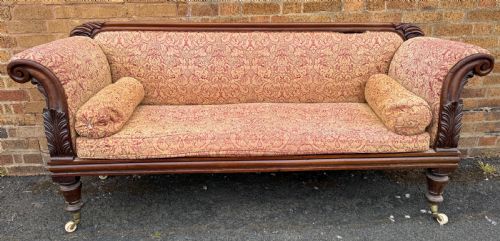
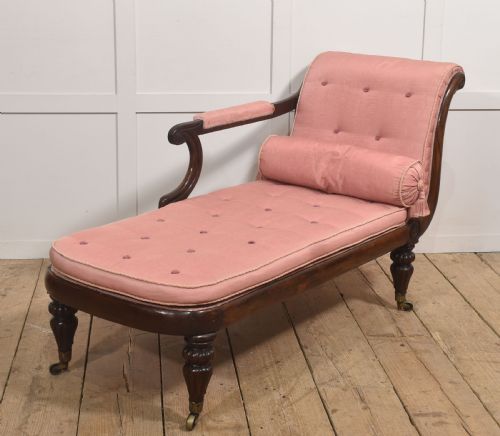
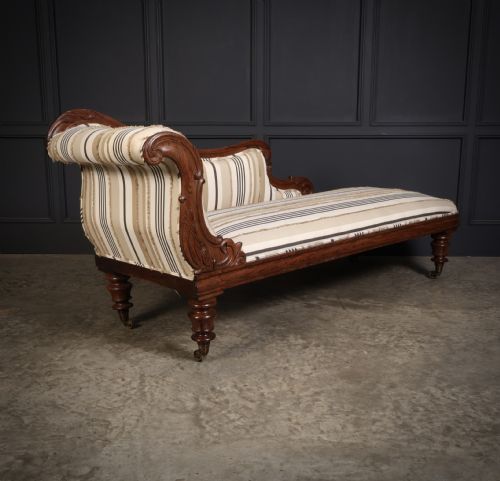
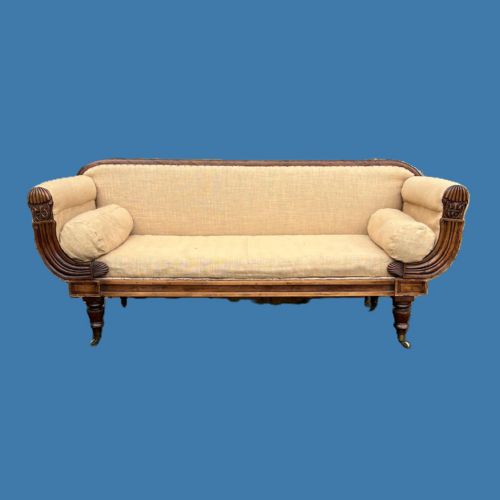
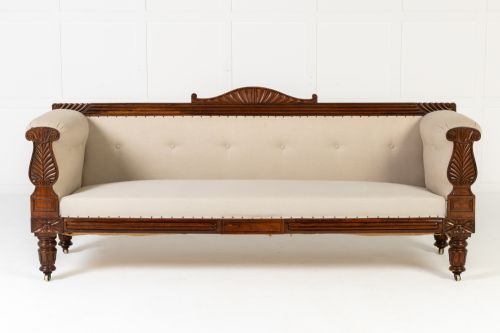
A regency scroll couch is a signature piece of early nineteenth-century seating furniture, combining the classical forms of the Regency period with the comfort of a daybed or chaise longue. You will most frequently encounter mahogany, rosewood, and simulated rosewood frames featuring distinct scrolled ends, often dating from the opening decades of the eighteen-hundreds.
The evidence shows these items appearing under various headings such as sofas, settees, chaise longues, and daybeds, spanning the Regency, George the Fourth, and William the Fourth eras. Many pieces display double scroll ends or asymmetrical frames intended to anchor a drawing room, library, or country house interior.
Materials and construction
Cabinet makers built these frames primarily using dense hardwoods like mahogany and solid rosewood, alongside ebonised wood and simulated rosewood finishes. Brass inlay frequently accented the timber surfaces, adding metallic contrast to the dark grain.
Upholstery materials ranged from silk and leather to hessian and modern decorative fabrics, supported by underlying frame construction designed to carry generous padding and carved scroll armrests.
Listings span multiple decades from eighteen hundred through nineteen thirty, dominated by nineteenth-century mahogany and rosewood timber frames.
Distinctions in quality
Quality rests in the crispness of the carved timber scrollwork and the selection of figured veneers, where highly grained rosewood or rich mahogany distinguishes superior workshop production from simpler country pieces. The structural integrity of the show frame and the precision of brass inlay work further separate standard examples from finer commissions.
Gillows·Thomas Hope·Syrie Maugham
The Regency Scroll Couch Glossary
- Scroll end
- A characteristic outward-curving wooden arm or terminal resembling a scroll, defining the silhouette of these couches.
- Chaise longue
- An upholstered sofa shaped to allow the occupant to recline with legs extended, frequently appearing interchangeably with daybeds in this period.
- Simulated rosewood
- A painted or stained wood finish designed to imitate the rich grain and colour of genuine rosewood timber.
- Giltwood
- Timber coated with gold leaf or gold paint to highlight carved decorative details on the frame.
Regency Scroll Couch: Frequently Asked Questions
Where should I place a regency scroll couch?
These pieces suit large drawing rooms, libraries, or open hallway spaces where their elongated silhouettes can be viewed in the round. They function effectively as daybeds for reading or as statement seating against a principal wall.
Position them away from direct sunlight to protect delicate silk or rosewood surfaces from fading over time.
How do I tell a Regency piece from William IV?
Regency pieces generally exhibit leaner, classical proportions with refined brass inlay and restrained carving. William IV examples tend to be heavier and more robust, featuring bolder scrollwork and denser mahogany or rosewood frames.
Examining the turning of the legs and the heft of the timber helps clarify the transition between these two overlapping periods.
What fabrics are appropriate for reupholstering?
Historical examples utilise woven silks, heavy cottons, leather, and patterned upholstery fabrics that reflect early nineteenth-century interior palettes. Striped silks and rich textured weaves align well with the character of the frame.
Select a fabric weight that complements the exposed woodwork without overwhelming the carved scroll ends.
Are these couches comfortable for daily lounging?
While originally built for upright sitting and daytime reclining, modern comfort depends entirely on the internal webbing and padding quality. Many historic frames require professional reupholstery to achieve proper support.
Ensure the foundation matches your intended level of firmness for regular relaxation.