





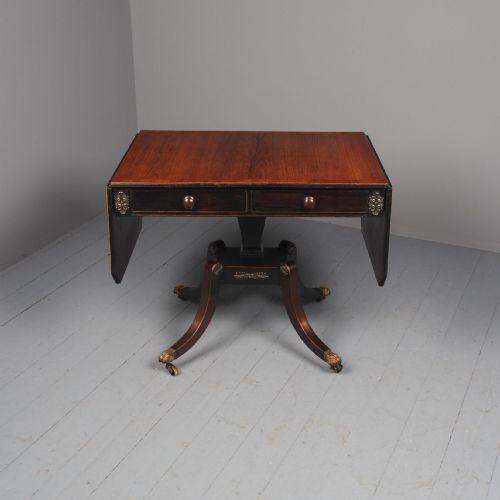

Regency Ebonised Sofa
A regency ebonised sofa brings dark, dramatic polish and classical silhouette to a room, offering both striking visual presence and enduring seating comfort.
Regency Ebonised Sofa
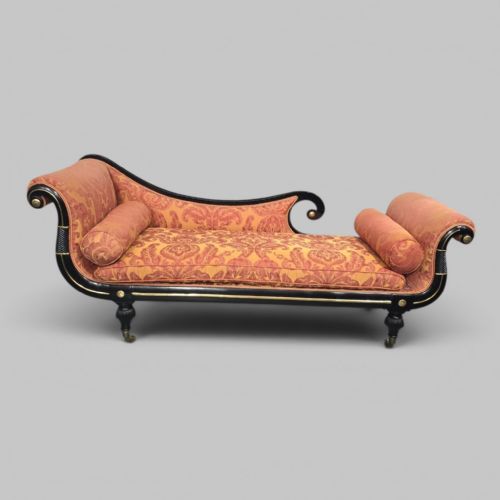
A regency ebonised sofa represents the striking taste for dark, dramatic woodwork that defined fashionable interiors during the early nineteenth century and its later revivals. These pieces combine deep, dark finishes with classical scroll ends and elegant framework, reflecting the enduring influence of the Regency period. Buyers seeking this phrase encounter sophisticated seating featuring rich wood finishes, often enhanced by gilt accents or contrasting timber details.
The versions most commonly met on this page span the nineteenth century, including pieces created during the Regency period itself as well as later interpretations. Surviving examples showcase various forms of dark-finished seating, from classic scroll-end settees to cane seat variations and parcel-gilt designs. Each piece demonstrates the distinctive proportion and classical restraint that characterises this specific era of British furniture design.
How they were made
Craftsmen utilised foundational timbers such as mahogany and various hardwoods, applying a dense black ebonised finish to mimic expensive solid ebony. This dark surface treatment was frequently paired with contrasting details like amboyna, bird's-eye maple, or delicate parcel gilding to highlight the architectural lines of the frame.
Upholstery techniques matched the formal elegance of the woodwork, incorporating traditional stuffing and supportive springing finished in heavy textiles such as damask or hessian. Joinery relied on precise traditional methods to ensure structural integrity across sweeping scroll arms and elongated daybed frames.
What varies in quality
Proportion and the handling of classical motifs dictate the aesthetic success of the piece. Master makers achieved a balance in the scroll ends and leg placement that lesser workshops occasionally missed, resulting in a more harmonious and authoritative presence.
Willian Trotter·Gillows
The Regency Ebonised Sofa Glossary
- Ebonised Wood
- Timber treated with stain, dye, or paint to imitate expensive ebony. This finish became immensely popular during the Regency period for its stark, classical contrast.
- Scroll-End
- A sweeping, outward-curving arm or terminal characteristic of Regency seating design. It draws inspiration from ancient Greek and Roman furniture forms.
- Parcel Gilt
- A decorative technique where specific carved details or mouldings are highlighted with thin layers of gold leaf. It adds a subtle gleam against dark ebonised surfaces.
- Damask Fabric
- A reversible figured textile traditionally used for formal upholstery. Its woven patterns catch the light to complement polished wood frames.
Regency Ebonised Sofa: Frequently Asked Questions
What defines a regency ebonised sofa?
A regency ebonised sofa is characterised by its dark, blackened wood finish and classical nineteenth-century proportions. These pieces often feature scroll-end arms and formal structural lines influenced by classical antiquity.
They stand apart from lighter wood furniture through their dramatic aesthetic and use of contrasting materials like parcel gilding or exotic veneers. Surviving examples reflect the high standards of design prevalent during the early nineteenth century.
How do I care for ebonised wood?
Caring for ebonised wood involves keeping the surface clean with a soft, dry cloth and avoiding harsh chemical polishes. Protection from direct sunlight and excessive humidity helps preserve the deep black finish.
Regular maintenance prevents the dark surface from fading or developing a hazy film over time. Gentle handling ensures the delicate polished appearance remains intact for years to come.
Where were these sofas placed originally?
These sofas originally occupied formal reception rooms, libraries, and grand drawing rooms of Regency homes. Their striking appearance made them centrepieces designed to impress visitors and complement classical interior schemes.
They served both as decorative statements of refined taste and as functional seating for reading or conversation. Their architectural presence suited the symmetrical room layouts of the period.
How do I distinguish Regency from later revivals?
Distinguishing original Regency pieces from later revivals involves examining the construction methods, secondary timbers, and wear patterns. Period pieces from the early nineteenth century typically exhibit hand-cut joinery and period-specific framing techniques.
Later nineteenth-century or subsequent revivals often incorporate different structural traits while imitating the earlier classical style. Expert examination of the wood grain and finishing materials helps clarify the exact age of the piece.