



Black Wooden Settee
These black wooden settee pieces bring dark timber framework and historic seating forms directly into your interior.
Black Wooden Settee
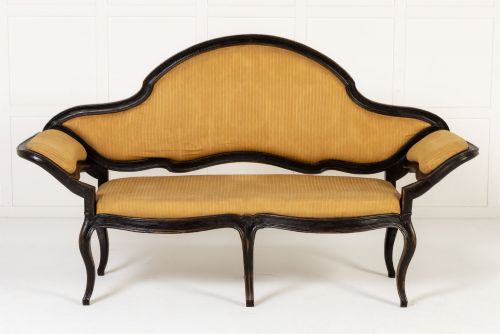
A black wooden settee spans centuries of domestic seating, appearing across 18th century Italian workshops and later 19th century revival movements. These benches and sofas offer extended seating built from dark or ebonised timber.
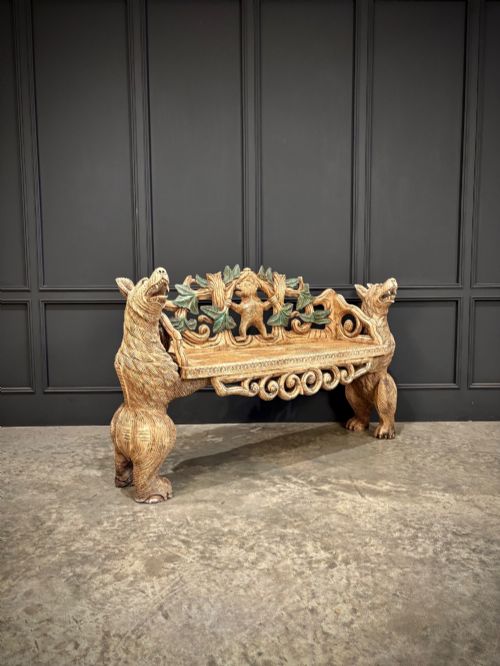
The most common examples on this page are 19th century pieces, alongside specific regional forms like Black Forest carved benches and Viennese bentwood loveseats. They function as striking focal points in hallways and reception rooms.
How they were made
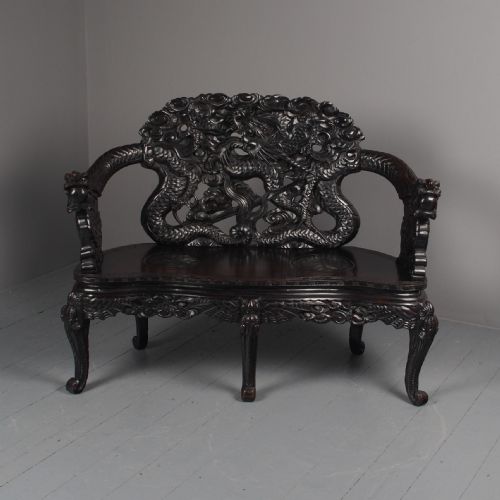
Carpenters utilised beech, linden wood, and hard timbers to construct the foundational frames, frequently applying ebonised finishes, black paint, or gold leaf accents. Skilled carvers shaped intricate details into the wood, notably seen in figural Black Forest bear supports and floral motifs.
Seating areas often integrated woven cane, rattan cane, or upholstered fabric panels set directly into the wooden framework. This combination of structural timber and lighter woven or upholstered elements defined the construction of the era.
Some benches feature carved bears staring back at the room.
What varies in quality
The sophistication of the timber carving dictates the upper tier of these pieces, separating standard joinery from sculptural work such as detailed animal figures or deep relief panels. Hand-applied finishes like genuine gold leaf and layered ebonisation display greater depth than simple modern paint layers.
Structural integrity of the canework and the precision of the joinery influence the overall standard. Original surfaces retain historical character that heavily impacts the visual presence of the furniture.
Thonet
The Black Wooden Settee Glossary
- Ebonised Wood
- Timber treated with chemical stains or dark pigments to imitate expensive ebony. This dark finish became particularly popular during the Victorian and Aesthetic Movement periods.
- Canework
- Woven rattan or cane material forming the seat or back panel of a bench. It provides a lightweight, flexible surface supported by the wooden frame.
- Gold Leaf
- Extremely thin sheets of beaten gold applied to decorative portions of the wooden structure. It highlights carved details and creates contrast against the black timber.
- Settle
- A wooden bench featuring a high back and solid arms designed to block drafts. Early examples often incorporate panelled construction.
Black Wooden Settee: Frequently Asked Questions
Where should I place a black wooden settee?
These pieces suit spacious hallways, landings, or living rooms where their dark frames create a strong visual anchor.
They pair well with neutral walls and traditional architectural details.
How do I care for ebonised wood?
Dust the timber regularly with a soft, dry cloth to prevent surface scratching. Avoid direct sunlight and moisture to preserve the historic dark finish.
Apply occasional specialist wax if recommended for antique timber.
How do I identify the period of a settee?
Examine the carved motifs, structural proportions, and finishing techniques against known design styles like Regency or Aesthetic Movement. Tool marks and material ageing provide further clues to the manufacturing era.
Comparing construction methods helps confirm the approximate decade of origin.