

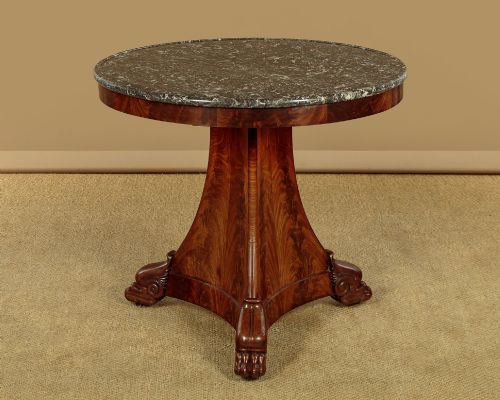
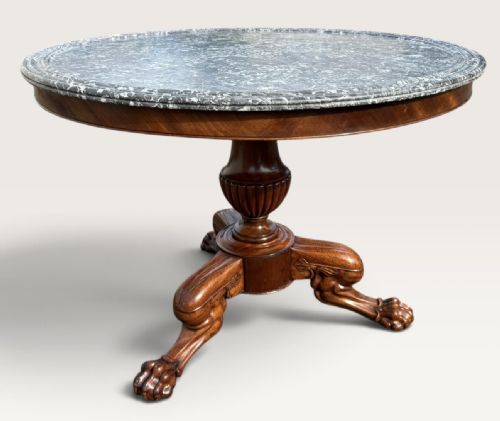
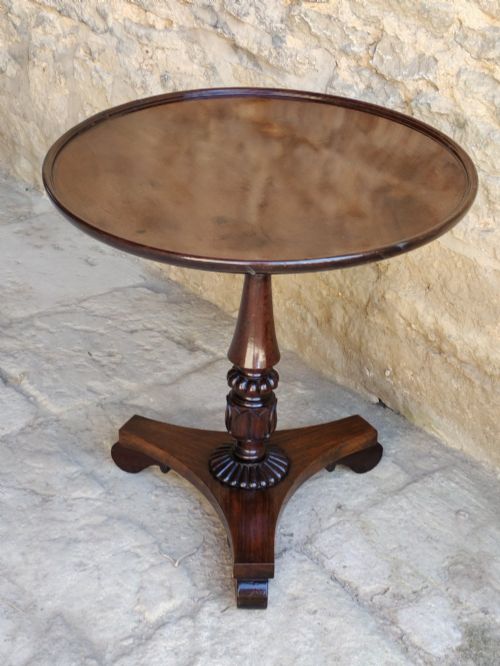


Regency Round Accent Table
These pieces are a regency round accent table, built to provide a compact surface for lamps and drinks while anchoring a room.
Regency Round Accent Table
A regency round accent table is what a buyer is looking at when they search this phrase, encompassing compact circular surfaces used as lamp, wine, or occasional tables. The versions most likely to meet on this page include 19th-century mahogany and rosewood examples, alongside William IV pieces and later revivals.
The forms span side tables, occasional tables, centre tables, and tilt-top tables, often supported by tripod bases or central pillars. Materials range from traditional timbers like mahogany, rosewood, elm, and burr wood to occasional incursions of marble, brass, leather, and chrome.
Origins stretch from the Regency period proper through Victorian interpretations, Georgian styles, and into Art Deco chrome. Buyers encounter both strict period pieces and later Regency Revival or early twentieth-century variations that maintain the circular format.
Materials and construction
Cabinet makers utilised dense hardwoods such as mahogany and rosewood for the primary structures, frequently selecting figured veneers or burr wood for decorative tops. Tripod bases and central pillars provided stable support without cluttering floor space.
Specialist touches included inset marble surfaces, brass details, and leather accents, while later twentieth-century iterations incorporated chrome and mirrored glass. Tilt-top mechanisms allowed tables to be stored flat against walls when not in use.
Regency Round Accent Table Retail Price Guide 2026
Typical asking prices for regency round accent table among the pieces listed under this phrase on Sellingantiques today, from the lower quarter to the upper quarter. They describe what is for sale here now, not the wider market.
Some tables were built to tilt vertically simply so they could hide quietly against the parlour wall like polite wooden ghosts until supper.
Judging quality in circular tables
The distinction between tiers rests on timber selection and timber preparation, where choice veneers and rich grain patterns elevate a piece above plain construction. Cabinet making technique dictates the stability of the central pillar and the tight fit of tripod joints.
Refinement in turning and carving separates standard production from superior examples, particularly in the shaping of pedestal bases and edge moulding. The integration of auxiliary materials like brass mounts or marble slabs also signals higher workshop ambition.
The Regency Round Accent Table Glossary
- Tripod base
- A three-legged support structure commonly found beneath circular tables to ensure stability on uneven floors. This configuration allows the table to stand firmly without rocking.
- Tilt-top table
- A table designed with a hinged mechanism allowing the circular surface to pivot into a vertical position. This feature enabled easy storage against walls when the space was needed for other activities.
- Specimen wood top
- A tabletop assembled from multiple different decorative timbers arranged in geometric patterns or panels. Such tops showcase the variety of exotic and domestic woods available to the cabinet maker.
- Gilt wood
- Wood that has been treated with a thin layer of gold leaf or gilt finish to simulate solid gold decoration. It appears on decorative frames and mounts.
- Guerridon
- A small occasional table supported by a central column or figures, originating in seventeenth-century France. The form persisted through subsequent centuries as a decorative accent piece.
Regency Round Accent Table: Frequently Asked Questions
What is a regency round accent table used for?
These pieces serve as versatile surfaces for holding lamps, drinks, or decorative items within a room. Their compact circular footprint allows them to sit beside seating or in hallways without obstructing movement.
Historically, specific forms like wine tables and lamp tables were designed for designated tasks during evening gatherings. Today, they function equally well as flexible focal points in contemporary interiors.
How do I distinguish Regency from William IV tables?
Regency pieces generally exhibit leaner proportions, classical restraint, and refined reeded or fluted legs. Cabinet makers of that era favoured understated elegance inspired by ancient Greek and Roman models.
William IV pieces, which follow immediately after, tend toward heavier proportions with bolder pedestal turns and more robust pillars. The timber choice often includes richly figured mahogany or rosewood with substantial carved scrollwork.
What does a tilt-top mechanism involve?
A tilt-top mechanism utilises a sophisticated catch and pivot block beneath the tabletop. This allows the circular surface to rotate from horizontal to vertical.
Cabinet makers engineered these hinges precisely so the table remained secure in use while folding flat for storage. This practical design was essential in smaller domestic spaces.
How do I live with a marble top table?
Marble top tables require mindfulness regarding acidic liquids and heavy impacts, as the stone can stain or chip. Using coasters and placemats protects the polished surface from daily wear.
Positioning the table away from high-traffic zones prevents accidental knocks while allowing the stone and timber combination to catch the light.