

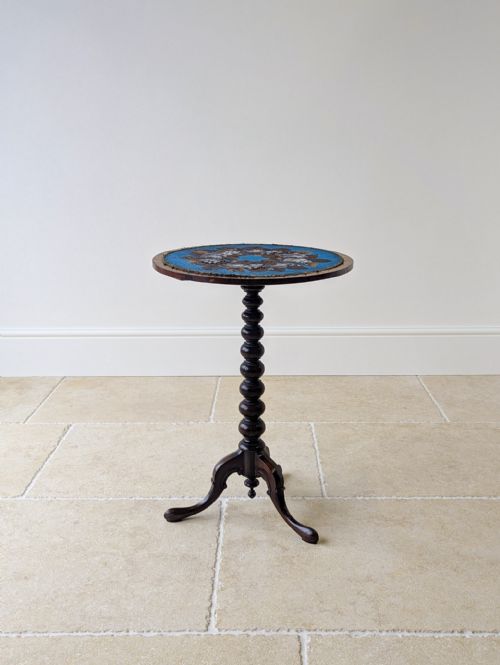
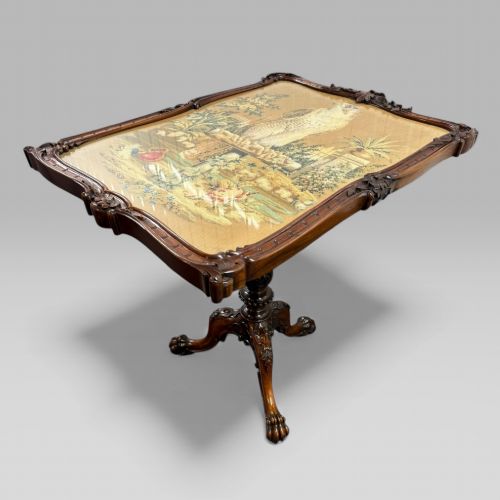
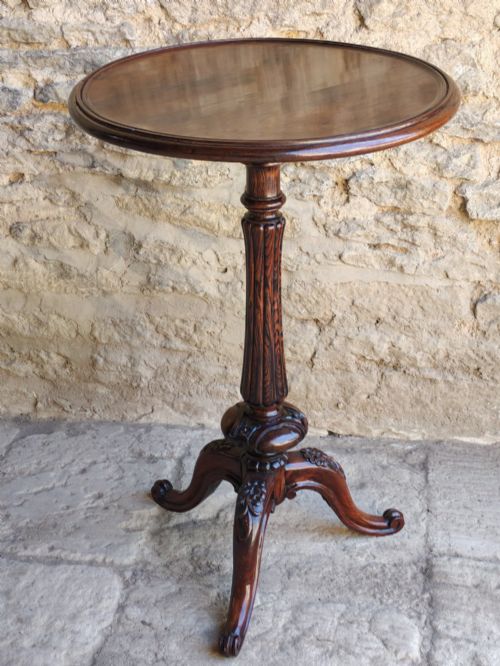
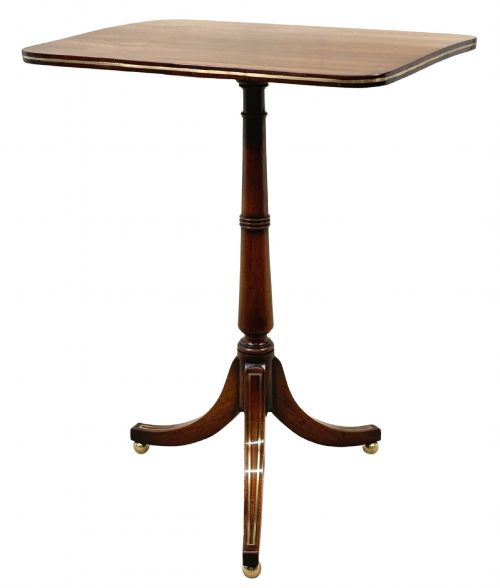
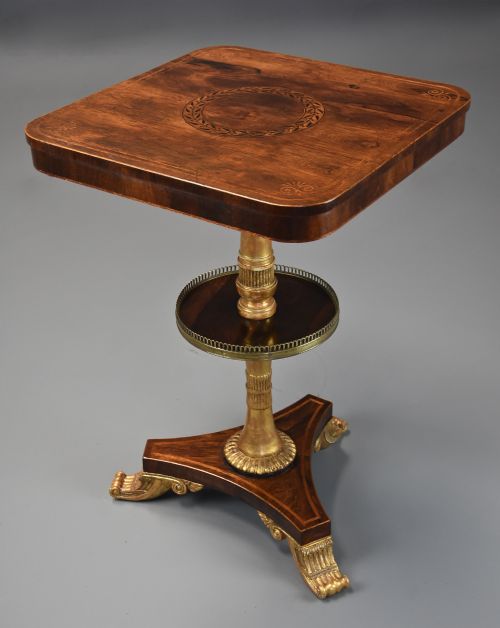

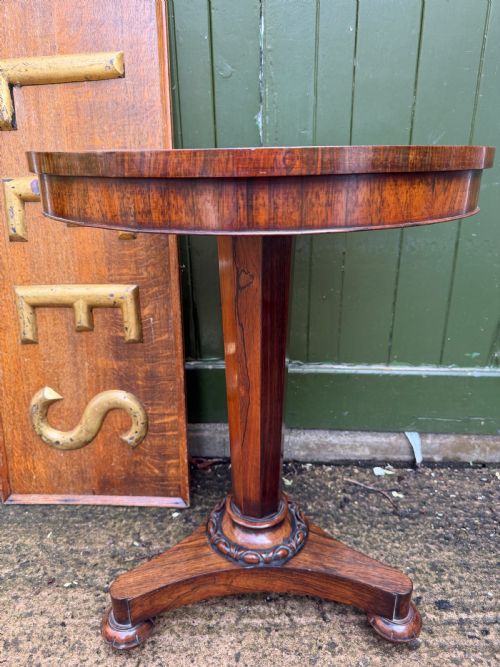

Regency Rosewood Tripod Table
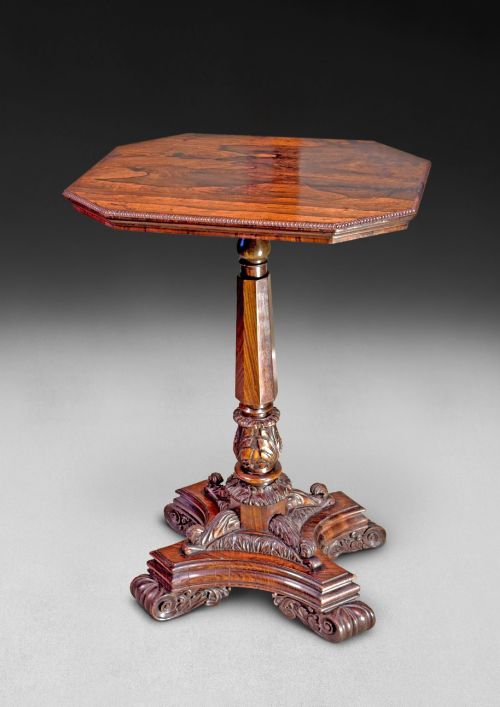
A regency rosewood tripod table brings compact elegance and dark timber grain to a room, serving as a versatile surface for lamps, wine or books.
Regency Rosewood Tripod Table
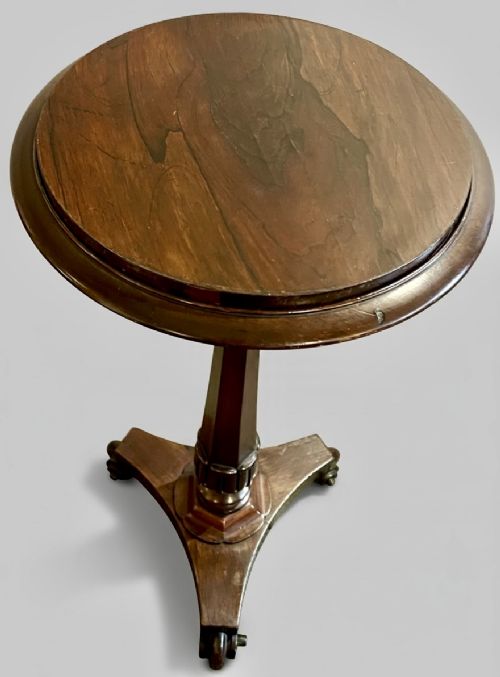
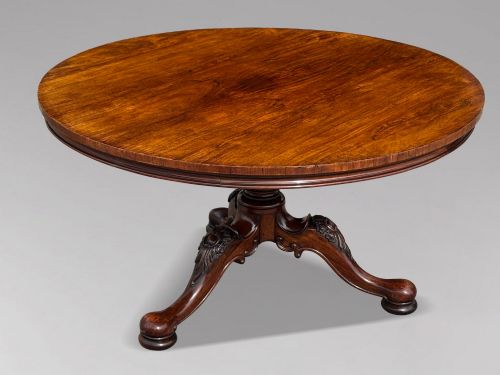
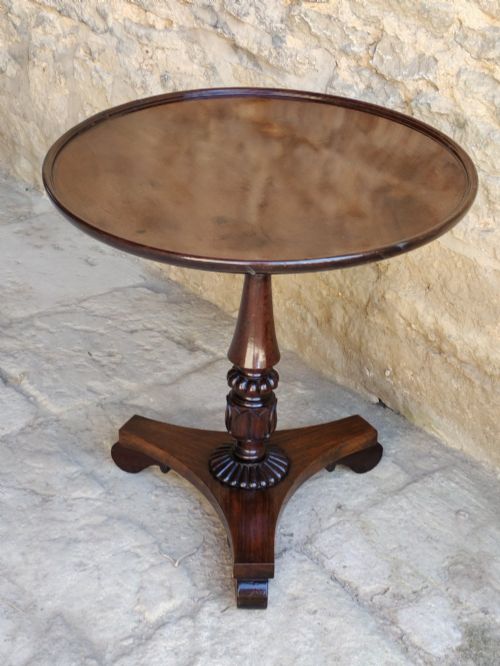
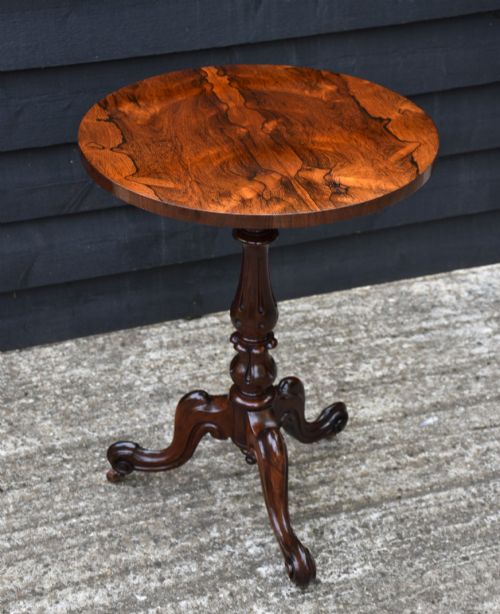
A regency rosewood tripod table is a compact piece of nineteenth-century furniture designed for flexible placement beside seating or in small spaces. The selections here typically feature a circular, octagonal or tilt-top surface supported by a central pillar and three splayed legs.
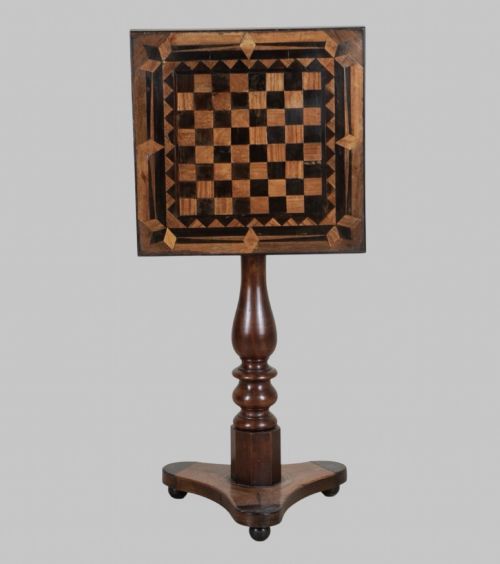
Most examples date from the georgian, regency and william iv periods, alongside later nineteenth-century revivals. They appear in forms ranging from plain wine tables and lamp stands to specialised games tables with inlaid chequer-boards.
Makers often utilised this pedestal format for occasional use, meaning the pieces are easily moved around a room. The combination of a turned column and standing feet provides stability while maintaining a light silhouette.
Materials and construction
Cabinet-makers relied heavily on rosewood for its rich, figured grain, frequently combining the solid timber and veneers over secondary woods. Workshops also incorporated brass stringing, boxwood inlay and marble inserts to enhance the top surfaces.
The characteristic three-legged base connects to a central turned pedestal, which sometimes supports a tilt-top mechanism for convenient storage. Brass mounts, decorative carvings and beadwork often finish the joints and legs.
Regency Rosewood Tripod Table Retail Price Guide 2026
Typical asking prices for regency rosewood tripod table among the pieces listed under this phrase on Sellingantiques today, from the lower quarter to the upper quarter. They describe what is for sale here now, not the wider market.
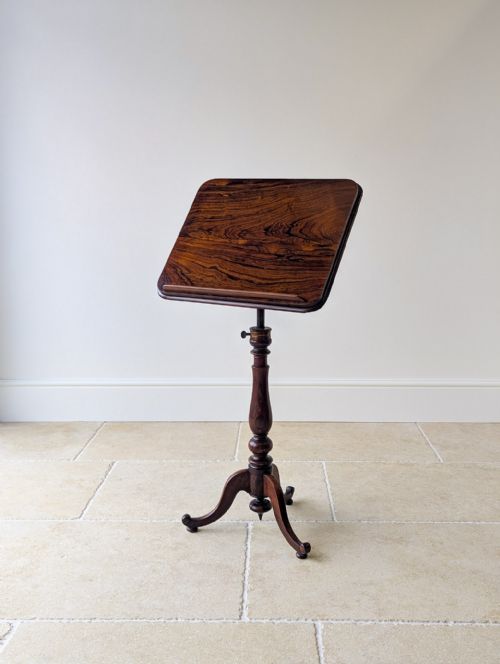
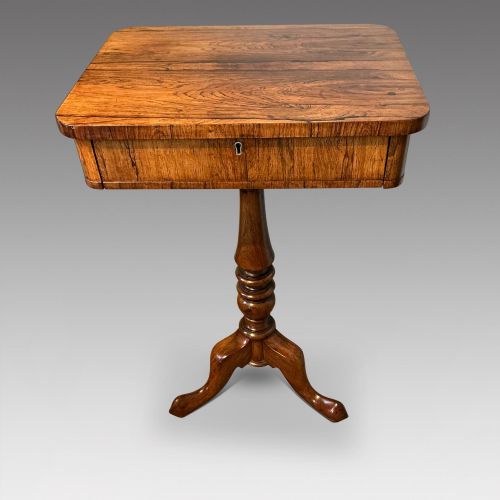
Some tables double as sewing boxes or music stands, proving that nineteenth-century furniture also liked to multitask.
Gradations in quality
Excellence in these pieces rests upon the crispness of the carving, the richness of the rosewood figure, and the precision of any brass or boxwood inlay. Superior examples show thoughtful proportion between the top, the central pillar and the splayed feet.
Simpler versions rely on plain timber and minimal turning, whereas finer pieces demonstrate detailed workmanship such as chequer-board surfaces or specialised tilt-top mechanisms. The integrity of the foundational timber and the joinery at the tripod base dictate the longevity of the table.
Gillows·George Bullock
The Regency Rosewood Tripod Table Glossary
- Tripod base
- A support structure consisting of three splayed legs radiating from a central pillar. This design provides steady footing on uneven floors while keeping the footprint compact.
- Tilt-top mechanism
- A hinge fitting beneath the table surface that allows the top to fold vertical when not in use. It enables the furniture to stand flat against a wall.
- Brass stringing
- Narrow strips of brass inlaid into channels cut into the timber surface. It creates geometric outlines and decorative contrast against dark rosewood.
- Occasional table
- A small, movable table intended for specific, intermittent tasks such as holding a lamp, drinks or needlework. They form the majority of the current selection.
Regency Rosewood Tripod Table: Frequently Asked Questions
How do I use an occasional table?
Occasional tables are designed to be moved easily around a room to serve immediate functions. They sit beside seating to hold lamps, books, or drinks.
Because they are lightweight and compact, they adapt well to corners or centre spaces where a larger piece would crowd the floor.
How do I identify a Regency period piece?
Regency pieces often display dark rosewood veneers, brass inlay, and classical revival motifs. They date from the early nineteenth century and typically emphasise clean architectural lines.
Comparing the timber grain, leg profiles, and secondary woods helps distinguish pieces from this era against later Victorian revivals.
What is the difference between a wine table and a lamp table?
Wine tables and lamp tables are both small occasional surfaces, but their top dimensions and heights often reflect their intended historical uses. Wine tables typically feature smaller tops meant for a single glass or bottle.
Lamp tables accommodate lighting fixtures and frequently incorporate decorative brass mounts or inlaid games boards for varied daily use.