

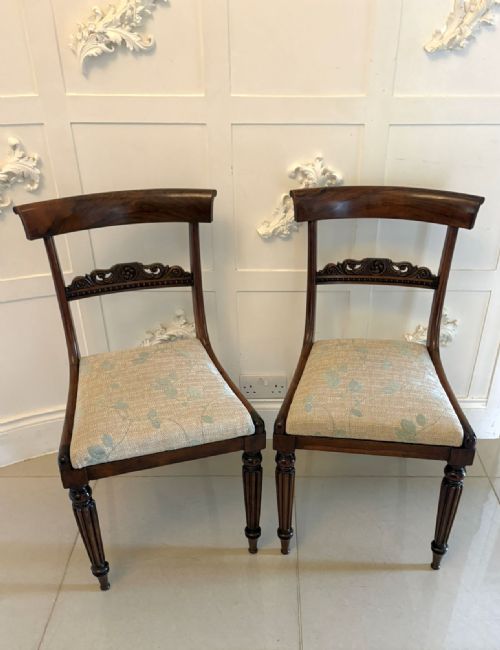
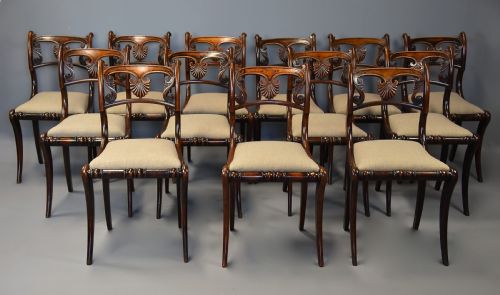
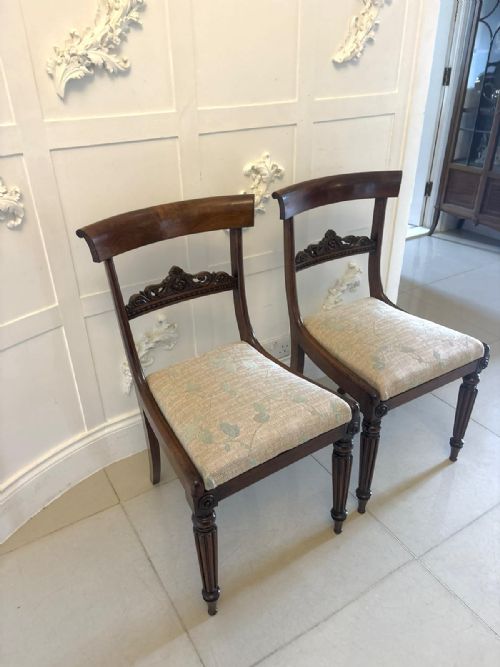
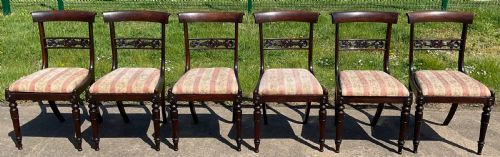


Regency Rosewood Dining Chairs
Regency rosewood dining chairs bring early nineteenth-century elegance to a room through rich timber and classical line.

Regency Rosewood Dining Chairs
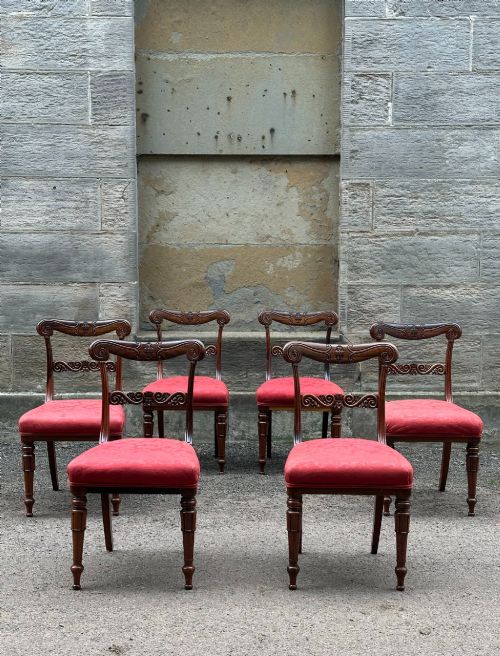
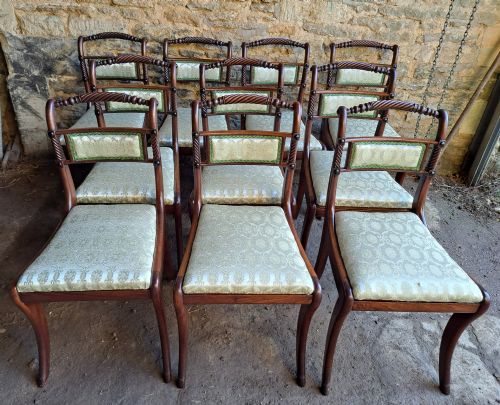
Regency rosewood dining chairs encompass formal seating pieces produced primarily during the early nineteenth century and the subsequent William IV period. Sets range from modest pairs to large collections of ten or twelve chairs designed for substantial dining tables.
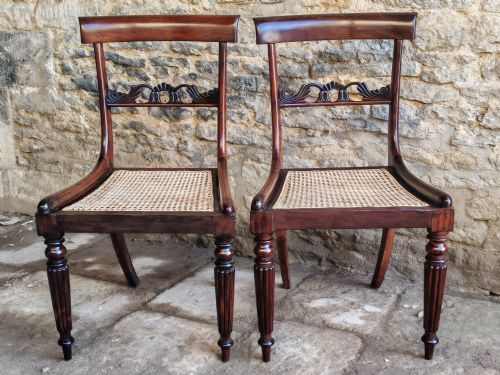
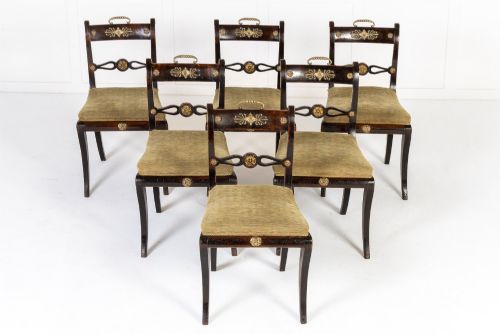
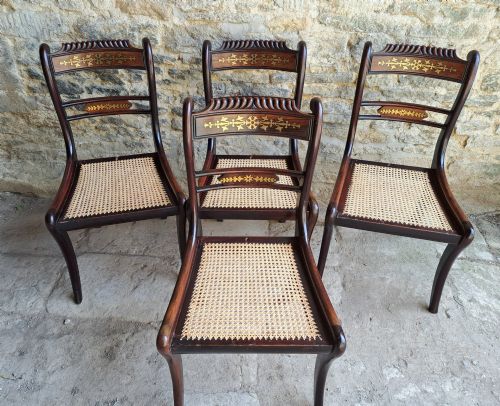
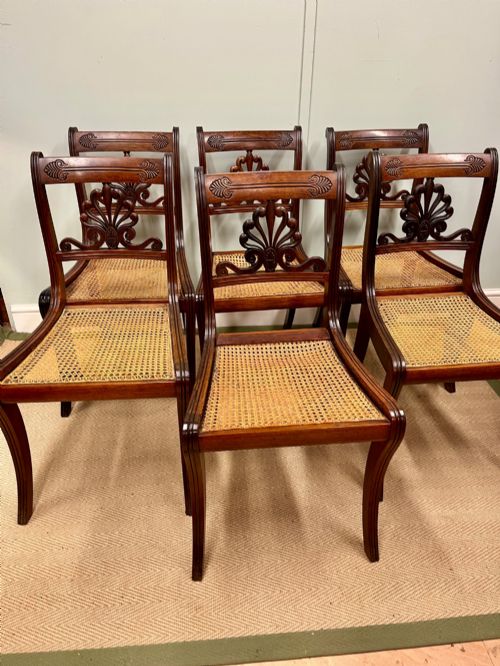
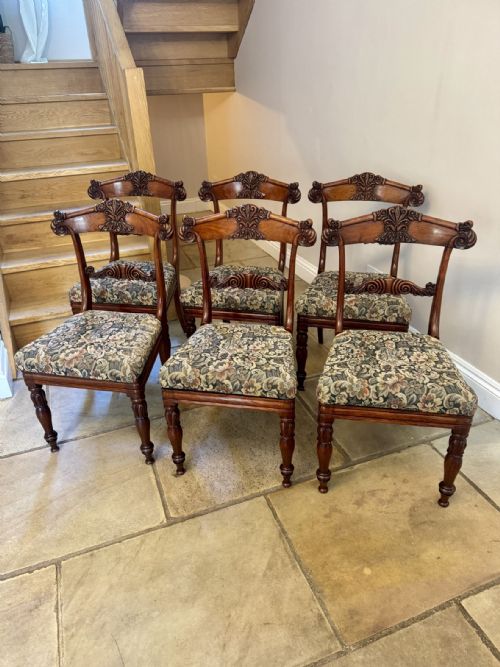
The material vocabulary spans solid rosewood as well as simulated or faux rosewood finishes on alternative woods. Surviving examples frequently include dining chairs, side chairs, and elbow chairs with upholstered, fabric, velvet, or cane seats.
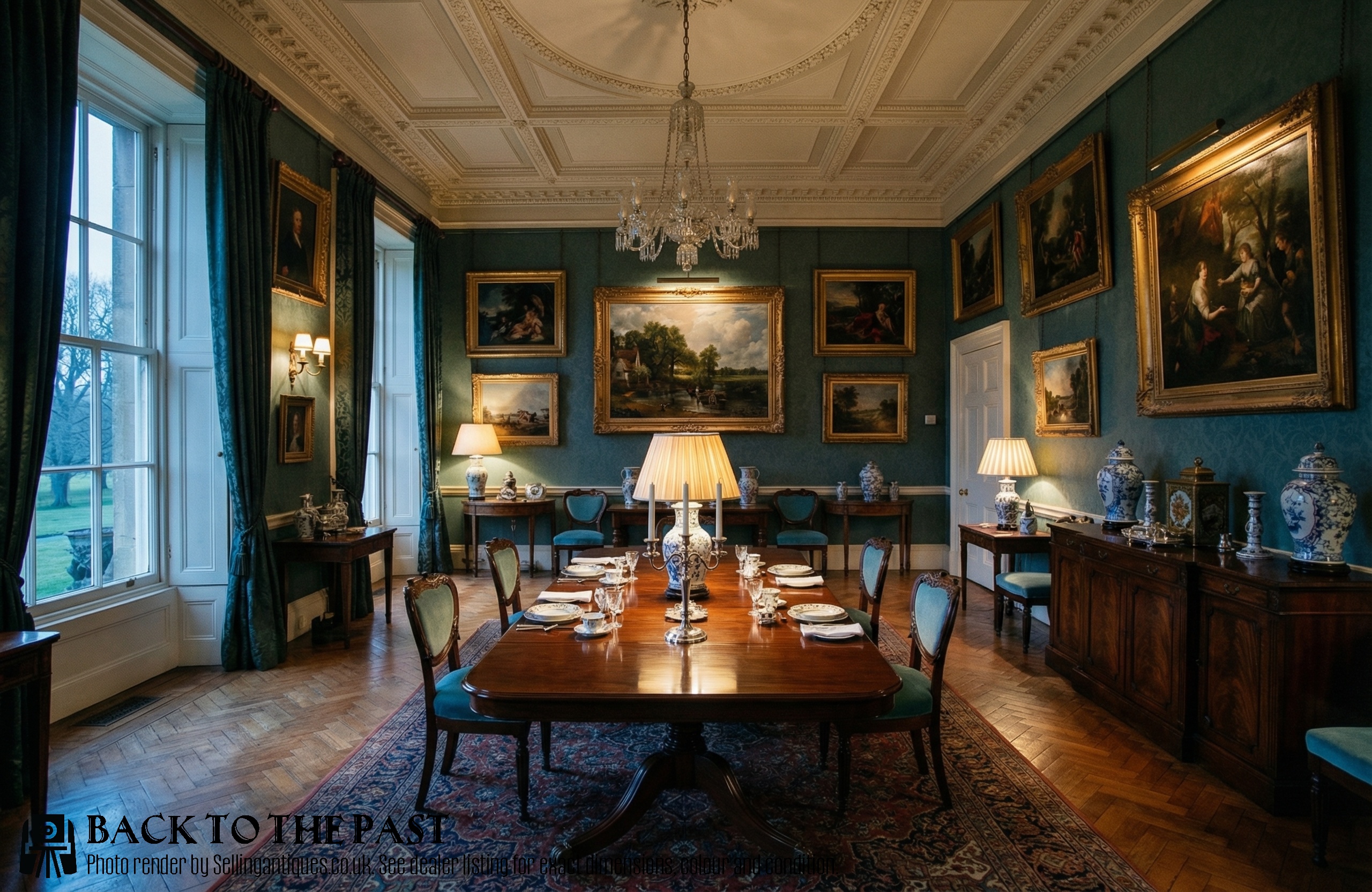
How they were made
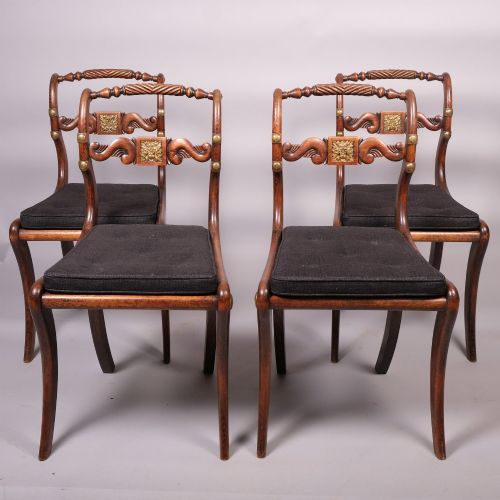
Cabinetmakers utilised dense tropical rosewood alongside beech or other timbers painted to simulate the distinctive grain pattern. Brass inlay work was frequently set flush into the wooden top rails and crossbars to create geometric or classical motifs.
Carved wooden details, rope twist rails, and Gothic Revival tracery demonstrate the hand carpentry of the period. Seats were integrated using traditional webbing and stuffing covered in upholstery fabric, velvet, or woven cane panels.
Regency Rosewood Dining Chairs Retail Price Guide 2026
Typical asking prices for regency rosewood dining chairs among the pieces listed under this phrase on Sellingantiques today, from the lower quarter to the upper quarter. They describe what is for sale here now, not the wider market.
Materials recorded across the inventory include solid rosewood, brass inlay, cane, velvet, and simulated rosewood finishes.
What varies in quality
The distinction between standard commercial production and exceptional workshop output lies in the crispness of the carving and the precision of the brass inlay. Superior sets maintain uniform timber selection across every chair in the group rather than mixing secondary woods.
Larger assembled sets that retain matching frames, original proportions, and consistent patination command greater attention than harlequin collections gathered together at a later date.
Gillows·Munro·John Gee
The Regency Rosewood Dining Chairs Glossary
- Rosewood
- A dense, heavily figured dark timber highly prized for cabinetmaking during the Regency era due to its rich colour and polished finish.
- Simulated rosewood
- A painted or stained finish applied to a lighter domestic wood to imitate the grain and appearance of genuine rosewood timber.
- Brass inlay
- Technique where thin strips or motifs of brass are embedded flush into channels carved directly into the surface of the wood.
- Rope twist
- A carved wooden decorative moulding that twists along the rail of a chair back to resemble a tightly wound rope.
- Gothic Revival
- An architectural and decorative style incorporating pointed arches, trefoils, and medieval ecclesiastical motifs into furniture design.
Regency Rosewood Dining Chairs: Frequently Asked Questions
How do I identify genuine Regency rosewood chairs?
Examine the timber grain, construction joints, and framing methods typical of early nineteenth-century cabinet workshops. Genuine examples often feature hand-cut joinery and heavy rosewood solids beneath layers of historic polish.
Compare the proportions and decorative details against established stylistic periods like the Regency, William IV, or late Georgian eras. Secondary woods behind the primary veneer or paint surface help confirm the period of manufacture.
Were these chairs originally sold in large sets?
Dining seating from this era was produced in varying quantities, ranging from intimate pairs to large sets intended for extensive dining rooms. Many surviving groups include armchairs or elbow chairs designed to sit at the head of the table alongside matching side chairs.
Finding larger matching sets intact remains uncommon because individual chairs frequently dispersed over generations. Harlequin sets combine pieces sharing similar Regency or William IV characteristics assembled later.
What is the difference between solid and simulated rosewood?
Solid rosewood construction utilises the heavy, oily tropical timber throughout the primary structural components of the chair frame. The natural grain runs deep into the material and develops a dark, warm patina through centuries of handling.
Simulated rosewood applies paint or graining techniques over a stable secondary wood such as beech. This decorative method achieved the fashionable dark aesthetic while managing material costs during the nineteenth century.
How should I care for antique rosewood dining chairs?
Maintain stable indoor humidity levels and keep antique seating away from direct sunlight or intense heat sources. Sudden environmental shifts cause timber to dry, split, or stress traditional joinery.
Clean surfaces gently using a soft, dry cloth without harsh chemical polishes. Protect upholstered or cane seat panels by avoiding excessive weight or abrasive cleaning agents.