

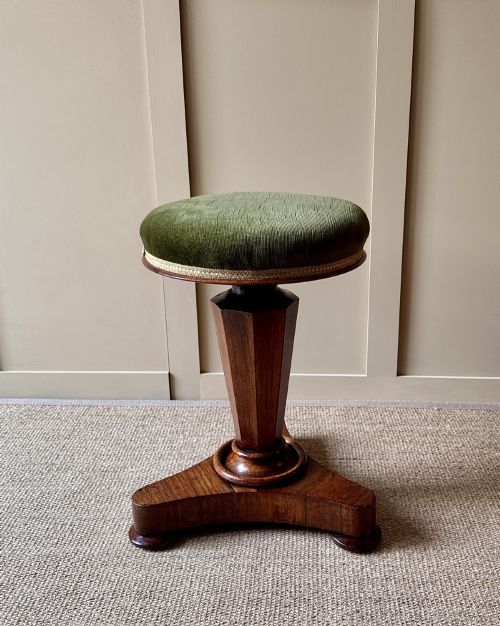
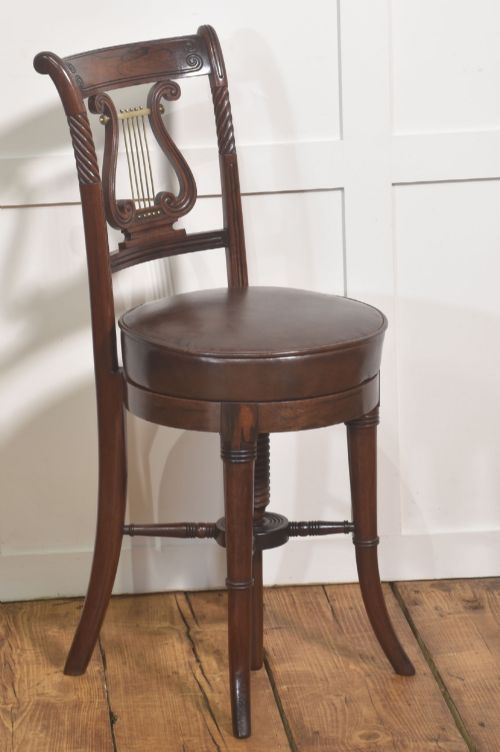
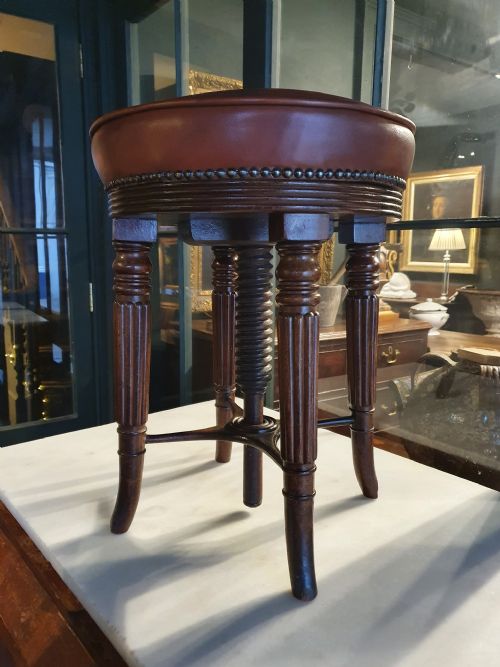


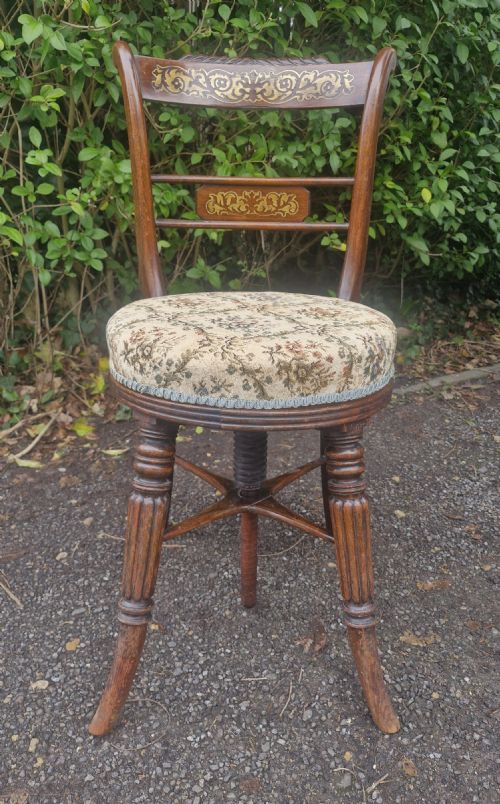


Regency Revolving Music Stool
A regency revolving music stool gives a room the neat utility of the nineteenth-century parlour while offering the simple pleasure of an adjustable seat.
Regency Revolving Music Stool
When you search for a regency revolving music stool, you encounter seating designed for the piano, the dressing table, or the music room, with origins spanning the Regency, Georgian, William IV, and nineteenth-century periods.
The pieces on this page appear variously as piano stools, music chairs, dressing chairs, and square top adjustable stools, reflecting the versatile domestic seating of the era.
Makers and workshops of the period utilised forms that ranged from straightforward timber frames to elaborate swivel mechanisms, meeting the daily demands of musicians and household occupants alike.
How they were made
These stools and chairs rely upon solid timbers such as mahogany, rosewood, simulated rosewood, satinwood, oak, and gilt painted finishes to construct the primary frame and support the rotating mechanism.
Craftsmen integrated brass inlay, gilt paint, and turned elements to elevate the visual appeal of the wood, while the seats received coverings of leather, velvet, fabric, tapestry, and general upholstery.
Regency Revolving Music Stool Retail Price Guide 2026
Typical asking prices for regency revolving music stool among the pieces listed under this phrase on Sellingantiques today, from the lower quarter to the upper quarter. They describe what is for sale here now, not the wider market.
Listings feature eighteenth and nineteenth-century periods, utilising mahogany, rosewood, oak, and satinwood alongside brass and various textile coverings.
What varies in quality
The distinction between standard examples and superior pieces rests upon the crispness of the turning, the precision of the brass inlay, and the fluidity of the adjustable screw mechanism.
Selection of denser cabinet timbers, such as figured rosewood or rich mahogany, alongside the original state of the upholstery and frame, separates ordinary workshop output from the finest documented work.
Gillows
The Regency Revolving Music Stool Glossary
- Revolving
- The property of a seat that turns upon a central screw or pivot, allowing the sitter to adjust height or rotate freely. This movement was essential for keyboard players who needed mobility.
- Adjustable
- A characteristic allowing the seat height to be raised or lowered through a threaded wooden or metal screw. It ensures ergonomic comfort at the piano or dressing table.
- Simulated rosewood
- Timber painted or grained to imitate the dark, richly figured appearance of genuine rosewood. This finish offered a fashionable aesthetic at a lower material cost.
- Brass inlay
- Metal strips or motifs embedded flush into the wooden surface of the frame. It defined high-end Regency cabinet work by adding metallic contrast to dark woods.
- William IV
- A transitional design period spanning the 1830s characterised by robust proportions and classical revival motifs. Stools from this era often feature heavier mahogany frames.
Regency Revolving Music Stool: Frequently Asked Questions
How do I adjust the height?
You simply rotate the top of the stool clockwise or anticlockwise to screw the seat up or down on its central threaded spindle. This mechanism allows for fine increments in height adjustment.
Ensure the mechanism is clean and free of heavy debris before turning, as forcing a stiff screw can strain the wooden threads or the central pillar.
Were these stools only used for pianos?
While primarily designed for keyboard players who required freedom of movement and adjustable seating, these chairs also served at dressing tables and in drawing rooms.
Their compact footprint and swivelling action made them versatile pieces of incidental furniture throughout the nineteenth-century home.
How do I distinguish Regency from William IV examples?
Regency pieces often display lighter proportions, refined brass inlay, and slender turned legs influenced by classical antiquity. They favour elegance and crisp detail.
William IV examples, dating from the 1830s, typically show heavier forms, bolder carved details, and sturdier mahogany or rosewood construction.
What maintenance do the swivel mechanisms need?
The internal screw and pivot require occasional inspection to ensure smooth rotation without binding or straining the surrounding timber. A light application of appropriate lubricant keeps the metal parts moving freely.
Avoid using excessive force if the mechanism resists, as nineteenth-century wooden threads can strip if turned improperly.
Can I use these stools for daily seating?
They were built for domestic use and remain entirely functional for sitting at a desk, piano, or vanity table today. Their sturdy timber frames accommodate regular use.
Consider the height range and upholstery condition to ensure the piece matches your intended daily comfort and room placement.