





Traditional Upholstered Piano Seat
A traditional upholstered piano seat brings character to a room while offering a practical perch for the player.
Traditional Upholstered Piano Seat
A traditional upholstered piano seat serves both musicians and collectors looking for functional period seating. These pieces range from compact single stools to longer duet benches designed for shared playing.
Buyers browsing this selection will most frequently encounter Edwardian and nineteenth-century examples. Common forms include revolving seats, lift-up storage compartments, and fixed benches with varied leg styles.
Makers shaped these seats across several decades, resulting in diverse forms spanning the Victorian era through the early twentieth century. Walnut, mahogany, and ebonised wood dominate the selection, often paired with period fabric or leather.
How they were made
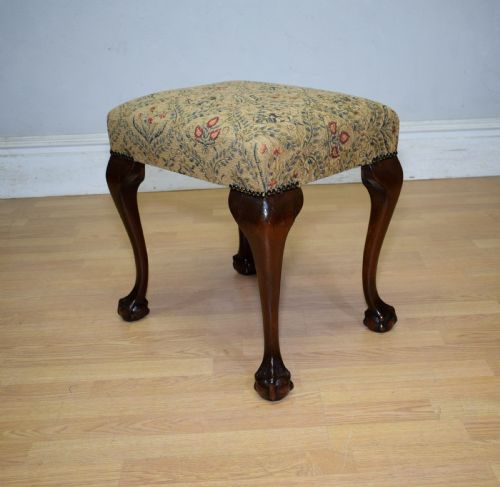
Cabinet makers built these seats using solid hardwoods such as mahogany and walnut, occasionally employing ebonised wood for a dark finish. Frames often featured carved details like ball and claw feet or subtle inlay work.
Upholstery completed the piece, utilising traditional fabrics and leather stretched over padded tops. Many designs incorporated brass hardware for hinges or revolving mechanisms to adjust height.
Traditional Upholstered Piano Seat Retail Price Guide 2026
Typical asking prices for traditional upholstered piano seat among the pieces listed under this phrase on Sellingantiques today, from the lower quarter to the upper quarter. They describe what is for sale here now, not the wider market.
Some nineteenth-century makers included hidden compartments beneath revolving seats for small tuning keys.
What varies in quality
The refinement of the woodwork dictates much of the distinction between pieces, with crisp carvings and thoughtful joinery setting finer examples apart. Secondary details like inlaid wood and substantial brass hardware elevate the overall construction.
The integrity of the frame and the quality of the timber selection determine long-term durability. Rich grain patterns in the mahogany and walnut demonstrate a more deliberate choice of material by the maker.
The Traditional Upholstered Piano Seat Glossary
- Duet stool
- A wider bench designed to accommodate two players at the keyboard simultaneously. These often feature lift-up lids for sheet music storage.
- Revolving piano stool
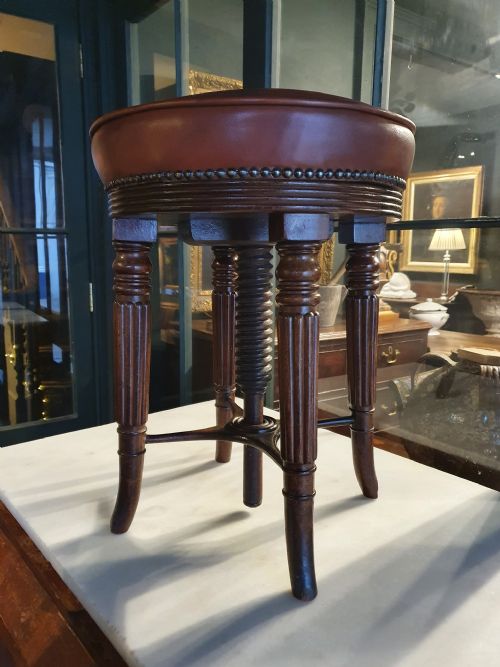
- A seat featuring a threaded spindle mechanism allowing the player to adjust their sitting height by spinning the top. These typically stand on a central pillar with tripod legs.
- Ebonised wood
- Timber treated with a finish to imitate expensive ebony wood. This technique gained popularity during the Victorian period for formal furnishings.
- Ball and claw
- A furniture foot carved to resemble a bird's talon gripping a ball. This motif appears frequently on revival pieces inspired by earlier furniture styles.
Traditional Upholstered Piano Seat: Frequently Asked Questions
Are these seats comfortable for daily sitting?
Most traditional upholstered piano seats offer firm support rather than deep cushioning, as players require a stable posture while performing.
Over time, the original padding may settle, so buyers seeking a softer daily seat often choose to refresh the interior padding.
Can I store music inside the seat?
Many piano benches include a hinged lid that opens to reveal a compartment beneath the upholstery. This space was originally intended for holding sheet music and practice books.
Duet stools frequently utilise this lift-up design, offering ample room for storage.
How do I date an Edwardian piano stool?
Edwardian pieces often display lighter mahogany timbers, delicate inlay work, and stylistic influences from earlier periods like Queen Anne or Chippendale. These items typically date from the turn of the twentieth century.
Examining the underside and the joinery helps confirm the period of construction.