

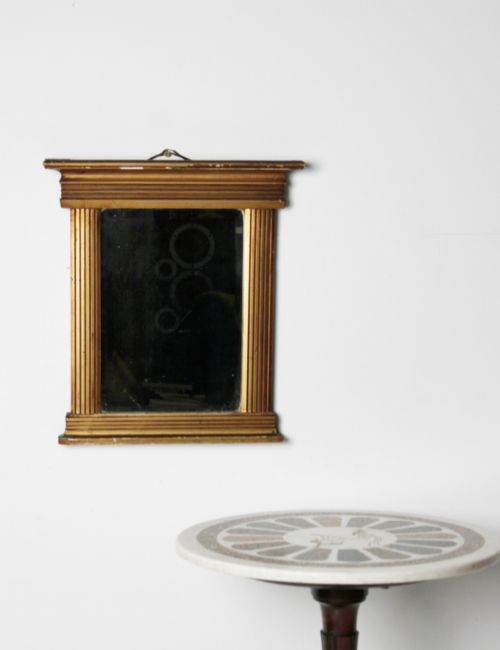

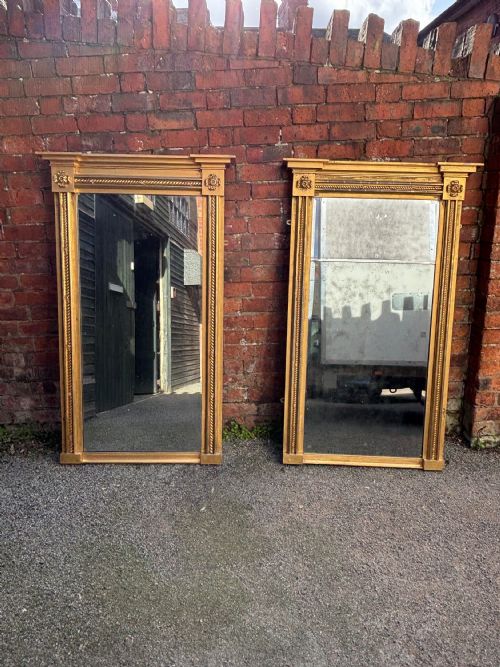


Regency Pilaster Wall Mirror
A regency pilaster wall mirror brings architectural clarity and rich gilding to a room, offering both depth and proportion.
Regency Pilaster Wall Mirror
A regency pilaster wall mirror draws on architectural forms, featuring classical columns or pilasters framing the reflective glass. These pieces originate mainly from the nineteenth century, including the Regency and George IV periods.
Most examples found on this page take the form of pier mirrors or overmantel mirrors designed to hang between windows or above fireplaces. They combine classical restraint with the decorative presence characteristic of the era.
Makers of the period utilised formats ranging from small hanging hall mirrors to large overmantels, often incorporating decorative panels above the glass. The style reflects strong Neoclassical and Empire influences.
How they were made
The construction relies on timber frameworks of softwood, mahogany, or walnut, which serve as the base for applied ornament. Carved details sit alongside composition mouldings to create crisp architectural lines.
Giltwood finishes dominate the surviving pieces, laid over gesso preparation, while other examples employ faux marble paint or partial gilding. Eglomise decoration frequently appears in the upper glass panels, adding depth through reverse painting on glass.
Regency Pilaster Wall Mirror Retail Price Guide 2026
Typical asking prices for regency pilaster wall mirror among the pieces listed under this phrase on Sellingantiques today, from the lower quarter to the upper quarter. They describe what is for sale here now, not the wider market.
Neoclassical and Empire influences appear across these pieces, pairing classical pilasters with verre eglomise decoration and faux marble paint.
What varies in quality
Quality reveals itself in the crispness of the carved ornament and the depth of the gilding over the gesso preparation. Finer pieces maintain balanced proportions between the framing pilasters and the central glass.
The treatment of secondary materials, such as the execution of eglomise panels or faux marble paint effects, distinguishes standard production from more ambitious workshop pieces. Original glass plates and intact structural joinery also elevate the standing of a mirror.
The Regency Pilaster Wall Mirror Glossary
- Pilaster
- A rectangular column that projects slightly from a wall, forming a key structural element in the framing of these mirrors. It provides the architectural discipline typical of Neoclassical design.
- Verre eglomise
- A technique involving cold painting and gilding on the reverse of glass. This process creates decorative friezes often seen in the upper sections of pier mirrors.
- Pier glass
- A tall mirror designed specifically to hang on the wall space between two windows. These pieces often match the height of the surrounding architectural joinery.
- Composition
- A moulded mixture of whiting, resin, glue and oil pressed into decorative relief ornaments. It allowed workshops to produce complex classical motifs efficiently during the nineteenth century.
- Gesso
- A plaster-like mixture applied to timber frames to provide a smooth surface for gilding. Its thickness and preparation determine how sharply the underlying ornament catches the light.
Regency Pilaster Wall Mirror: Frequently Asked Questions
Where should I hang a pier mirror?
Pier mirrors work best on narrow wall spaces, traditionally between windows or above low console tables. Their vertical proportions help draw light into darker corners of a room.
Ensure the wall construction can support the weight of a giltwood frame, using appropriate fixings to secure the mirror safely at eye level.
How do I identify a Regency mirror?
Look for architectural motifs such as reeded pilasters, classical cornices, and Neoclassical detailing. The proportions tend to be rigorous and balanced, reflecting the taste of the early nineteenth century.
Materials typically include giltwood over gesso on softwood, sometimes paired with mahogany frames or eglomise glass panels.
What is an eglomise panel?
An eglomise panel is a section of glass decorated on the reverse with gold leaf and black paint. These panels sit above the main mirror plate to add decorative contrast.
They often feature classical landscapes, urns, or geometric patterns typical of Empire and Regency design.
Are these mirrors suitable for bathrooms?
Antique giltwood and painted mirrors are sensitive to high humidity and moisture. Placing them in damp environments can damage the delicate gesso and gilding.
Keep these pieces in dry reception rooms, hallways, or bedrooms where the atmospheric conditions remain stable.
How do I clean the glass safely?
Apply a mild glass cleaner to a soft cloth rather than spraying the mirror directly. This prevents moisture from seeping behind the plate or damaging the surrounding frame.
Take care to keep cleaning liquids away from the giltwood edges and any reverse-painted glass panels.