
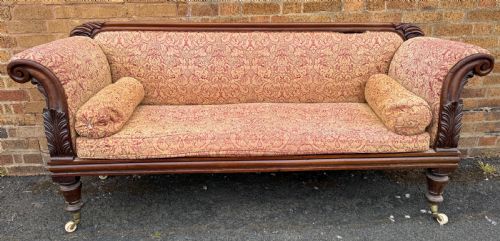


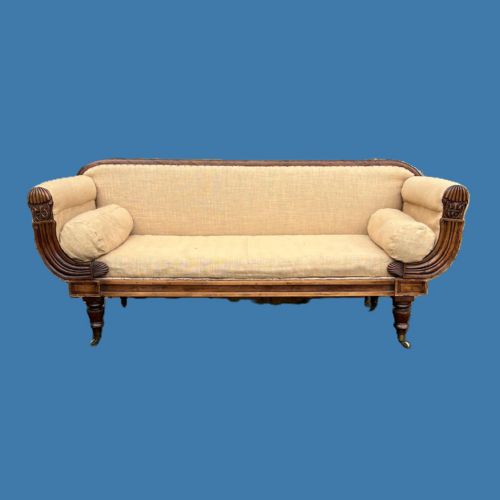
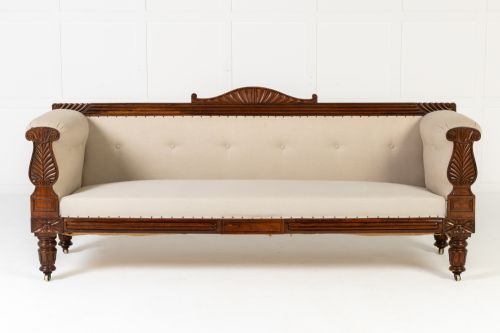


Regency Period Scroll Sofa
A regency period scroll sofa brings dramatic neoclassical lines to a drawing room, offering sweeping scroll arms and rich timbers.
Regency Period Scroll Sofa
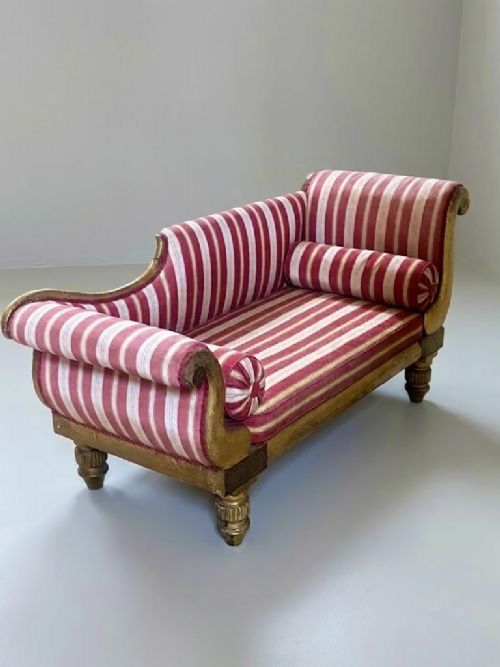
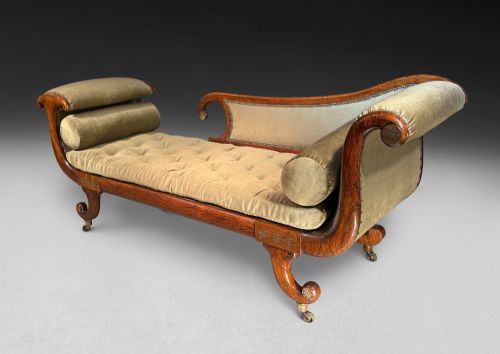
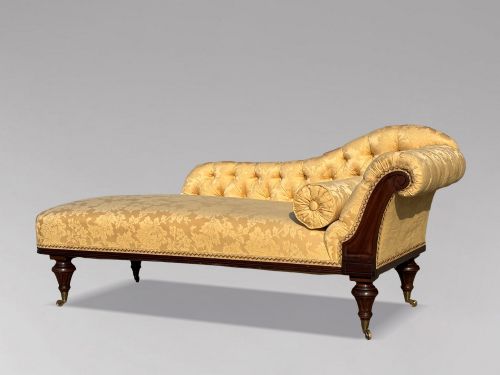
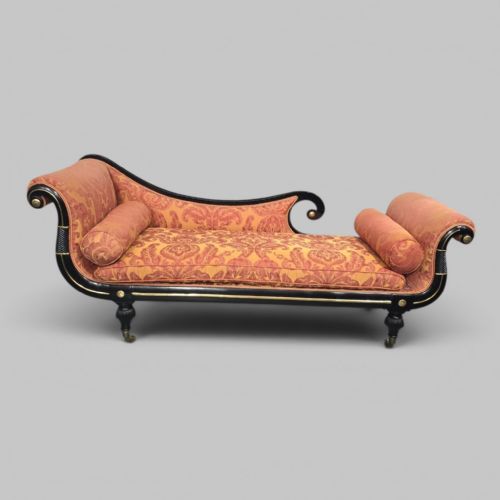
A regency period scroll sofa sits at the intersection of classical revival design and early nineteenth-century comfort, taking the form of a low settee or chaise longue with distinctive sweeping ends. The pieces found here span the nineteenth century, including specific variants from the Regency, George IV, and William IV periods.
Most examples present timber frames in mahogany, rosewood, simulated rosewood, or ebonised wood, frequently enhanced by brass inlay or delicate carved details. The seating arrangements range from traditional two-seat settees and large four-seater options to single-ended or double-ended daybeds and chaise longues.
Buyers seeking a regency period scroll sofa will encounter country house proportions alongside more formal drawing room pieces, occasionally accompanied by related side and work tables. The overarching character relies on sculptural timber scrollwork and sophisticated upholstery schemes.
Assessing Quality and Execution
The sophistication of the timber grain and the crispness of any carved scrollwork determine the visual standing of a piece. Finer examples display meticulously fitted brass inlay and carefully selected figure in the mahogany or rosewood veneers.
Proportion and scale dictate the success of the silhouette, where harmonious curves on double-ended frames outclass heavier, clumsier joinery. The integration of the show frame with the upholstered body marks the distinction between standard production and master cabinetmaking.
Object forms span standard sofas, double-ended settees, lyre-shaped designs, and chaise longues from the Regency, George IV, and William IV periods.
The Regency Period Scroll Sofa Glossary
- Scroll sofa
- A seating form featuring outward-curving arms or ends reminiscent of ancient classical furniture. These scrolls define the architectural silhouette characteristic of the early nineteenth century.
- Chaise longue
- An upholstered chair with a long seat intended for reclining, often combining the characteristics of a sofa and a single-ended daybed. It functions as a prominent day furniture piece.
- Simulated rosewood
- A painted or stained finish applied to a less costly timber to imitate the rich grain and deep colour of genuine rosewood. Craftsmen utilised this technique extensively during the Regency era.
- Ebonised wood
- Timber treated with a dark finish to resemble ebony. This treatment creates a formal, high-contrast appearance against gilt or brass details.
- Brass inlay
- Thin strips or motifs of brass embedded directly into the wooden surface of the furniture. It creates geometric or classical patterns along the frame.
Regency Period Scroll Sofa: Frequently Asked Questions
What defines a regency period scroll sofa?
A regency period scroll sofa is characterised by its distinctive outward-curving arms and classical proportions, typically dating from the early nineteenth century.
These pieces utilise rich timbers like mahogany and rosewood, often featuring show frames designed for prominent drawing room placement.
How do I distinguish between Regency and William IV pieces?
Regency designs tend to favour lighter, crisper neoclassical lines with delicate brass inlay and refined mahogany or simulated rosewood surfaces.
William IV pieces generally appear heavier and more robust, featuring bolder carved mahogany frames and deeper scrollwork.
Where should I place a scroll sofa in a home?
These sofas suit formal drawing rooms, large living spaces, or grand hallways where their sculptural frames can be viewed from multiple angles.
Single-ended chaise longues work effectively as standalone daybeds or reading seats against a main wall.
What maintenance do these antique sofas require?
Regular dusting with a soft, dry cloth protects the polished timber surfaces and prevents dust accumulation in carved crevices.
Upholstery care depends on the specific fabric used, requiring gentle professional cleaning and protection from direct sunlight.