





Regency Period Etagere
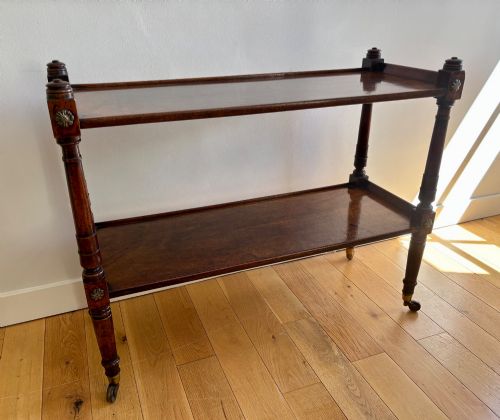
Regency period etagere pieces are tiered display and storage furniture designed for elegance, mostly meeting the eye as mahogany and rosewood what-nots.
Regency Period Etagere
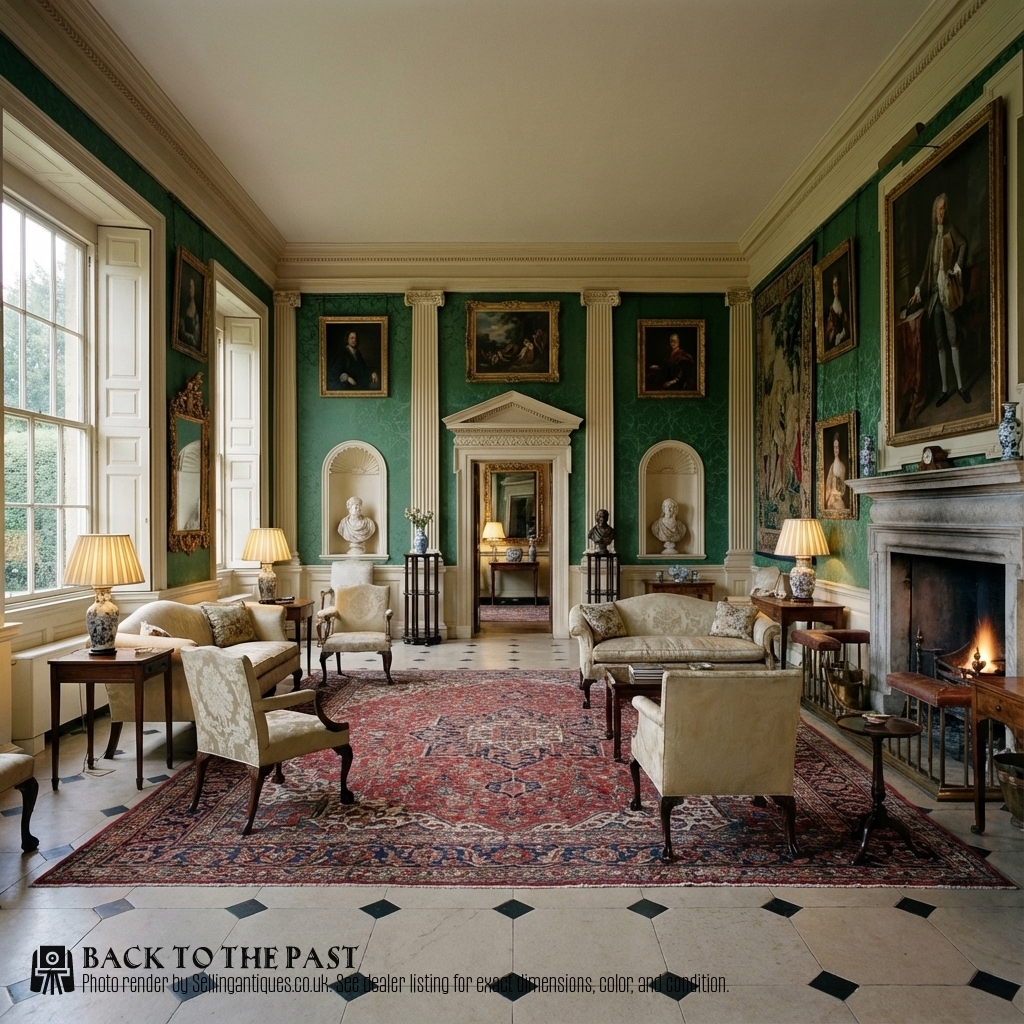
A regency period etagere functions primarily as a tiered shelving unit or what-not, serving to display books, ceramics, and ornaments in formal rooms. These pieces emerged principally during the Regency, George IV, and William IV eras of the early nineteenth century.
Makers and cabinetmakers of the period constructed these tiered stands in various woods, matching the refined domestic interiors of Georgian and nineteenth-century households. Buyers frequently encounter them listed interchangeably as what-nots, bookcases, buffets, or display stands.
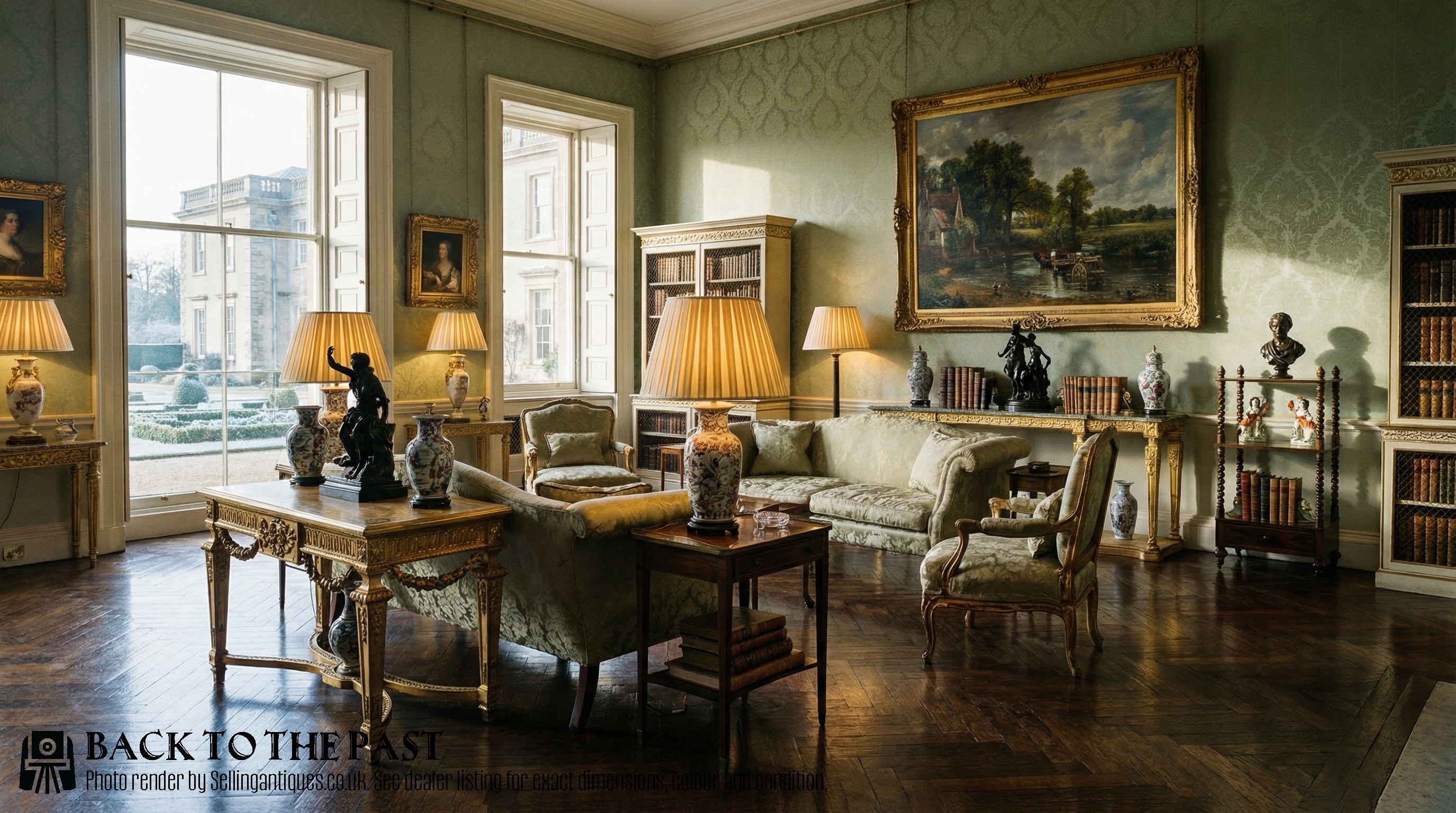
Factors that separate the finer examples
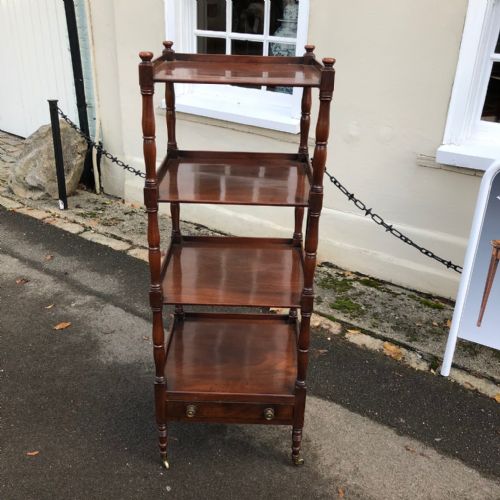
Quality rests significantly on the choice of timber, where richly figured mahogany or dense rosewood elevates a piece above standard oak or plain stock. Finer execution shows in the crispness of the turned supports, the tightness of the shelf joints, and the retention of original brass details.
Proportion and scale dictate the visual success of the piece, with smaller, more versatile end-table formats and matched pairs holding particular distinction. Subtle enhancements such as integrated drawers or unusual tripartite forms demonstrate superior workshop output.
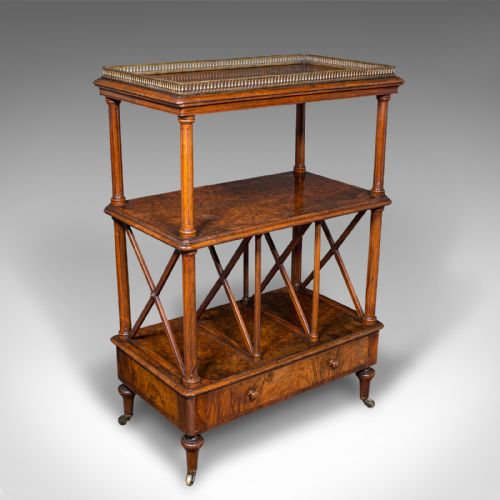
Cabinetmakers occasionally packed multiple functions into a single frame, creating hybrid pieces that served simultaneously as bookshelves, display stands, and folio holders.
Gillows
The Regency Period Etagere Glossary
- Etagere
- A piece of furniture consisting of a set of open shelves for displaying small objects. The form became popular in the early nineteenth century.
- What-not
- An alternative name for an etagere, commonly used in English inventories. It describes a tiered stand for books and ornaments.
- Canterbury
- A low stand with partitioned vertical sections, frequently incorporated into the base of these units for holding music or folios. This addition increased the utility of the standard etagere.
- Regency
- The period in British history from 1811 to 1820, though the style extended through the reigns of George IV and William IV. Furniture from this era is characterised by classical restraint and rich veneers.
- Burr walnut
- A prized timber cut from the wart-like growths on walnut trees, yielding intricate, swirling grain patterns. Cabinetmakers used it for decorative veneer on high-status surfaces.
Regency Period Etagere: Frequently Asked Questions
What is a regency period etagere used for?
These tiered stands served primarily for displaying ornaments, ceramics, and books within principal rooms. Their open shelves allowed owners to exhibit portable decorative items.
Over time, households adapted them for various storage needs, sometimes incorporating drawers or lower compartments for folios and music sheets.
How do I identify a genuine regency etagere?
Look for timber selection typical of the early nineteenth century, such as solid mahogany, rosewood veneers, or oak framing. Construction details like hand-cut joints and period brass hardware offer key indicators of age.
Proportions generally follow the classical design vocabulary associated with the Regency, George IV, and William IV periods.
Are etageres and what-nots the same thing?
In historical and modern furniture trade terminology, the two terms often describe the same type of tiered shelving unit. Etageres frequently emphasise display, while what-not served as the common English term.
Listings often combine both words to encompass multi-shelf units designed for domestic display and storage.
How do these pieces fit into modern homes?
Their compact tiered footprint allows them to sit beside seating or against walls without occupying excessive floor space. They provide vertical display surfaces for collections, plants, or lamps in contemporary settings.
Smaller three-tier formats function effectively as bedside tables or end tables while retaining historical character.
What wood types appear most frequently?
Mahogany forms the majority of surviving pieces, valued for its stability and deep reddish-brown tone. Rosewood also appears regularly, often displaying prominent figuring on the shelf surfaces.
Occasional examples utilise burr walnut, oak, or brass framing to achieve distinct visual finishes.