
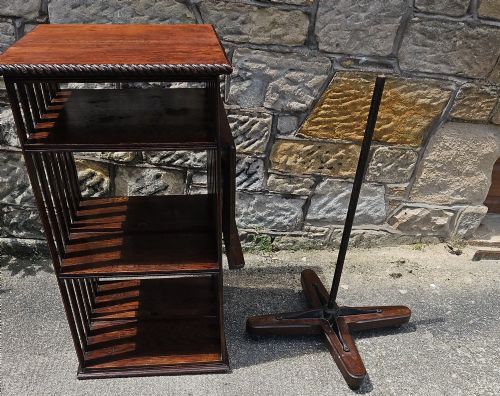
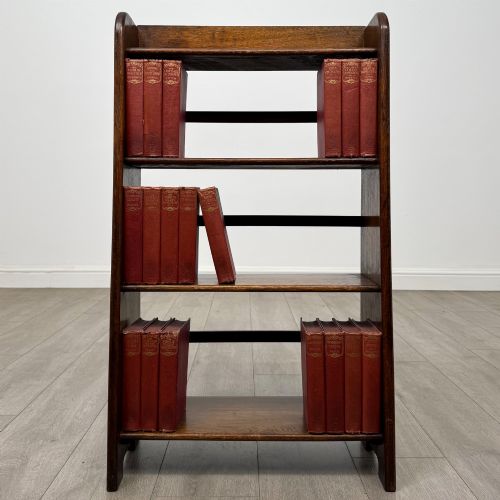
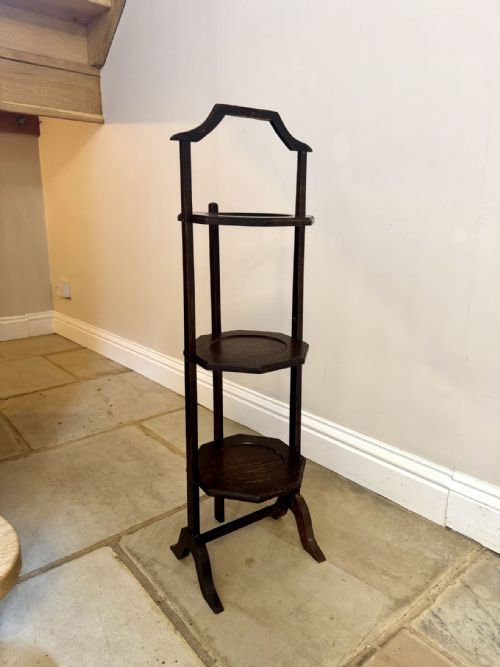


Three Tier Oak Stand
A three tier oak stand brings layered display to a room, offering practical surface space across successive levels of timber.
Three Tier Oak Stand
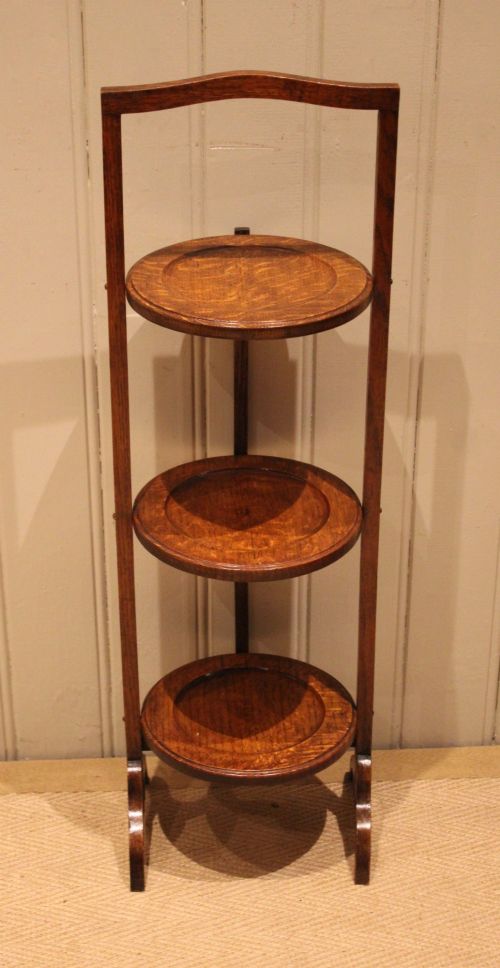
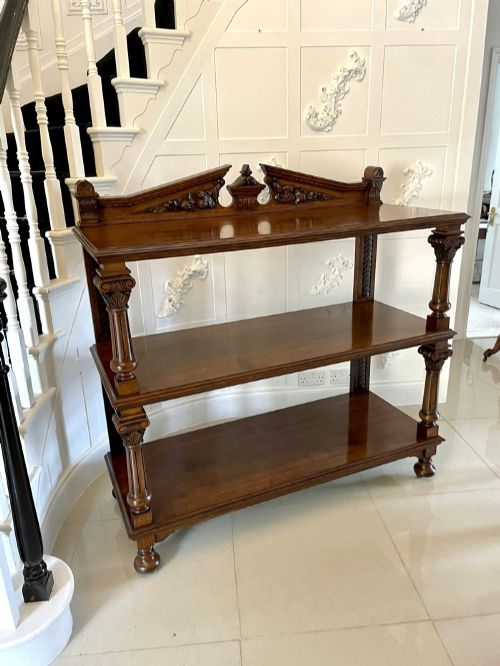
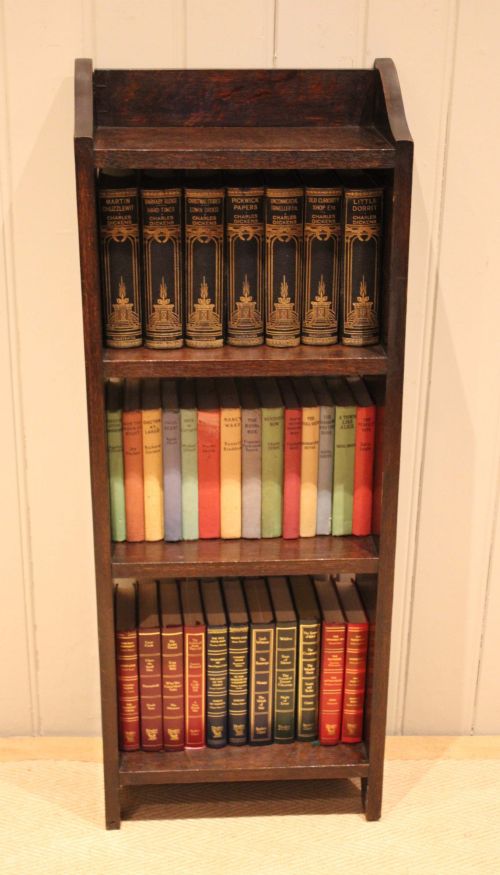
A three tier oak stand provides three distinct levels for display or utility, taking various structural forms across domestic interiors. These pieces appear frequently as folding cake stands, side tables, dumbwaiters, and etageres from periods spanning the nineteenth and twentieth centuries.
The version most commonly encountered on this page is the Edwardian or nineteen-twenties folding cake stand in oak. Such pieces combine tiered utility with a collapsible frame designed for easy storage when not in use.
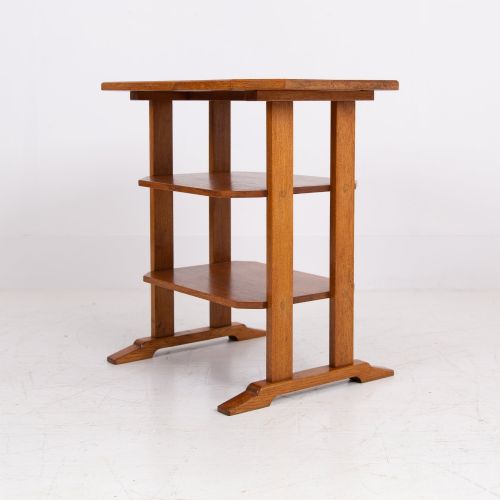
Other forms appearing in this category include nineteenth-century dumbwaiters, Regency octagonal whatnots, and Cotswold School side tables. Each style adapts the basic three-tier layout to specific domestic functions, from dining service to book storage.
How they were made
Construction relies primarily on oak and solid oak, occasionally augmented by pollard oak or combined with materials such as brass, cast iron, iron, marble, and cane. Makers employed traditional joinery to secure the multiple tiers to upright supports or folding scissor mechanisms.
Surface detailing ranges from plain timber finishes to carved decoration, reflecting the aesthetic preferences of periods from the Regency era through the Arts and Crafts movement. Hardware components such as brass brackets or iron fittings appear on specific structural variants.
Materials recorded across the inventory include solid oak, pollard oak, marble, brass, and canework.
What varies in quality
Quality in these stands is determined by the selection of the timber and the precision of the construction across all three tiers. Solid oak variants show greater structural integrity than those built with lesser materials.
The refinement of the joinery and any decorative carving separate standard production pieces from finer examples associated with specific design movements or known makers.
Liberty and Co
The Three Tier Oak Stand Glossary
- Etagere
- A piece of furniture consisting of a set of open shelves for small objects or ornaments. These tiers provide vertical display space.
- Dumbwaiter
- A tiered piece of furniture traditionally used for serving food or holding tableware. Nineteenth-century examples often feature heavy timber construction.
- Whatnot
- An open set of shelves used for displaying ornaments or books. Regency variants frequently adopt geometric forms such as octagons.
- Pollard oak
- Oak timber obtained from trees that have been pollarded, producing a characteristic decorative grain pattern. This material appears on select nineteenth-century pieces.
Three Tier Oak Stand: Frequently Asked Questions
What are three tier oak stands used for?
These stands serve multiple domestic purposes depending on their specific form. Folding versions were traditionally used for serving afternoon tea or holding cakes.
Other variants such as whatnots and etageres function as display surfaces for books and ornaments across living spaces.
How do I date a three tier oak stand?
Dating relies on identifying stylistic markers associated with periods such as the Regency era, the Victorian period, or the Edwardian years. Construction techniques and hardware also offer clues to the age of the piece.
Edwardian folding stands often feature lighter timber frames, whereas nineteenth-century dumbwaiters utilise heavier solid construction and distinct turning.
Are folding cake stands stable?
Folding cake stands utilise hinged scissor actions or pivoting frames designed to lock into position when opened. When properly adjusted, they provide a secure platform for light items.
Wear to the central pivot points can occur over time, which affects the rigidity of the tiered shelves.
How do I care for oak furniture?
Oak surfaces benefit from occasional dusting with a soft cloth and minimal exposure to direct sunlight or sudden temperature changes. This preserves the natural finish of the timber.
Applying appropriate wax polishes helps maintain the lustre of the wood without building up heavy residue.