


Wooden Muffin Stand
A wooden muffin stand offers tiered service for tea, bringing practical elegance to the table.
Wooden Muffin Stand
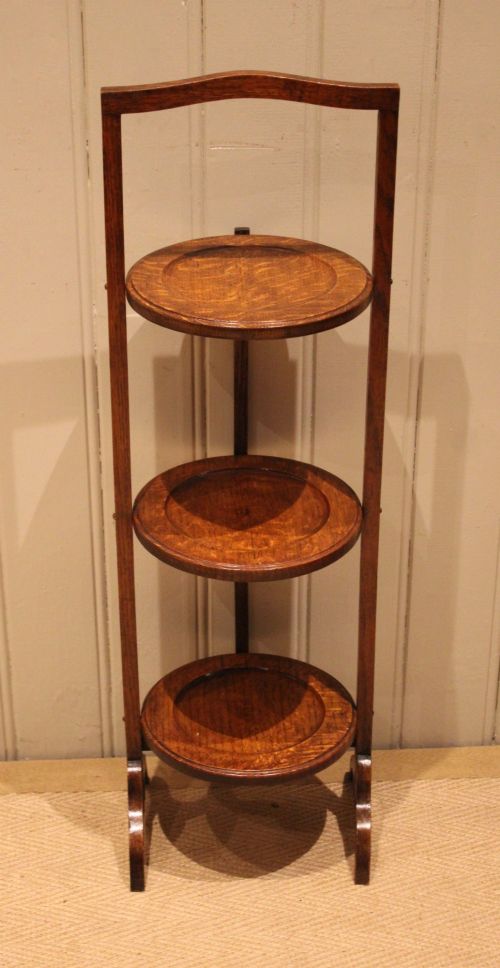
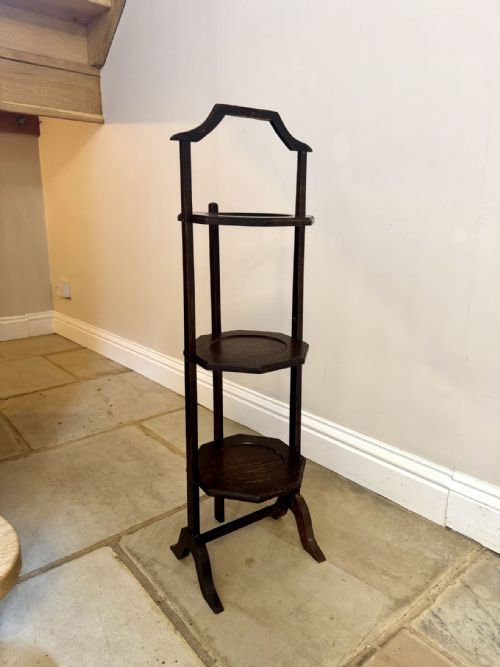
A wooden muffin stand provides vertical tiered space for serving cakes and small baked goods during tea. The examples gathered under the wooden muffin stand label include Edwardian pieces and items from the nineteenth century up to 1920.
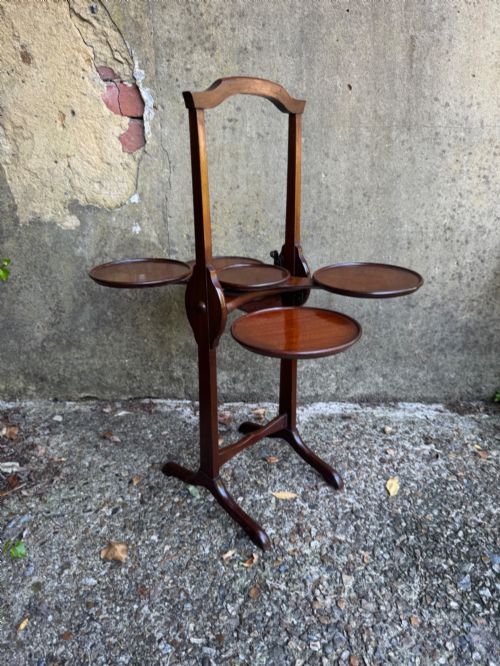
The forms on this page span cake stands and tiered stands in multi-tier formats, including three-tier and four-tier layouts. Folding mechanisms appear frequently alongside fixed standing designs.
Makers shaped these pieces during the Edwardian period and the early twentieth century, utilising traditional furniture forms to solve the problem of serving space. These items serve modern homes just as they served earlier dining rooms.
Materials and construction
Makers relied on mahogany and oak as the primary timbers, occasionally incorporating satinwood and walnut for surface variety. Brass fittings and metal elements often secure the folding mechanisms and tier joints.
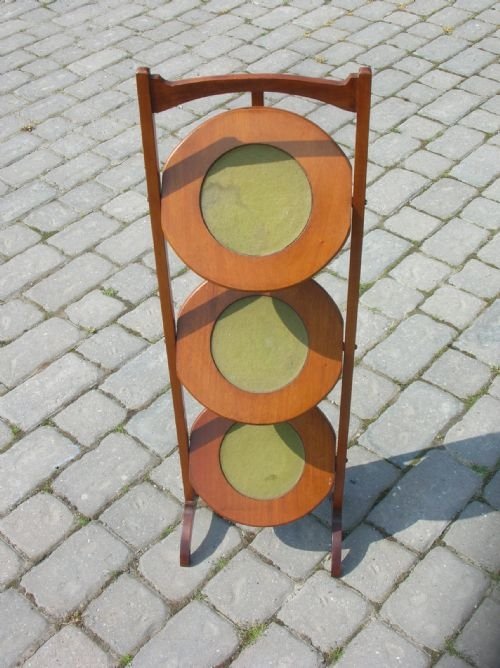
Surfaces sometimes include felt inserts to cushion the tiers. Woodturning and joinery form the structural backbone of these tiered stands, allowing multi-tier frames to support weight securely.
Some folding stands feature tiny felt pads on the tiers, ensuring your crumpets land on a soft, civilised surface.
Distinguishing quality
The choice of timber creates a clear distinction across the range, with figured mahogany and finely grained oak sitting above simpler utility woods. Subtle decorative inlays like satinwood elevate specific pieces.
The precision of the folding action and the stability of the tiers demonstrate the joiner's skill. Solid brass hardware rather than plated base metals marks out the better examples.
The Wooden Muffin Stand Glossary
- Tiered stand
- A piece of furniture featuring multiple horizontal surfaces arranged vertically to hold items. These structures maximise tabletop space.
- Folding cake stand
- A collapsible stand designed to fold flat for storage when not in use. Hinges and pivots allow the frame to collapse.
- Edwardian
- The period spanning the reign of King Edward VII from 1901 to 1910. Furniture from this era often lighter in proportion than Victorian pieces.
- Satinwood
- A durable hardwood with a lustrous yellowish grain used for decorative banding and inlay. It provides a bright contrast against darker timbers.
Wooden Muffin Stand: Frequently Asked Questions
What is a wooden muffin stand?
A wooden muffin stand is a tiered piece of furniture designed to hold cakes, pastries, or small breads during tea service.
These pieces use multiple levels to present food without crowding the main dining table.
How do folding tiers work?
Folding tiers rely on hinged wooden arms or scissor-like pivots that allow the shelves to collapse together.
This mechanism lets the stand fold flat against itself for easy storage in a cupboard or corner.
What woods were used?
Makers constructed these stands primarily in mahogany and oak, with occasional examples in walnut or satinwood.
Brass hardware and felt pads were frequently added to assist with movement and protect the wood surfaces.
How do I date a stand?
Dating relies on timber choice, construction style, and hardware details like brass screws and hinges.
Edwardian pieces often show lighter proportions compared to heavier nineteenth-century furniture.