

Oak Tier Stand
An oak tier stand brings practical multilevel display to a room, offering sturdy timber surfaces for books, plants, and smaller domestic objects.
Oak Tier Stand
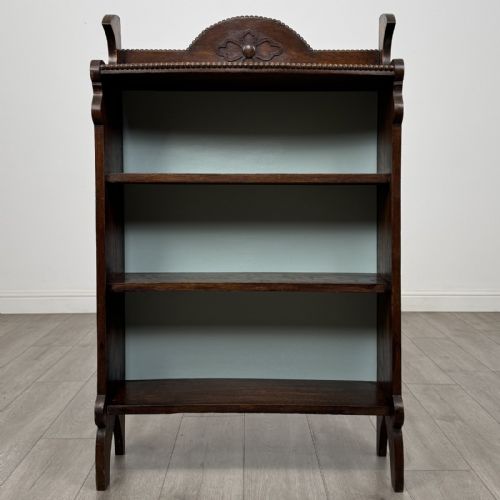
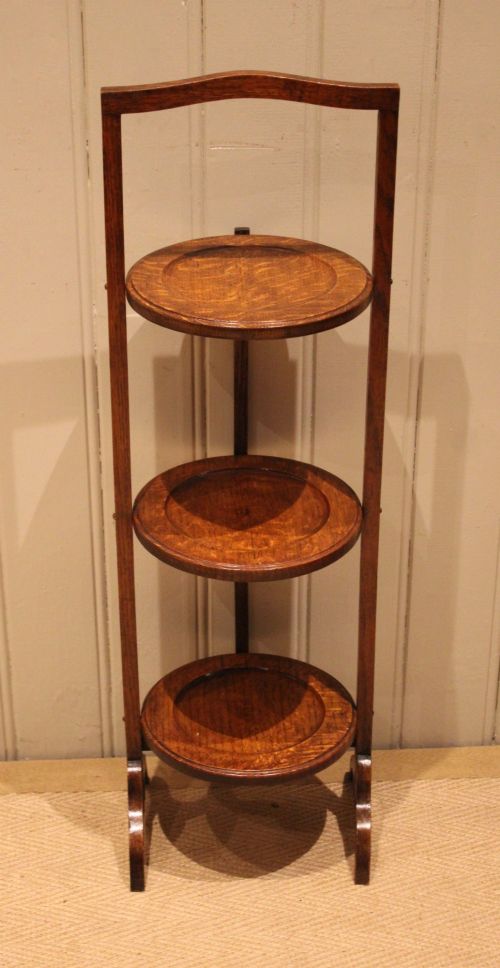
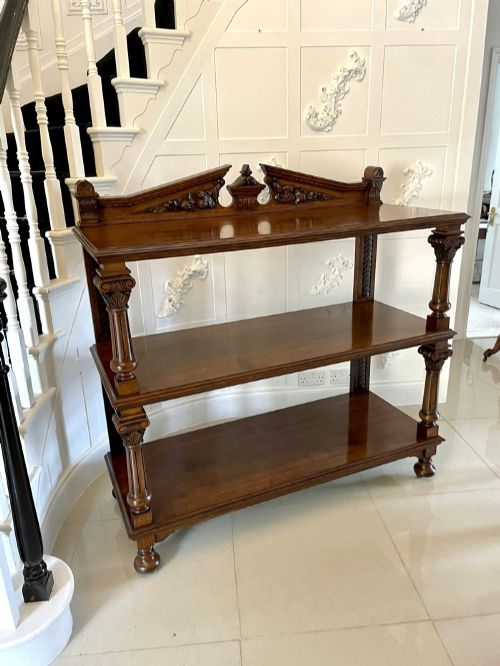
When searching for an oak tier stand, a buyer encounters a utilitarian form designed to maximise vertical display space without dominating a floor plan. The pieces seen across these periods and styles range from multi-tiered side tables and cake stands to bookcases, dumbwaiters, and plant stands.
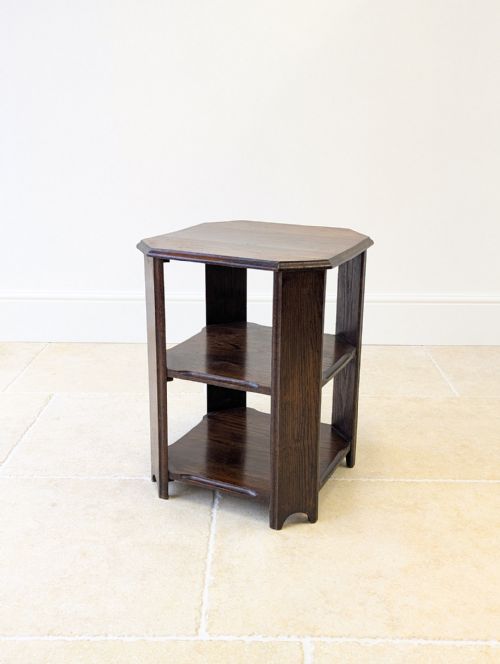
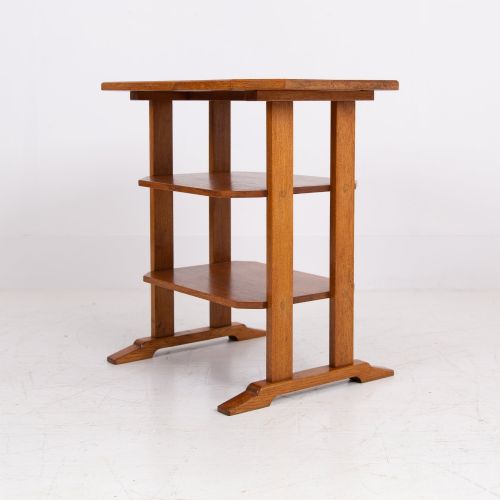
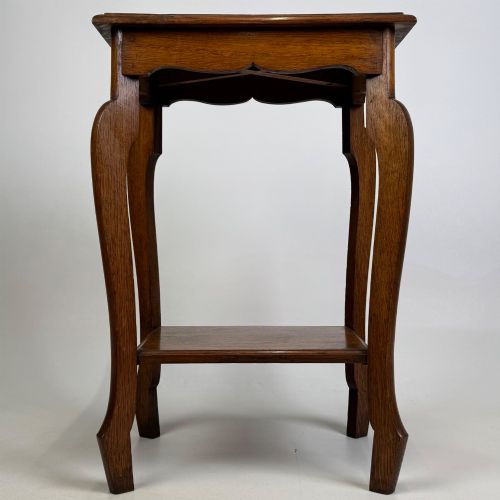
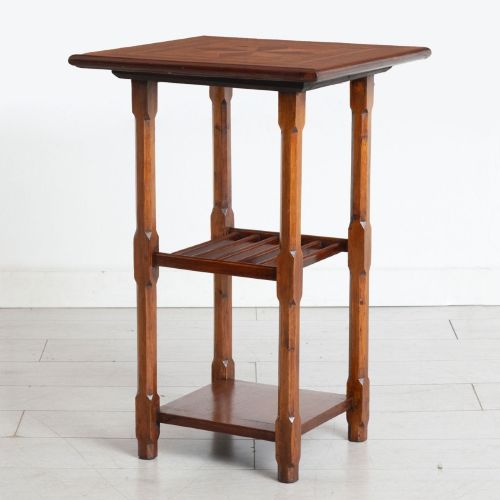
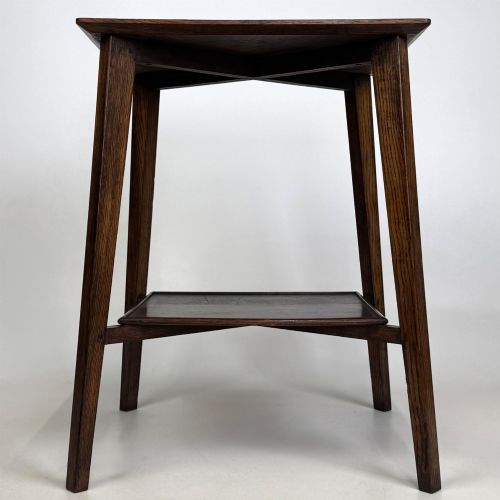
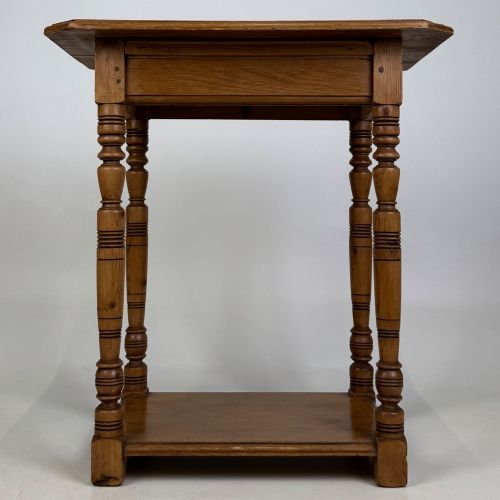
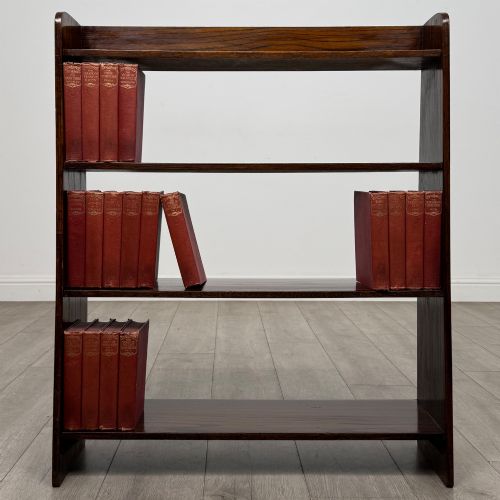
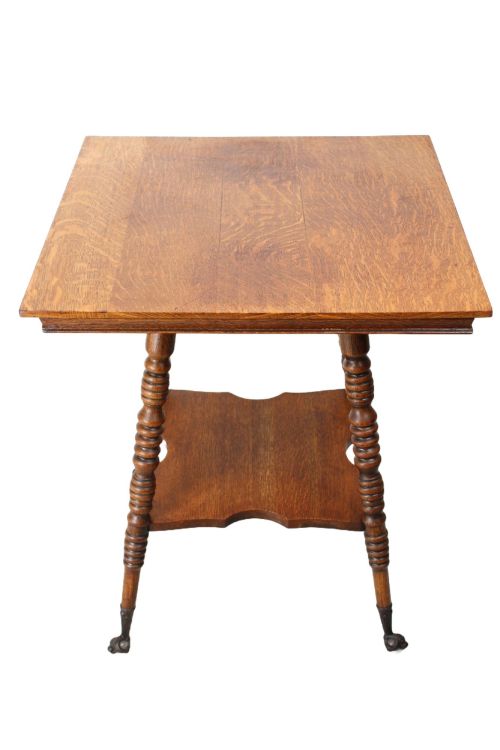
The version most frequently met on this page is the Edwardian or Arts and Crafts multi-tier table, constructed with shelves arranged above one another to hold books, ceramics, or small decorative items. These multi-level pieces draw on stylistic movements from the late nineteenth century through to the nineteen-twenties.
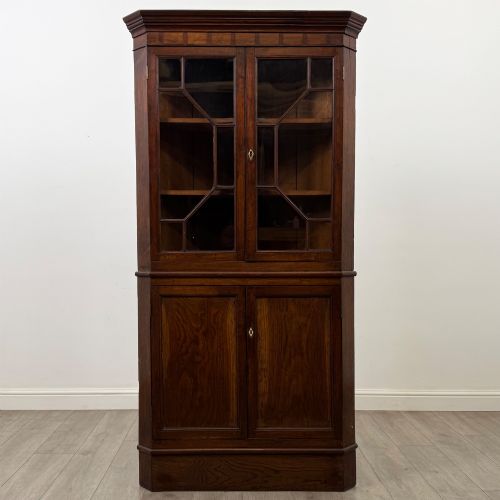
Other variations appearing in the record include corner cabinets, library carts, and folding stands utilising two, three, or four tiers. Across these varied formats, the underlying purpose remains consistent: providing accessible horizontal surfaces arranged vertically in domestic interiors.
What varies in quality
Quality in these pieces is dictated by the selection of timber, the weight and stability of the frame, and the precision of the joinery. Heavier solid oak construction with thoughtful grain matching separates standard production items from finer workshop pieces.
The integration of secondary materials, such as hand-painted tiles, cast brass hardware, or carved detailing, distinguishes standard utility items from higher-status design expressions originating from prominent retail houses.
Oak Tier Stand Retail Price Guide 2026
Typical asking prices for oak tier stand among the pieces listed under this phrase on Sellingantiques today, from the lower quarter to the upper quarter. They describe what is for sale here now, not the wider market.
The listings show oak tier stands spanning the Georgian period, the Victorian era, the Edwardian years, and the Arts and Crafts movement.
Liberty and Co·William Birch
The Oak Tier Stand Glossary
- Tier stand
- A piece of furniture featuring multiple horizontal surfaces arranged vertically above one another. These are designed to hold objects while taking up minimal floor space.
- Arts and Crafts
- A design movement spanning the late nineteenth and early twentieth centuries emphasising handcraftsmanship, simple forms, and visible construction methods. Pieces from this tradition often display honest joinery and vernacular oak timber.
- Dumbwaiter
- A multi-tiered serving piece or side table traditionally used for holding dishes or books. In oak, these structures provide sturdy stacked surfaces for domestic use.
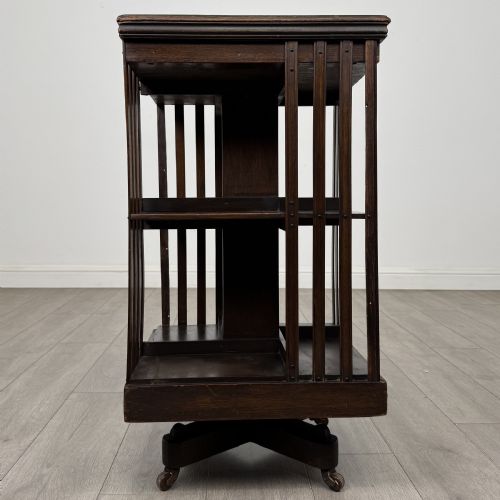
- Revolving bookcase
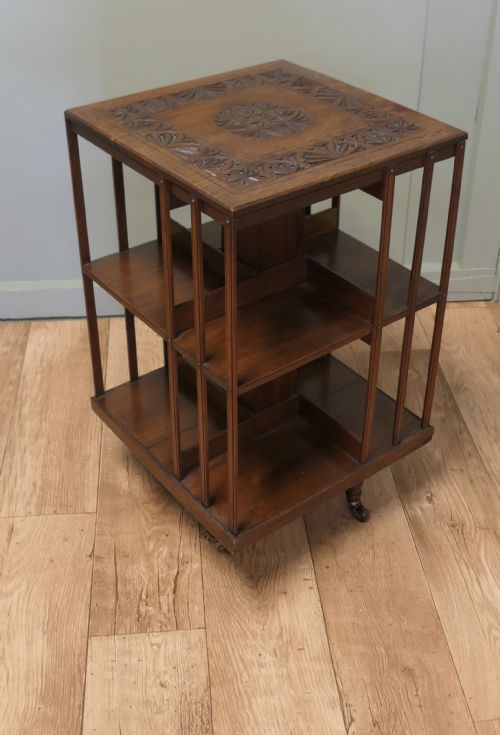
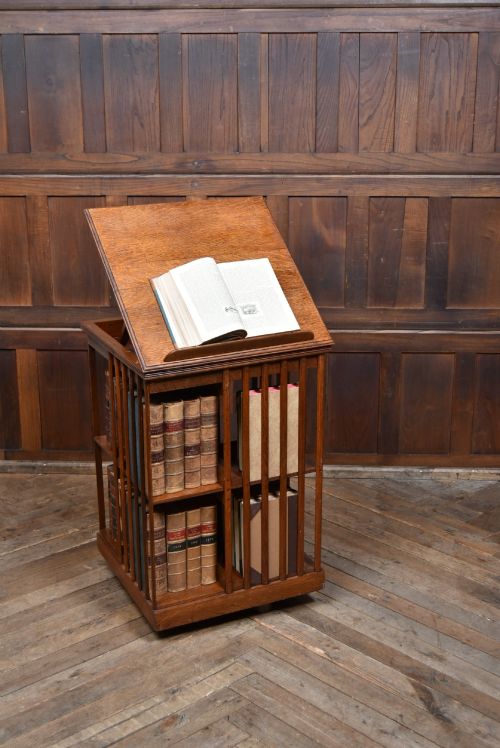
- A freestanding tiered bookcase mounted on a central pivot allowing the entire unit to turn. This form provides easy access to books stored across multiple compartments.
- Torchere
- A tall stand or pedestal originally intended to support a candle or lamp. In oak, these tall single or multi-level stands often display turned uprights or bobbin legs.
Oak Tier Stand: Frequently Asked Questions
What rooms suit an oak tier stand best?
These pieces fit naturally into living rooms, studies, and hallways where extra surface area is required without adding bulk. Their vertical format makes them particularly useful beside armchairs or in awkward corners.
Because the footprint remains small, they integrate easily alongside existing furniture while providing dedicated space for books, plants, or decorative items.
How do I identify an Arts and Crafts tier stand?
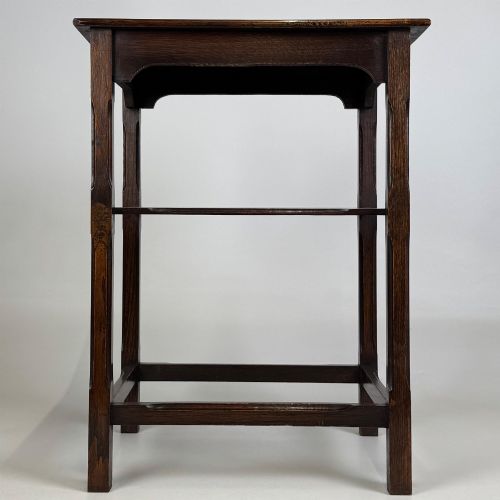
Arts and Crafts examples usually display straightforward construction, honest joinery, and minimal applied ornamentation. The focus remains on the natural grain of the oak timber and the structural form itself.
Look for pegged joints, chamfered edges, and architectural simplicity that prioritises utility over decorative excess.
Can a tier stand support heavy books?
Solid oak versions built with sturdy uprights and fixed shelves handle heavy volumes reliably. Lighter folding or occasional variants are better suited to lighter display items.
Examining the thickness of the timber shelves and the rigidity of the frame will indicate the weight capacity of an individual piece.
How do Edwardian tier stands differ from Victorian ones?
Victorian stands tend to feature heavier proportions, darker finishes, and more elaborate carved or turned details. Edwardian and later pieces frequently exhibit lighter framing and simpler lines influenced by the Arts and Crafts aesthetic.
Examining the turning on the legs and the overall scale helps distinguish the heavier nineteenth-century examples from the lighter twentieth-century interpretations.