
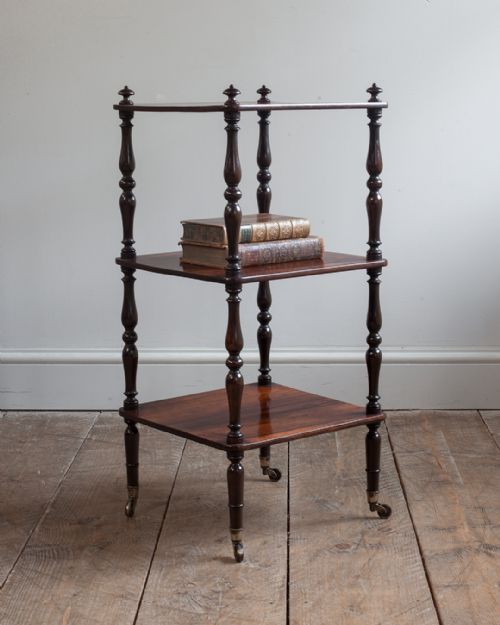
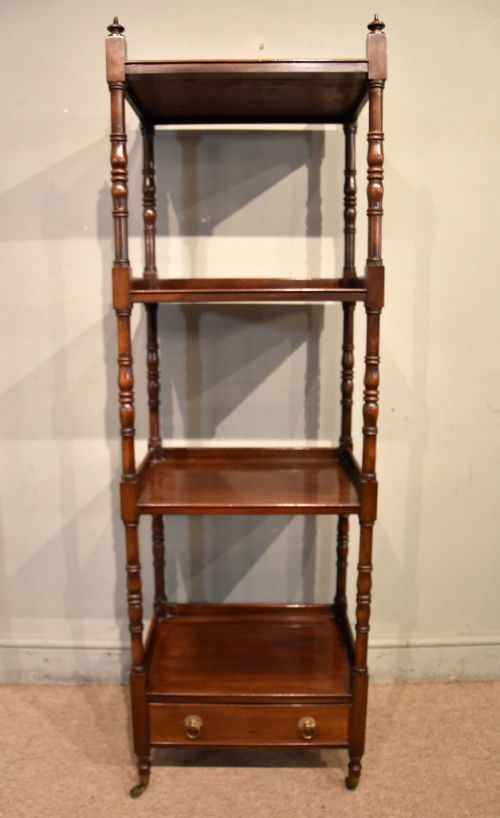
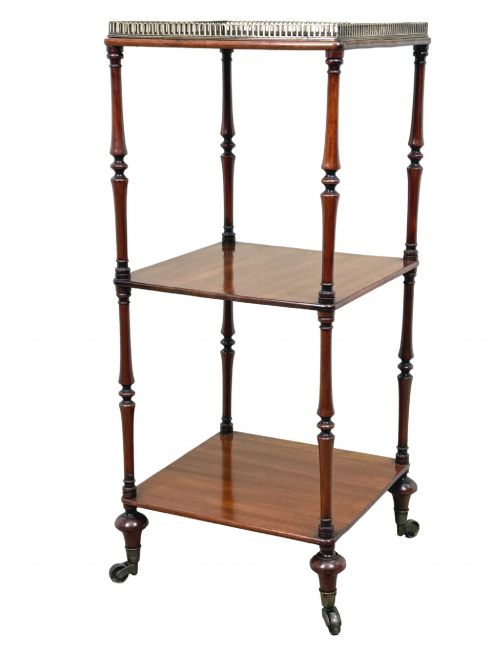
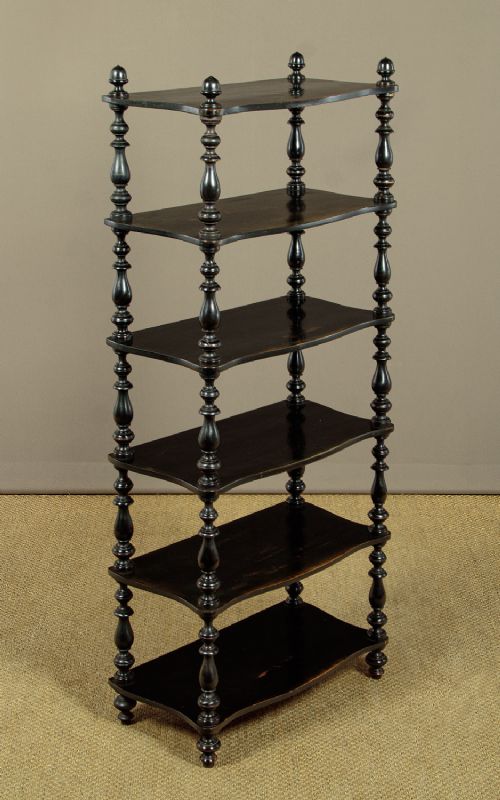


Turned Column Display Shelf
These turned column display shelf pieces bring tiered vertical storage and classic timber grain into any room.
Turned Column Display Shelf
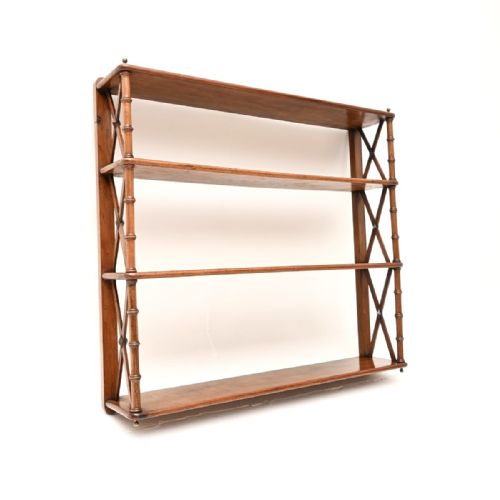
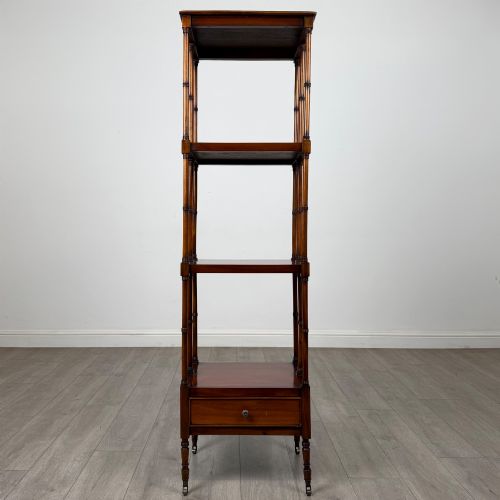
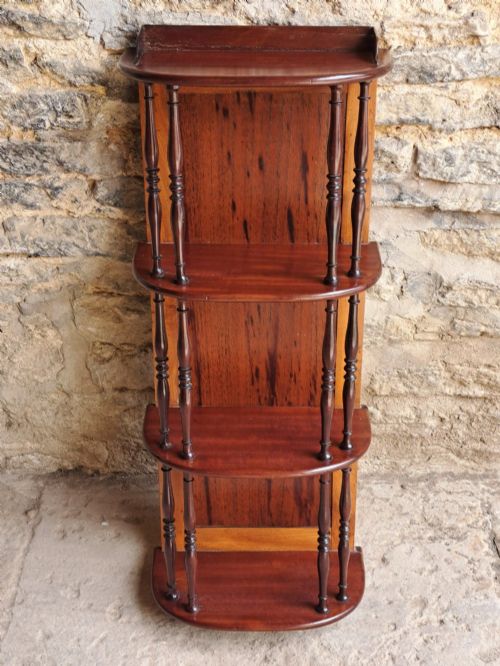
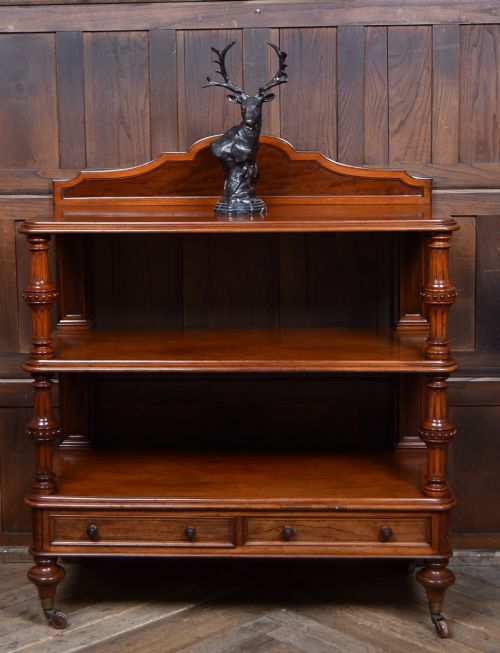
A turned column display shelf provides vertical storage through multiple tiers supported by turned wooden uprights. Buyers seeking a turned column display shelf will encounter forms such as whatnots, étagères, and hanging wall shelves spanning the Georgian, Regency, and Victorian periods.
Most examples found on this page consist of freestanding mahogany or walnut tiered stands alongside wall-mounted bookcases. These pieces serve to display books and decorative objects while occupying minimal floor space in a traditional interior.
Materials and construction
Cabinetmakers utilised dense hardwoods including mahogany, walnut, and rosewood for structural stability and rich grain figures. Burr walnut and birdseye maple veneers frequently face the primary surfaces to add visual depth.
Uprights feature decorative woodturning executed on a lathe to create balanced balusters and columns. Shelves join these vertical supports through traditional joinery, occasionally incorporating brass details or cane panels.
Listings feature mahogany, walnut, rosewood, and ebonised wood across Victorian, Regency, and Georgian periods.
Judging the standard
Quality rests upon the selection of timber and the crispness of the turned columns. Superior pieces display harmonious proportions across multiple tiers, with tight joints and carefully matched wood grains.
Lesser examples show heavier proportions or utilitarian timber selection without refined turning details. The integrity of the tiers and the stability of the upright assembly determine the lasting worth of each piece.
The Turned Column Display Shelf Glossary
- Whatnot
- A freestanding piece of furniture comprising three or more open tiers used for displaying ornaments or books. It gained popularity during the Georgian and Victorian eras for parlour use.
- Étagère
- A set of open shelves for displaying small objects or china. This French term describes tiered stands closely related to the English whatnot.
- Turning
- The technique of shaping wood on a lathe using cutting tools to create cylindrical and rounded profiles. Columns and upright supports on these shelves rely on this method.
- Veneer
- A thin layer of figured wood, such as burr walnut or mahogany, applied over a secondary timber base. This practice maximised precious materials while providing striking surface patterns.
- Dumb waiter
- A tiered freestanding stand originally used in dining rooms for holding dishes or serving items without servants present.
Turned Column Display Shelf: Frequently Asked Questions
What is a whatnot?
A whatnot is a tiered piece of furniture designed for displaying small objects, books, or ornaments. These pieces typically feature three or more open shelves supported by turned columns.
Originating in the Georgian period, they became household staples through the Regency and Victorian eras. Their open construction allows them to fit neatly into corners or against walls without dominating a room.
How do I style a tiered shelf?
Tiered shelves suit the display of books, ceramics, and small decorative items across multiple levels. Grouping objects by colour or material helps maintain a balanced appearance.
Because these units have open sides, placing them against a plain wall allows the silhouette of the turned columns to stand out clearly.
How do I date an antique shelf?
Dating relies on timber choice, construction methods, and the style of the woodturning. Georgian and Regency pieces often feature straight-grained mahogany, while Victorian examples frequently utilise walnut or ebonised wood.
Joinery details and the thickness of the shelf boards also provide clues to the decade of manufacture. Examining the timber underneath helps confirm the age of the piece.
Are these shelves sturdy?
Freestanding tiered shelves derive stability from solid upright columns and secure shelf fixings. Most standard items handle books and decorative objects safely under normal conditions.
Heavier items belong on the lowest tier to keep the centre of gravity low. Wall-mounted versions require secure fixing to wall studs to bear weight safely.