




Regency Period Display Stand
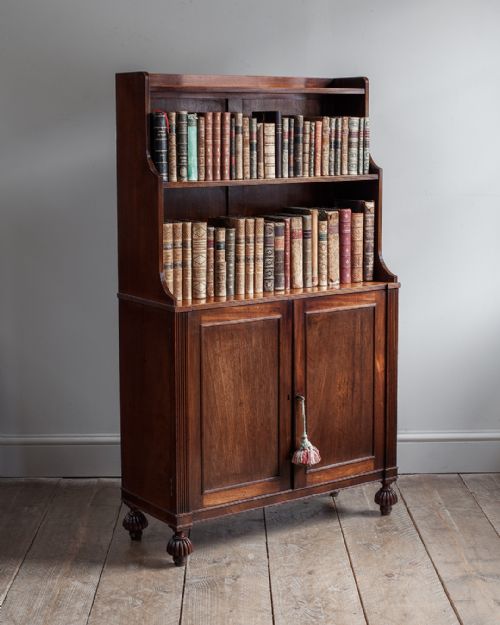
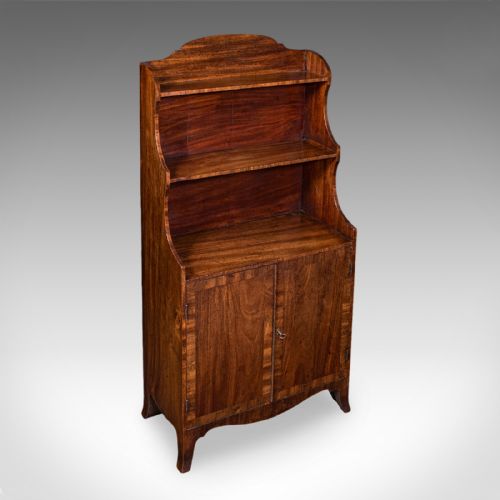
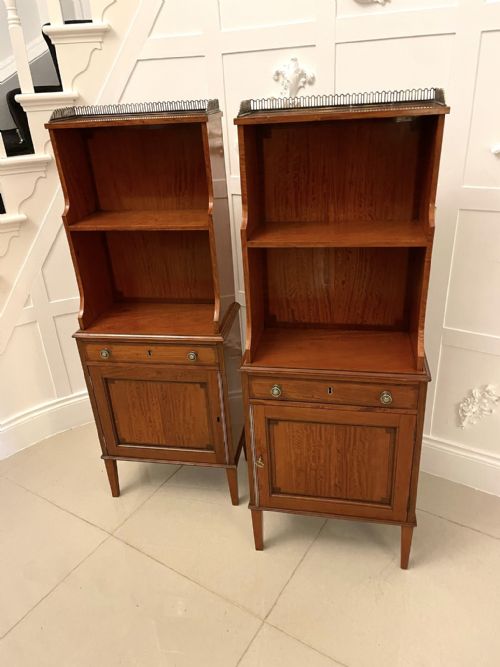
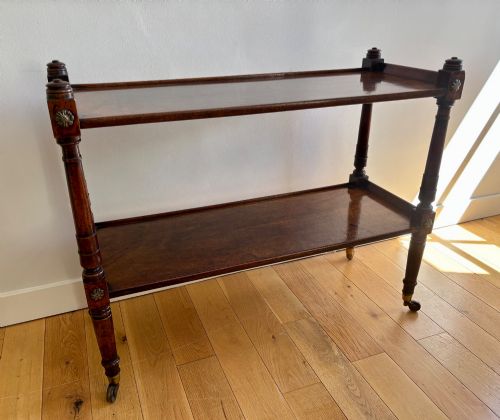
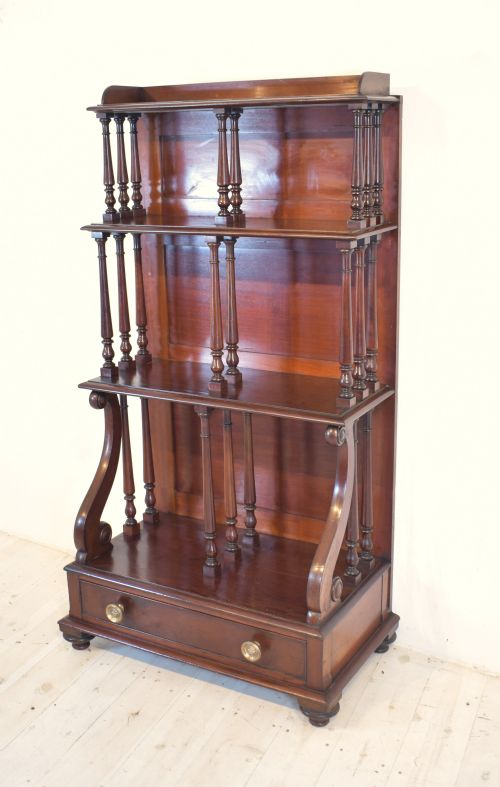
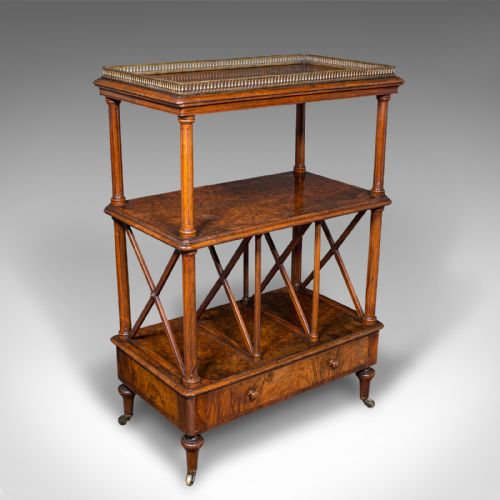
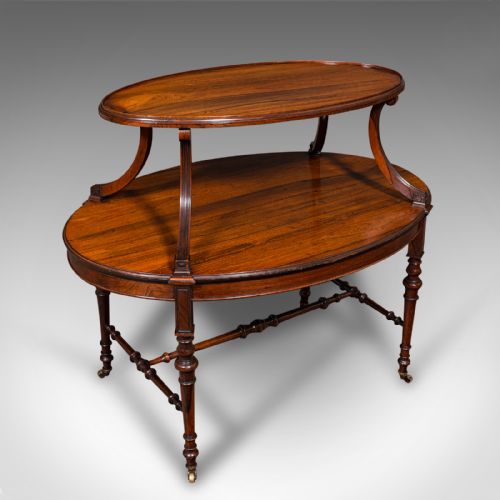
These pieces form a regency period display stand, built to show and hold books, cabinets, and ornaments.
Regency Period Display Stand
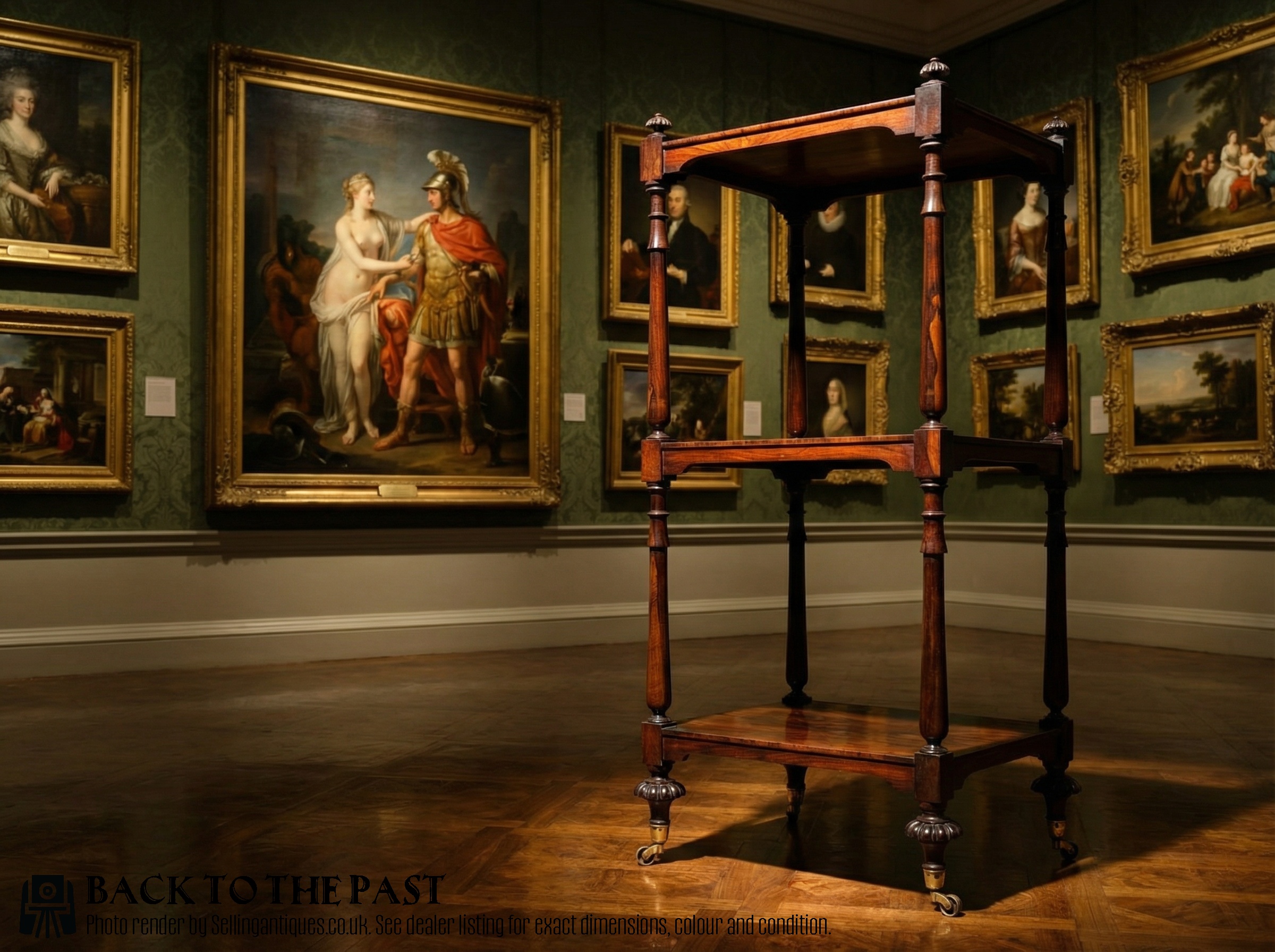
A regency period display stand serves to exhibit books, small sculptures, and prized objects across tiered surfaces. When you search for a regency period display stand, you encounter varied forms such as whatnots, etageres, waterfall bookcases, and pedestals.
The pieces on this page span the Regency, Georgian, George IV, and William IV periods, alongside the nineteenth century and an 1880 interpretation. Mahogany, rosewood, and flame mahogany dominate the selection, often accompanied by brass fittings.
Tiered whatnots and open shelving units appear most frequently among the listings, alongside cabinets and dwarf bookcases. These furnishings provide practical vertical storage while maintaining an open profile for display.
Judging quality in early display furniture
The refinement of turned supports, column joints, and tier spacing separates standard production from exceptional examples. Cabinetmakers who matched grain patterns across multiple shelves achieved a more cohesive visual finish.
Attribution to known workshops, such as Gillows, elevates the standing of a piece through superior carving and structural precision. The depth of timber figure and the crispness of brass mounts also indicate higher workshop standards.
Early nineteenth-century craftsmen built multi-tiered stands to hold everything from porcelain tea sets to sheet music.
Gillows
The Regency Period Display Stand Glossary
- Whatnot
- An open set of tiered shelves designed for displaying ornaments, books, or small objects. This form gained popularity during the late Georgian and Regency eras.
- Etagere
- A piece of furniture consisting of a series of open shelves for holding display items. It functions similarly to a whatnot with distinct French stylistic origins.
- Waterfall bookcase
- A standing bookcase with graduated shelves that step back from bottom to top. The profile resembles the cascading steps of a waterfall.
- Canterbury
- A low stand featuring slatted divisions, originally made for sheet music or folios. Many examples incorporate a small drawer or lower shelf.
- Pedestal
- A single support column or plinth used to elevate a bust, vase, or sculpture. These stands focus attention on a solitary object rather than multiple tiers.
Regency Period Display Stand: Frequently Asked Questions
What is a whatnot?
A whatnot is a multi-tiered open shelving unit designed to display small decorative objects, books, or silver. Makers built them with three or more tiers supported by turned columns or uprights.
During the Regency period, these stands became staple drawing-room furniture for displaying portable possessions. Their open design kept rooms feeling spacious while providing ample surface area.
How do I style an etagere?
An etagere suits corners or wall spaces where vertical display adds height to a room. Group objects by material or scale to maintain visual balance across the shelves.
Leave sufficient negative space around books and ceramics so the timber and brass details remain visible. Rotating displays helps prevent overcrowding on individual tiers.
What distinguishes Regency from Georgian furniture?
Regency furniture, produced during the early nineteenth century, draws heavily on classical Greek, Roman, and Egyptian motifs. Pieces from this era often feature bolder brass mounts and rosewood veneers.
Georgian furniture spans a much broader eighteenth-century timeline with an emphasis on mahogany and carved mahogany details. Transitional pieces often blur these stylistic boundaries.
Where should I place a display stand?
Display stands perform best against stable interior walls away from direct sunlight and heating vents. Protecting timber veneers from extreme temperature fluctuations preserves the finish.
Placing a whatnot or etagere near seating areas allows guests to examine displayed items closely. Ensure the floor level is even so multi-tiered pieces remain stable.