

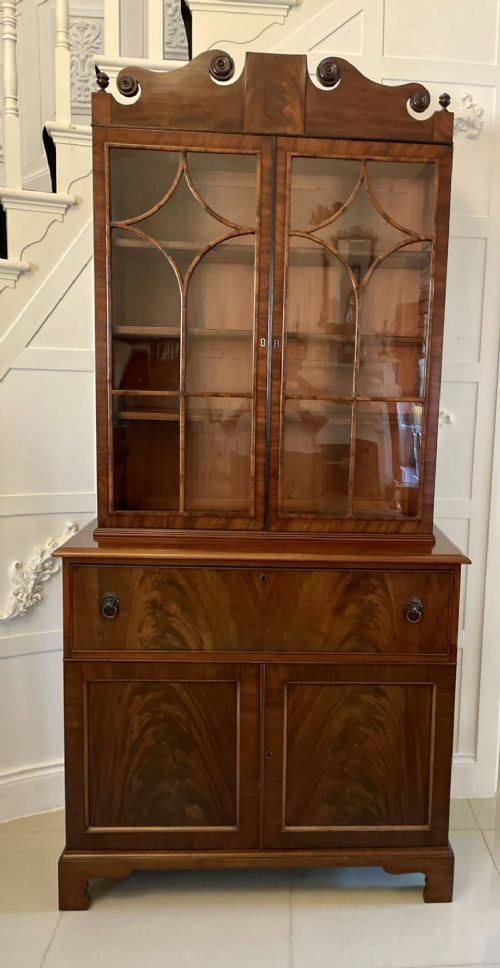
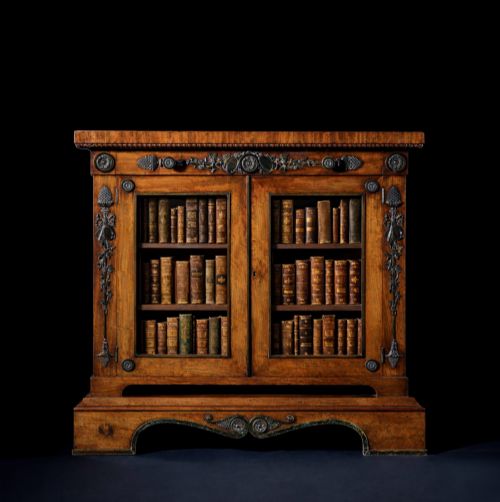
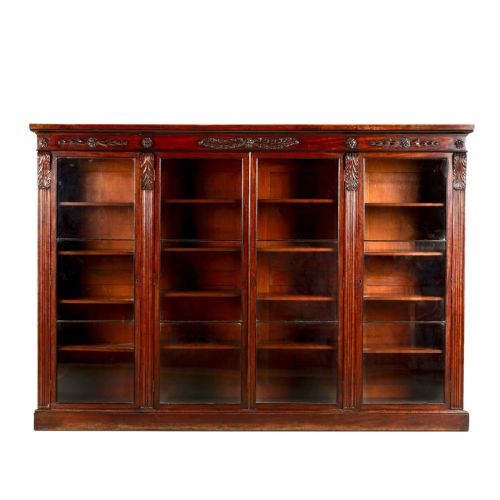

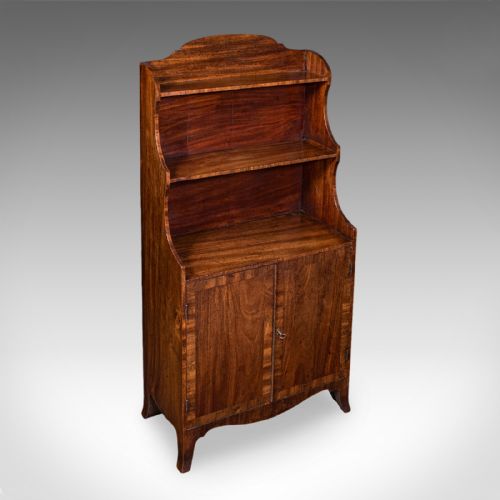


Regency Period Display Cabinet
A regency period display cabinet brings formal architectural proportion and rich figured timbers into a room with understated authority.
Regency Period Display Cabinet
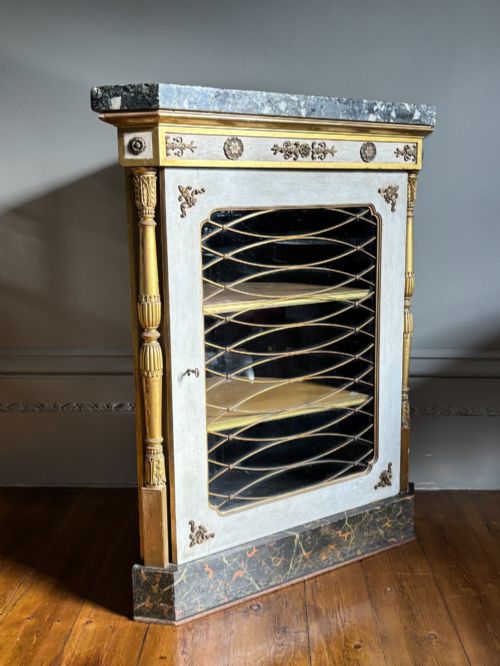
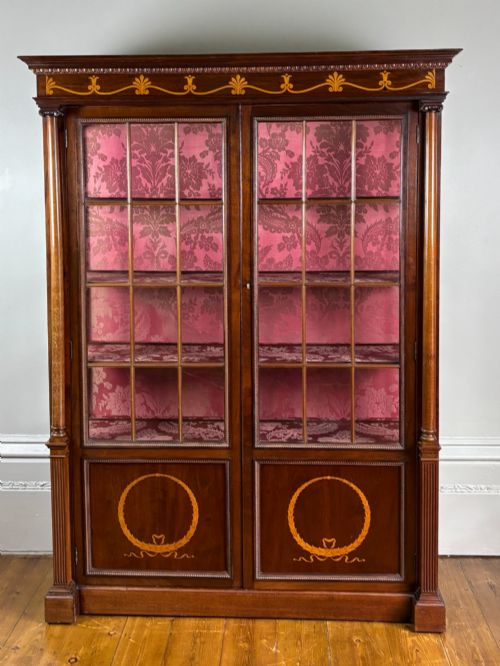
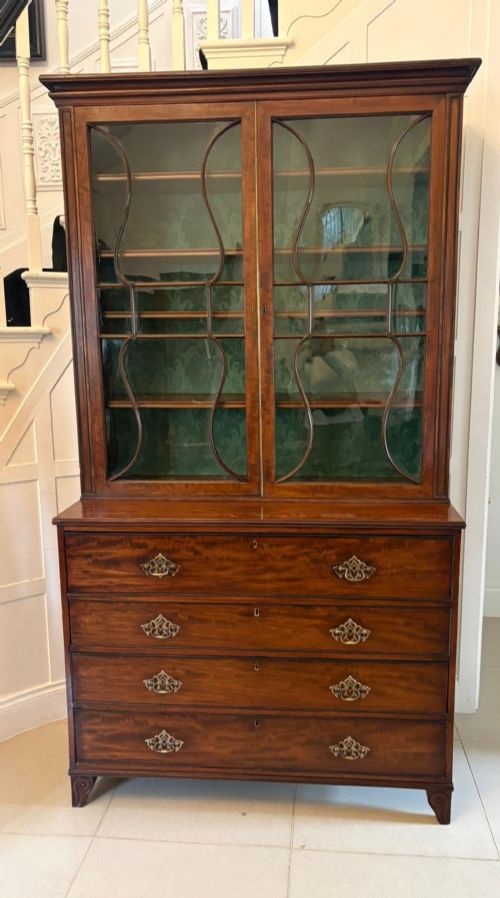
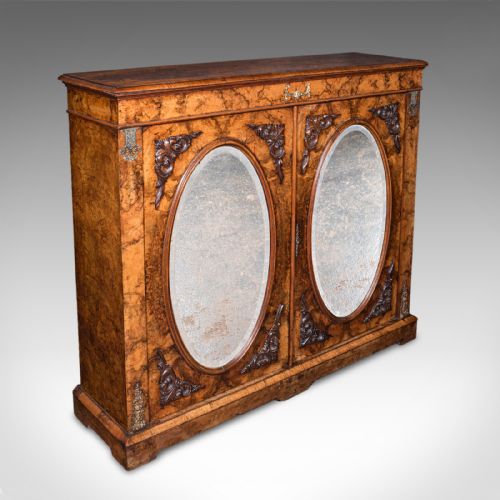
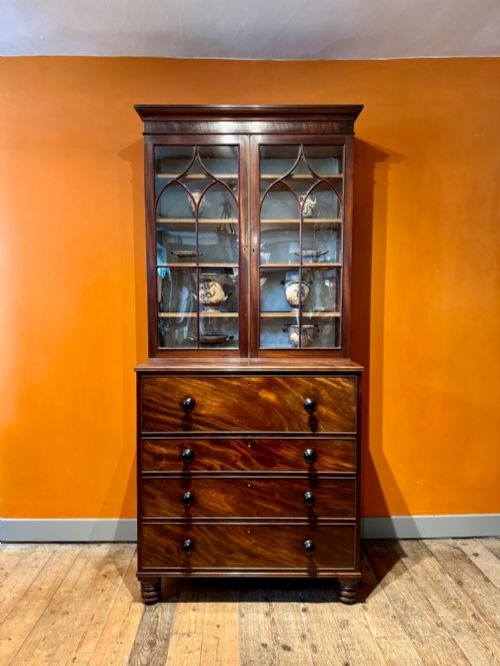
A regency period display cabinet encompasses architectural bookcases, side cabinets, and glazed floor storage pieces produced during the early nineteenth century and the wider Georgian era. These pieces combine utility and display, often featuring glazed upper doors alongside lower cupboards or fitted secretaire drawers.
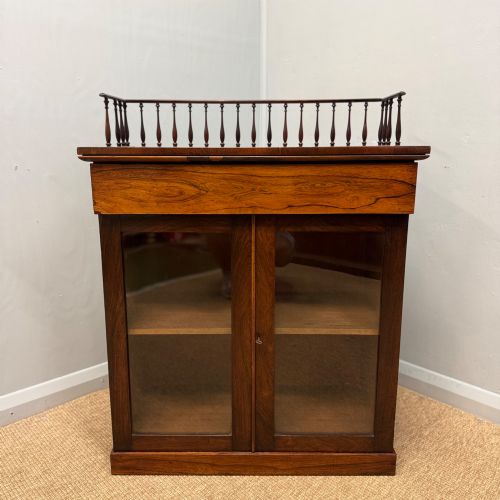
The versions most frequently met on this page are constructed from rich dark timbers and organised into breakfront forms, pier cabinets, or smaller waterfall and chiffonier configurations. They reflect the neoclassical tastes of the Regency, Grand Regency, George IV, and William IV styles.
Materials and construction
Makers utilised dense primary hardwoods like mahogany, flame mahogany veneer, and rosewood, frequently selecting figured grains to create striking visual movement across large flat surfaces. These cabinet timbers are often enhanced with contrasting inlay, burr walnut, amboyna, or thuya wood details.
Metalwork and glazing form essential secondary elements in the construction, utilising cast brass mounts, gilt bronze, and delicate spindle galleries alongside clear glass panelling. Fabric linings sometimes back the interior shelves, while structural frames rely on traditional joinery suited to heavy breakfront bookcases.
Regency Period Display Cabinet Retail Price Guide 2026
Typical asking prices for regency period display cabinet among the pieces listed under this phrase on Sellingantiques today, from the lower quarter to the upper quarter. They describe what is for sale here now, not the wider market.
Listings feature mahogany, rosewood, and flame mahogany veneer alongside brass and giltwood mounts.
Distinguishing quality across pieces
Quality separates through the selection and bookmatching of timber veneers, where symmetrical flame mahogany or richly figured rosewood elevate a standard carcass into a sophisticated focal point. The refinement of secondary details, such as finely chased brass mounts or integrated gilt brass wiring, dictates the upper tier of execution.
Proportion and architectural restraint further distinguish superior examples, as balanced breakfront forms and precise Neoclassical lines demonstrate a maker's mastery over mass and void. The presence of specialised internal fittings, such as fitted secretaire drawers with pigeonholes, adds complexity that separates ordinary utility storage from exceptional cabinet work.
Gillows
The Regency Period Display Cabinet Glossary
- Breakfront
- A piece of furniture with a central section that projects forward from the flanking wings. This architectural arrangement creates dynamic shadow lines across large bookcases.
- Secretaire
- A cabinet incorporating a pull-down writing drawer fitted with small drawers and pigeonholes. It combines a writing desk with enclosed library storage.
- Chiffonier
- A low cabinet originating in the Regency period, often fitted with a small shelf or spindle gallery on top. It served as a sideboard or small display surface in dining and morning rooms.
- Pier cabinet
- A narrow cabinet designed specifically to fit the wall space between windows. These pieces often feature glass doors or open shelving for ornamental display.
- Giltwood
- Wood that has been coated with gold leaf or gold paint. This technique highlights carved neoclassical details and mounts.
Regency Period Display Cabinet: Frequently Asked Questions
What is a regency period display cabinet used for?
These cabinets serve as architectural storage furniture designed to house books, ceramics, and valued collections behind glazed doors. The lower sections provide concealed storage for household items.
In contemporary interiors, they function as focal points in libraries and reception rooms, combining display space with formal proportion.
How do I identify the Regency style?
The style draws heavily from Neoclassical design, displaying clean architectural lines, symmetry, and classical proportions. Decoration is restrained, relying on the natural grain of rosewood and mahogany rather than heavy carving.
Brass mounts, pilasters, and grille doors frequently appear on these pieces, linking them to the broader Georgian aesthetic.
What is the difference between a bookcase and a chiffonier?
A bookcase is typically taller, featuring extensive shelving enclosed by glazed doors for book storage and display. A chiffonier is a lower cabinet, often topped with a small shelf or spindle gallery.
Both forms belong to the broader category of Regency storage furniture but serve different functional scales within a room.
Where should I place a large breakfront cabinet?
Large breakfront bookcases require a substantial wall with stable environmental conditions, away from direct heat sources that can dry out old timbers. They command significant visual weight and anchor a principal reception room.
Ensure adequate floor clearance and ceiling height before positioning these expansive floor-standing pieces.