

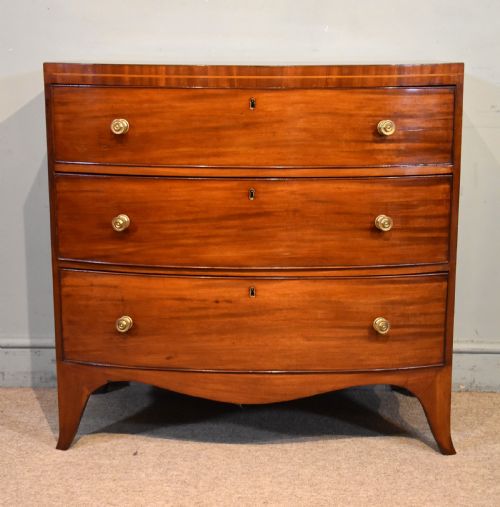
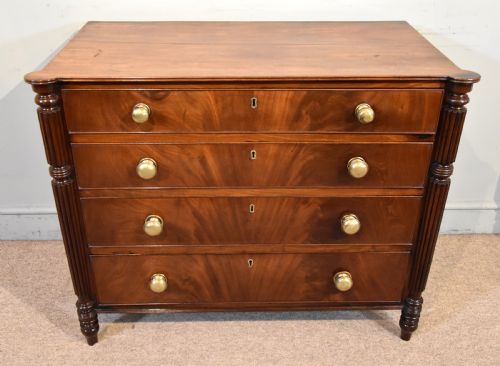


Regency Period Bedroom Chest
A regency period bedroom chest offers clean architectural lines and rich timber grains that anchor a room with understated grace.
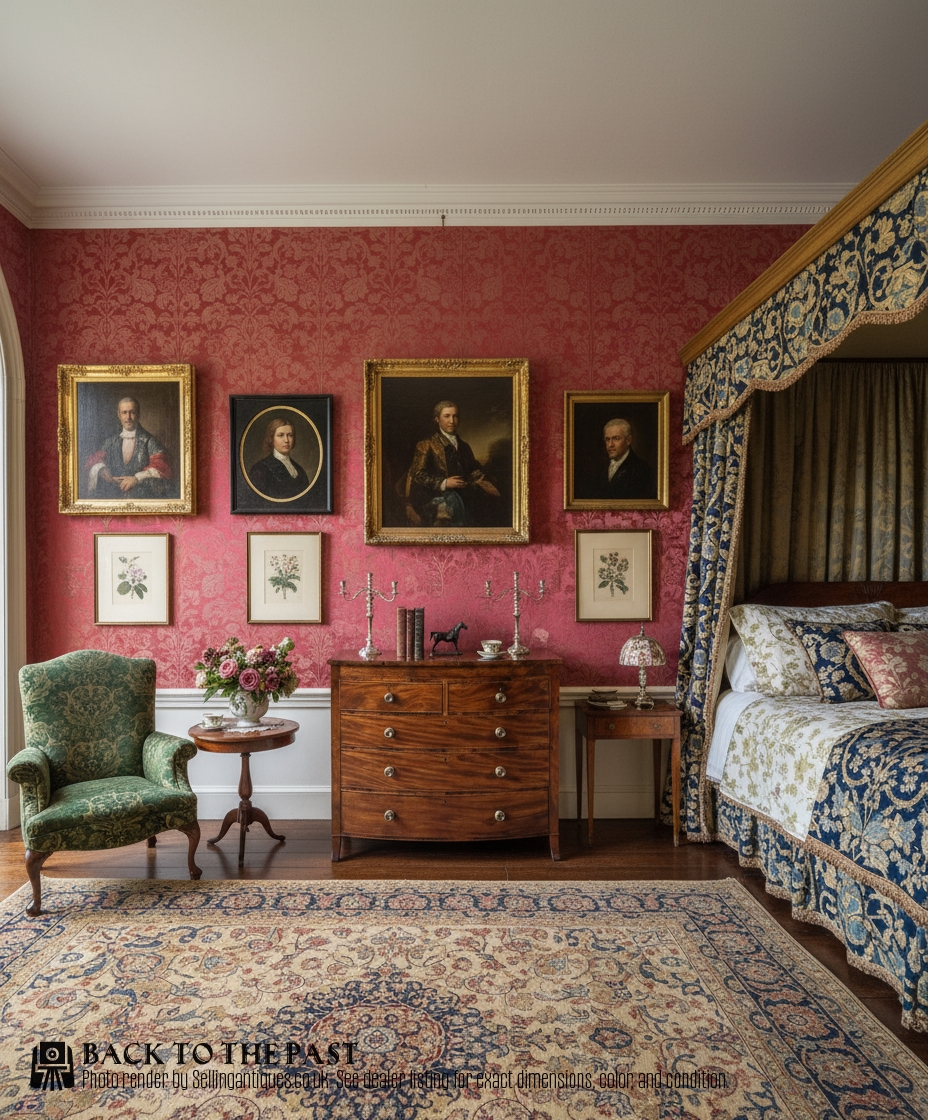
Regency Period Bedroom Chest
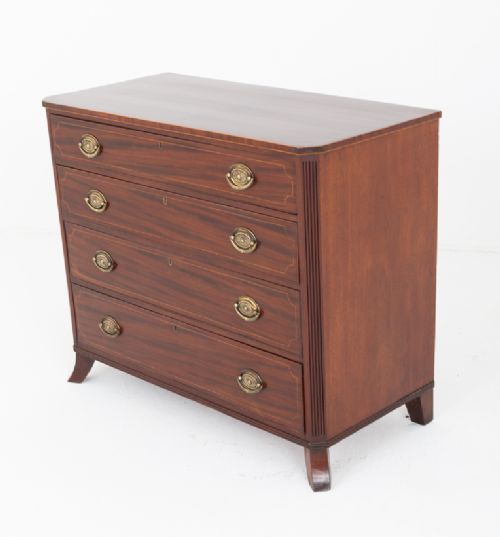
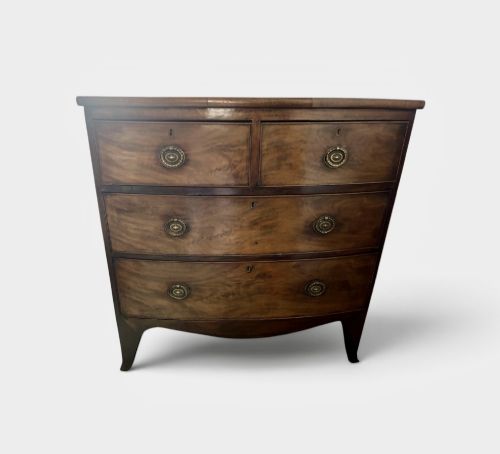
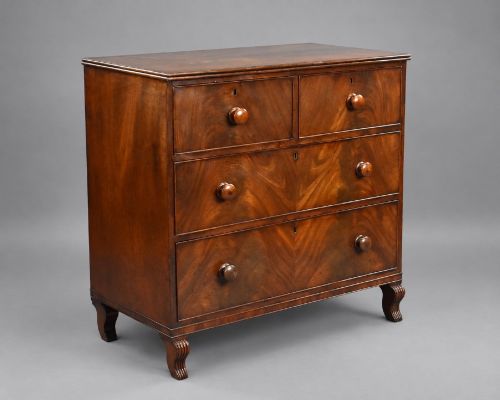
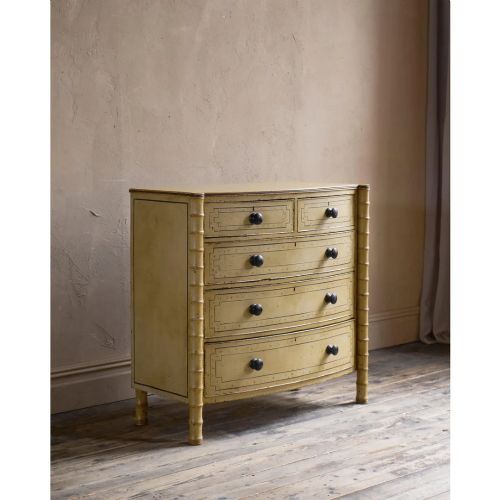
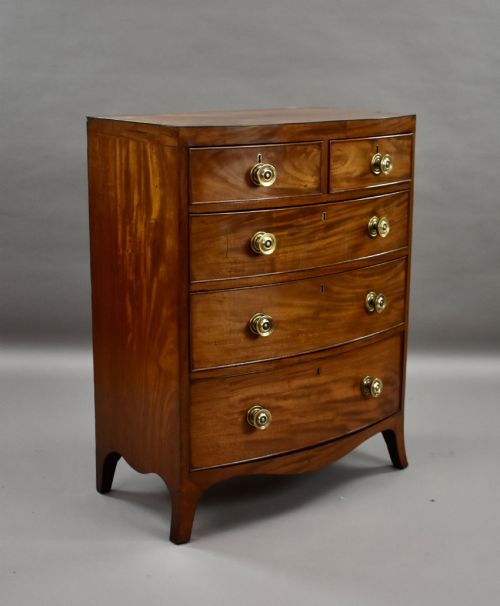
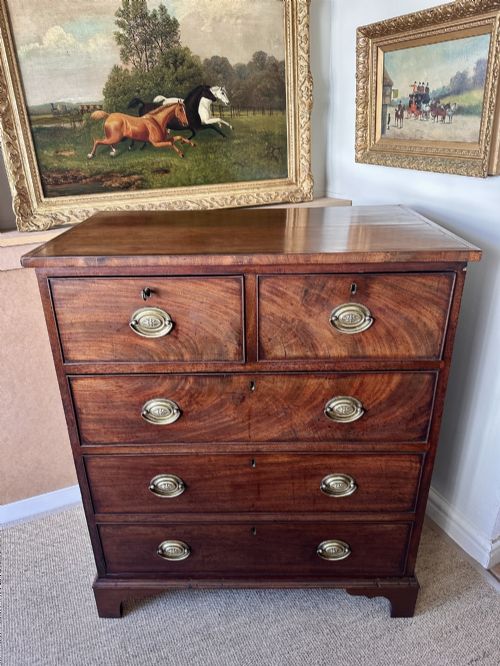
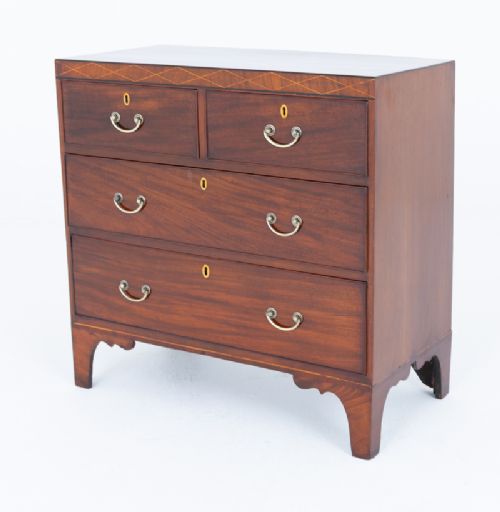
A regency period bedroom chest provides essential storage through generously proportioned drawers framed by the distinct aesthetic sensibilities of the early nineteenth century. Buyers searching for a regency period bedroom chest encounter pieces ranging from compact bow front designs to wider proportioned examples.
Most pieces seen here date from the Regency and Georgian eras, taking the form of traditional chests of drawers or taller linen presses. These items reflect a period of refined cabinet making where utility met classical proportion.
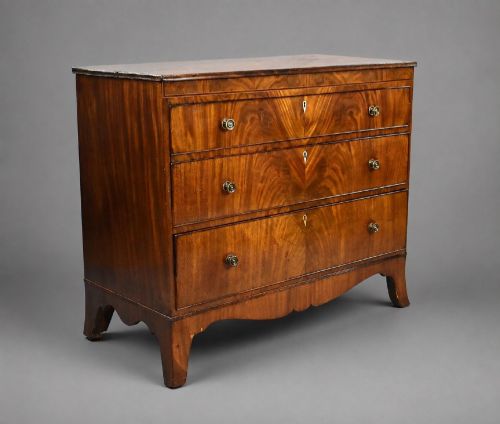
The dominant forms include straight and bow front configurations, often raised on bracket feet or slender supports. Each piece serves as a functional focal point within domestic spaces, embodying the architectural focus of the era.
Materials and construction methods
Cabinet makers relied heavily on solid mahogany and flame mahogany veneer, supported by secondary timbers such as oak and pine within the drawer linings. These dense hardwoods provided the structural stability necessary for large drawer frames and subtle curved facades.
Surface ornamentation often incorporated contrasting elements like bone inlay, brass hardware, and glass details, while certain pieces utilised painted softwood or ebonised finishes. Artisans selected timber grains deliberately to create visual depth across the drawer fronts.
Construction techniques prioritised graduated drawer depths and tight joints, ensuring the heavy timber carcasses endured daily domestic use. The application of figured veneers required precise hand cutting to match grains across multiple drawer tiers.
Secret compartments occasionally hide behind the top moulding of a press, built for storing private ledgers or small valuables.
Distinctions in construction and material quality
The standard of a piece rests upon the selection of timber veneers, where highly figured flame mahogany or plum pudding mahogany elevates the visual impact above standard straight grained boards. Superior examples demonstrate careful grain alignment across the drawer fronts and harmonious proportions throughout the carcass.
Fine craftsmanship shows in the precise execution of curved bow fronts, delicate bracket feet, and the integration of secondary woods like oak within the drawer construction. Better quality specimens maintain smooth operational drawers and crisp architectural mouldings that reflect the maker's skill.
The Regency Period Bedroom Chest Glossary
- Bow front
- A convex curved cabinet front that projects outward from the centre, popular in furniture design during the early nineteenth century.
- Flame mahogany
- A veneer cut from timber fork sections that produces a flamelike pattern with intense figuring.
- Linen press
- A tall storage piece combining upper sliding trays for textiles with lower drawers for garments.
- Bracket foot
- A structural support projecting beneath the corners of a case piece, shaped in profile as a simple bracket.
- Graduated drawers
- A series of drawers decreasing in depth from bottom to top, creating a balanced visual progression.
- Ebonised
- Wood treated with a dark finish to imitate ebony, providing strong visual contrast on mouldings or details.
Regency Period Bedroom Chest: Frequently Asked Questions
How do I identify a genuine period piece?
Examine the secondary timbers inside the drawer boxes and the hand cut dovetails used in assembly. These internal construction methods reveal the period techniques distinct from later reproductions.
Look closely at the timber grain continuity and the wear patterns around the drawer pulls. Genuine pieces exhibit natural ageing and timber movement consistent with early nineteenth century cabinet making.
Where should I place this furniture?
These chests function effectively in bedrooms or hallways where their storage capacity and proportions serve daily utility. Ensure the space accommodates the projection of a bow front or the width of a larger chest.
Keep the piece away from direct heat sources and strong sunlight to protect the mahogany veneers and polished finishes from drying out over time.
How do I care for mahogany surfaces?
Dust the timber regularly with a soft, dry cloth to prevent particulate accumulation on the polished veneer. Avoid silicone based polishes that can build up and dull the historic finish.
Apply a traditional beeswax sparingly when the timber appears dry, buffing it gently to maintain the natural lustre of the flame mahogany. Stable room humidity prevents the timber and veneer from cracking.