
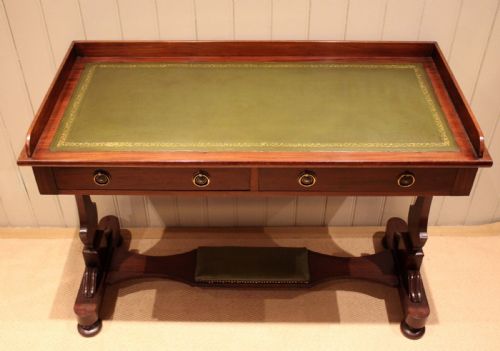


Large Regency Mahogany Drawers
Large regency mahogany drawers bring substantial timber, brass, and deep colour into a room.
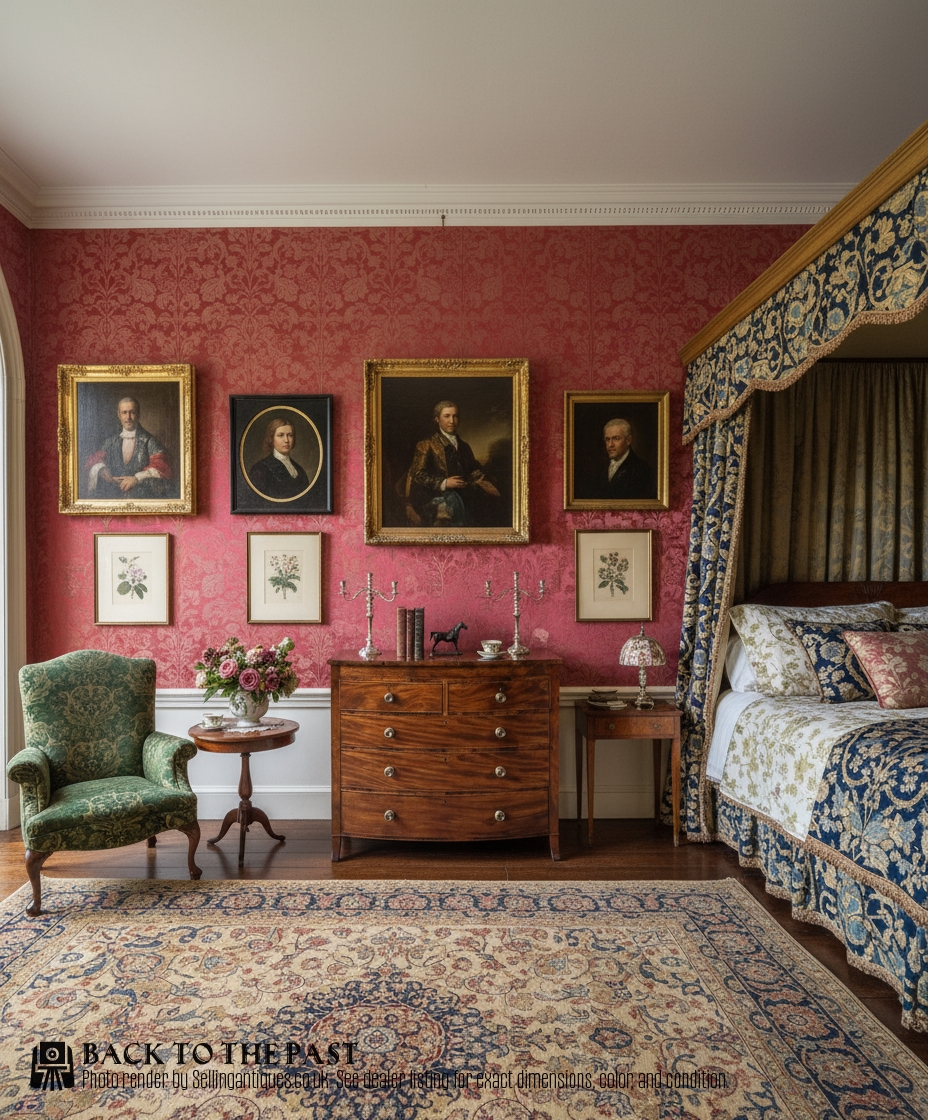
Large Regency Mahogany Drawers
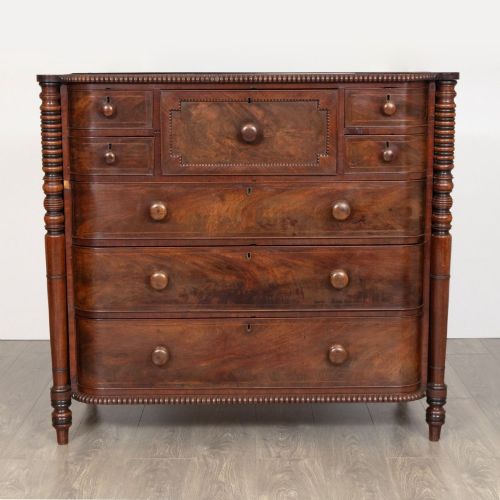
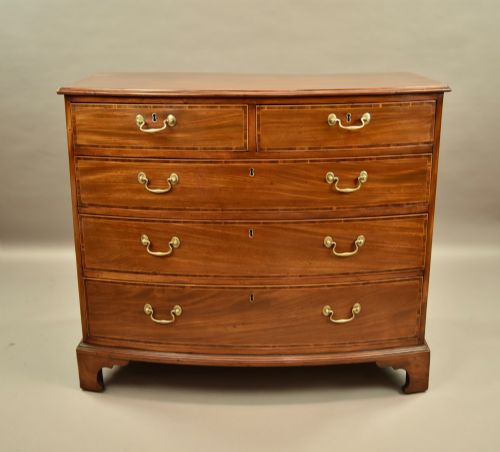
When you search for large regency mahogany drawers, you encounter substantial storage furniture built primarily during the Regency and Georgian periods. These pieces include generous chests of drawers, often featuring bow fronts or D fronts, alongside writing tables, library tables, and tallboys.
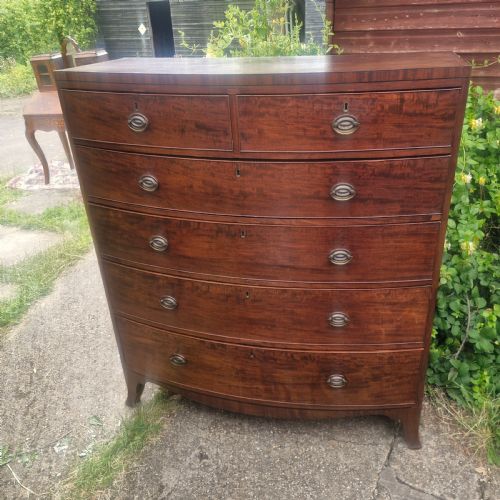
The version you are most likely to meet on this page is the bow front chest of drawers. These items dominate both current listings and the archive, presenting curved drawer fronts and sturdy proportions.
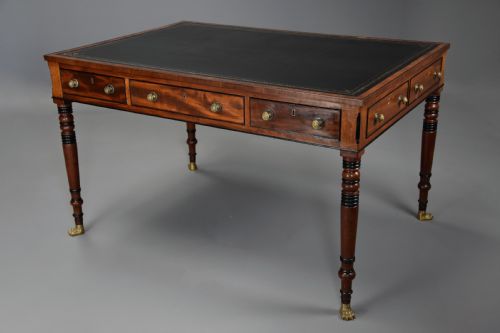
Makers of the period also applied the timber to library tables and writing desks. These alternative forms maintain the same dark wood and architectural presence as the primary chests.
What varies in quality
Quality rests heavily on the selection of timber and the fading of the surface patina. Pieces featuring figured or flame mahogany display more dynamic grain patterns across the drawer fronts than plain timber examples.
The refinement of the secondary woods, such as oak linings inside the drawers, distinguishes higher grade items. Construction details like tight dovetails and original brass fixtures separate workshop standards.
Current listings and past archives feature mahogany, brass, leather, glass, flame mahogany, wood inlay, pine, and timber.
The Large Regency Mahogany Drawers Glossary
- Bow front
- A convex curved cabinet front that projects outward in the centre. This shape defines many chests of drawers from the Regency era.
- Flame mahogany
- A veneer cut from the branch junction of the mahogany tree, producing a swirling, flame-like grain pattern. Cabinet makers used this on prominent surfaces to catch the light.
- Tallboy
- A tall chest on chest of drawers providing extensive vertical storage. These pieces combine two distinct drawer sections into one towering form.
- Patina
- The surface sheen and colour developed by wood and polish over decades of use. A faded patina shows gentle lightening from exposure to ambient light.
- D front
- A cabinet front shaped like a capital letter D, presenting a flat back and a curved front. This profile appears on specific Regency chests.
Large Regency Mahogany Drawers: Frequently Asked Questions
What periods do these pieces date from?
The items originate primarily from the Regency and Georgian eras, spanning into the 19th century and the Victorian period. Archive records and current listings show dates stretching from around eighteen hundred to eighteen thirty.
Craftsmen built these pieces using traditional timber construction methods before later industrial changes altered furniture production. The stylistic markers reflect the architectural tastes of those decades.
What materials are used in these items?
Mahogany and flame mahogany serve as the primary visible timbers, complemented by wood inlay and brass fittings. Secondary woods like pine and oak appear inside the carcass and drawer linings.
Some writing tables and desks also incorporate leather inserts on the top surface. Glass appears occasionally in associated pieces such as bookcases and dressing mirrors.
Where were these pieces used historically?
Chest of drawers and tallboys stood in bedrooms and dressing rooms for apparel storage. Writing tables and library desks functioned in studies and libraries for correspondence and reading.
Larger items like breakfront bookcases and pedestal tables occupied formal reception rooms in substantial houses. Their scale suited the high ceilings and generous floor plans of the period.