

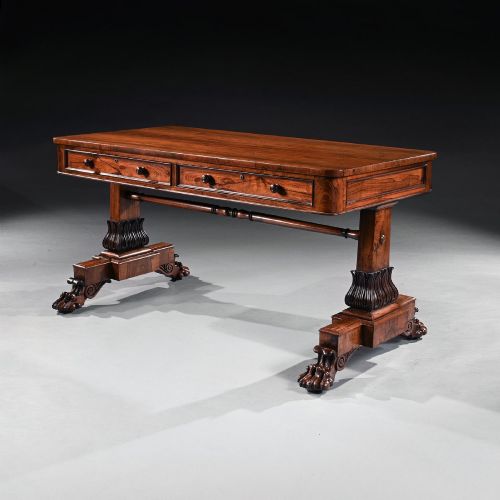
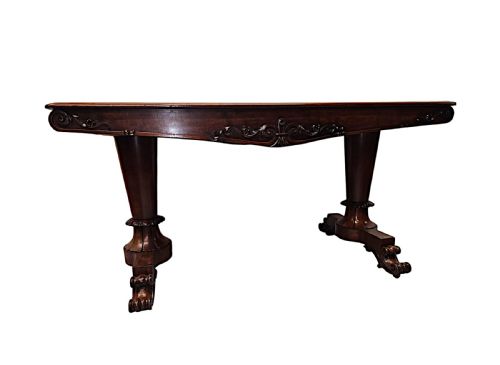
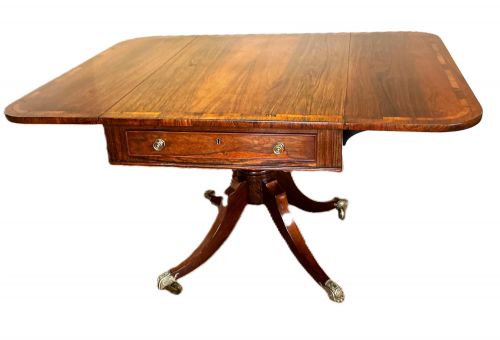
Regency Pedestal Writing Desk
A regency pedestal writing desk brings architectural symmetry and warm timber into a room, offering a generous workspace designed for serious correspondence.
Regency Pedestal Writing Desk
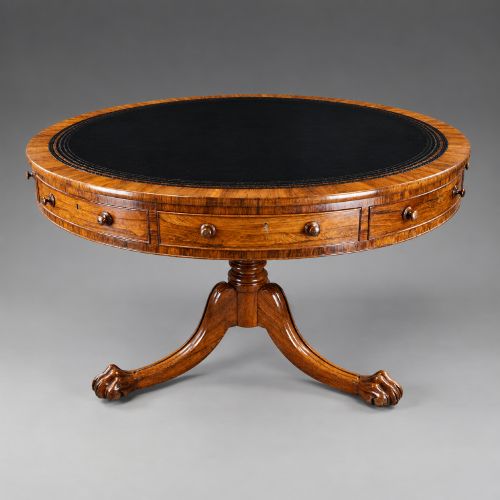
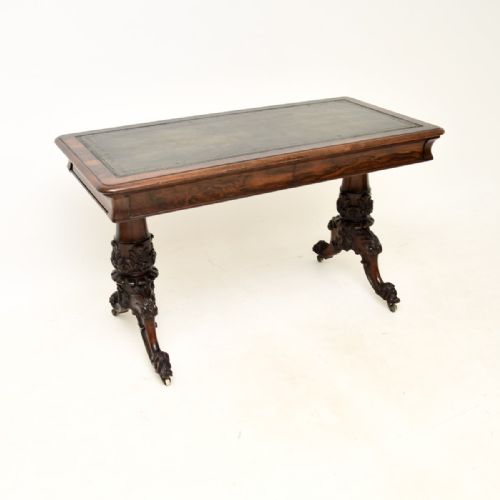
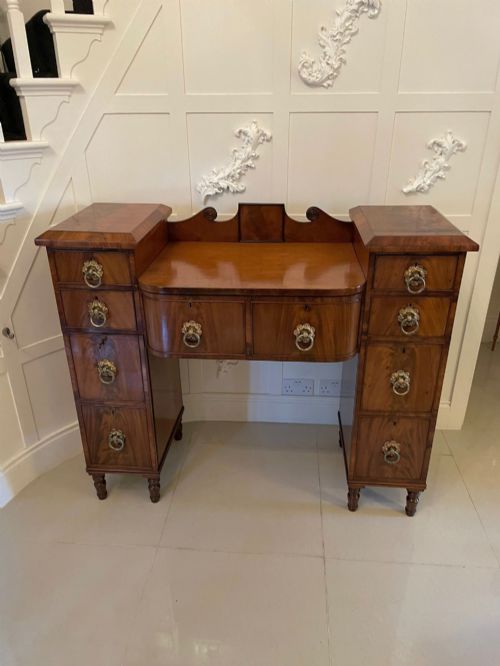
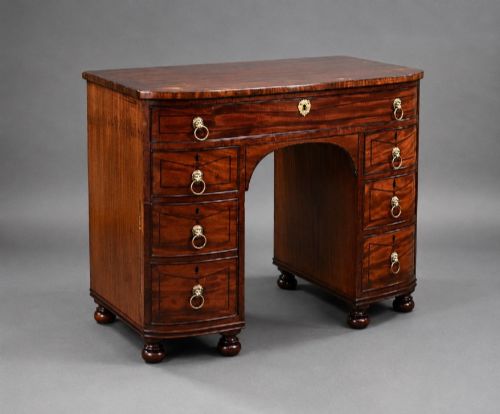
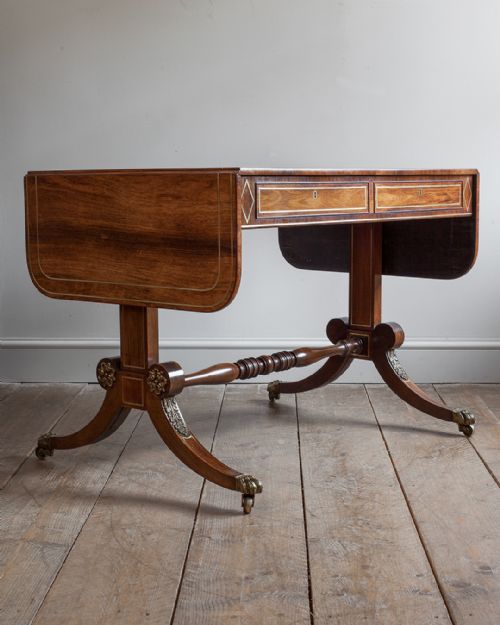
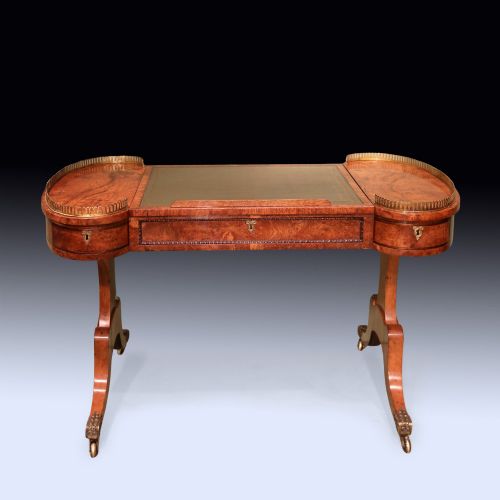
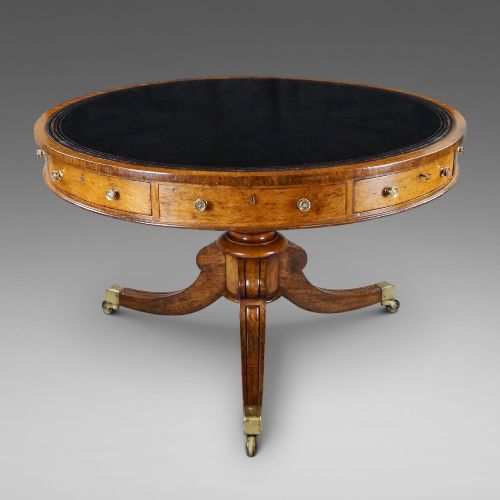
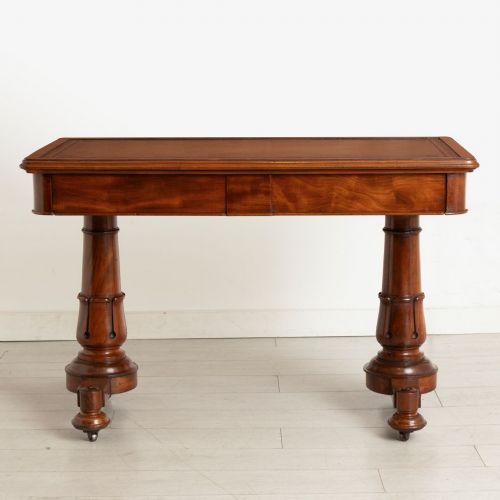
When you search for a regency pedestal writing desk, you encounter pieces that bridge the late Georgian era and the early Victorian period. These items typically manifest as library tables, writing tables, and twin-pedestal forms originating from the nineteenth century.
Makers of this period prioritised freestanding utility, meaning these desks often feature finished backs intended to sit proudly in the centre of a room rather than against a wall. Mahogany and rosewood dominate the selection, frequently accompanied by fitted leather writing surfaces.
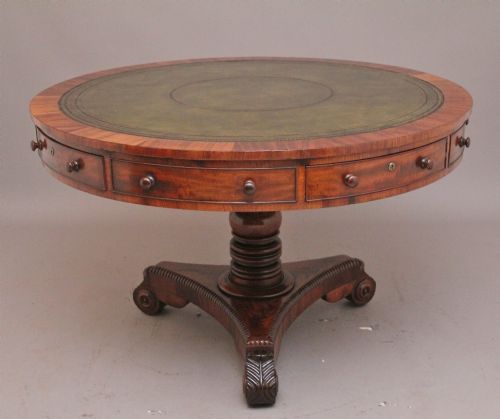
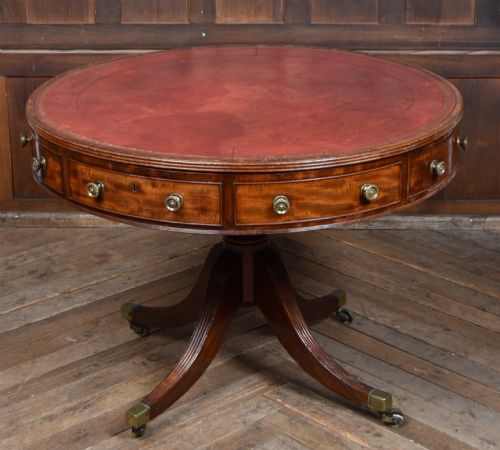
You are most likely to meet mahogany and rosewood variants displaying characteristic pedestal supports, drum tops, or twin pedestals. The construction reflects a period when furniture served as both a practical workstation and a formal display of domestic status.
Materials and construction methods
Cabinet makers utilised dense, durable timbers such as mahogany, rosewood, burr oak, and goncalo alves, often selecting figured veneers to create striking visual patterns across large flat surfaces. Solid woods formed the structural framework, while brass fittings provided functional accents on castors and drawer pulls.
Leather inserts, often tan in colour, were traditionally set into the top surface to provide a smooth, resilient medium for writing with quill or pen. Joinery relied on precise dovetailing for drawers and robust internal framing to support the heavy timber pedestals and drum mechanisms.
Materials recorded across the inventory include brass, mahogany, leather, rosewood, oak, burr oak, and goncalo alves.
Indicators of superior craftsmanship
The distinction between standard output and the finest examples lies in the selection of timber veneers and the crispness of carved details such as lion paws or lyre ends. Superior pieces display book-matched figuring across the top and drawer fronts, ensuring visual continuity.
Internal construction reveals the maker's hand through secondary woods used in drawer linings and the precision of the dovetail joints. Stability, smooth drawer action, and original brass castors further separate utilitarian pieces from exceptional commissions.
Williams and Gibton·Gillows of Lancaster
The Regency Pedestal Writing Desk Glossary
- Pedestal
- A supporting column or base structure beneath a desk, often housing banks of drawers.
- Drum table
- A circular library table with a rotating or stationary top surrounded by an arrangement of drawers.
- Veneer
- A thin layer of figured timber applied to a stable secondary wood to create decorative patterns.
- Sofa table
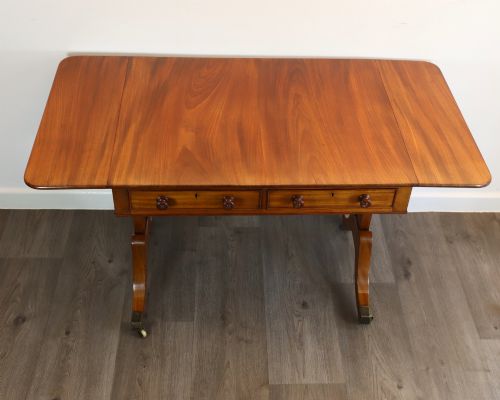
- A rectangular occasional table with drop-down leaves at either end, traditionally placed before a sofa.
- Dovetail
- An interlocking joint used in drawer construction that provides high tensile strength.
Regency Pedestal Writing Desk: Frequently Asked Questions
Where should I place a pedestal desk?
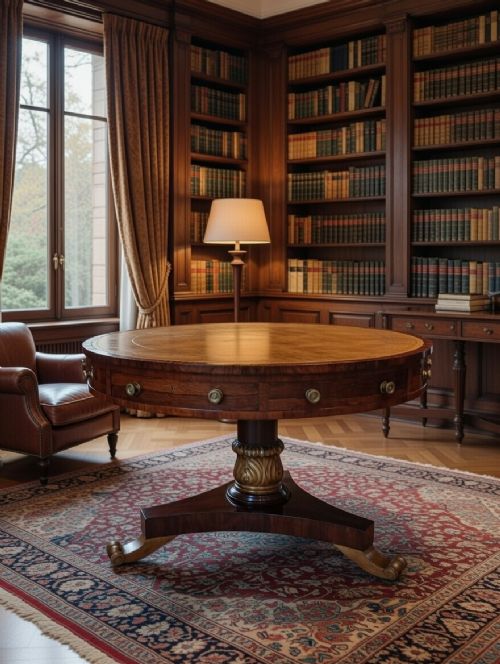
These desks are traditionally designed to stand freestanding in the middle of a room, allowing access to drawers from multiple sides.
Position yours away from direct sunlight and heat sources to protect the delicate timber veneers and leather surfaces from drying out.
How do I care for the leather top?
Keep the leather surface clean by dusting it gently with a dry, soft cloth during routine maintenance.
Avoid using harsh chemical cleaners or excessive water, applying specialised leather balms sparingly only if the material begins to dry.
Are these desks suitable for daily work?
The sturdy construction and generous proportions of these tables make them highly functional workspaces for modern writing and computing.
Ensure that any modern equipment placed upon the antique timber is padded to prevent accidental scratching of the polished surface.
How can I identify the wood type?
Examine the grain pattern, colour variation, and density of the timber visible across the top and drawer fronts.
Mahogany typically shows a deep reddish-brown tone with straight or ribbon grain, whereas rosewood displays darker contrasting streaks and burr oak reveals complex swirling figures.