


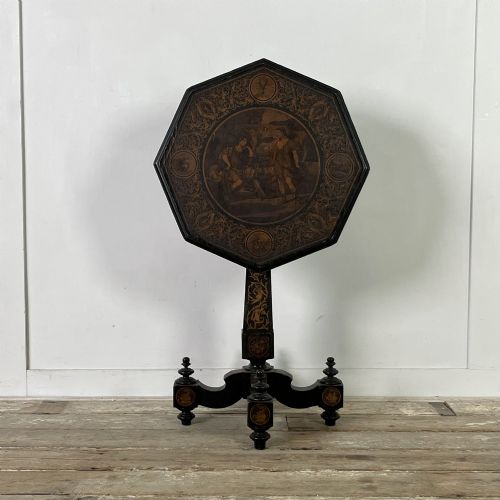
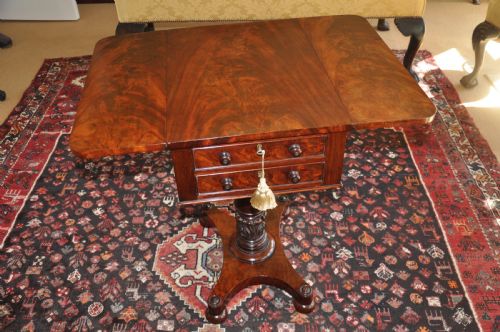
Regency Pedestal Work Table
A regency pedestal work table brings domestic craft and polished timber together on a single central column.
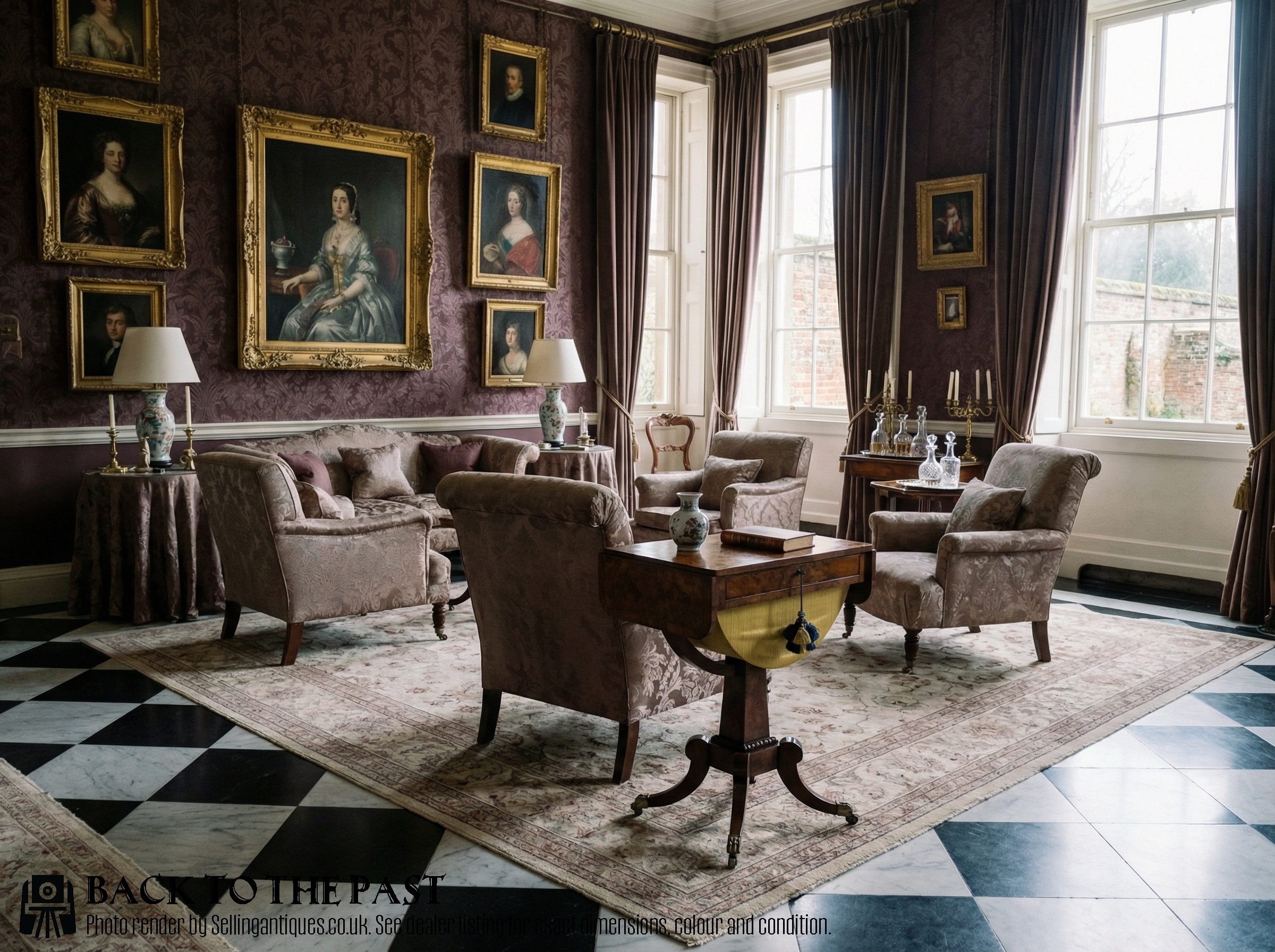
Regency Pedestal Work Table
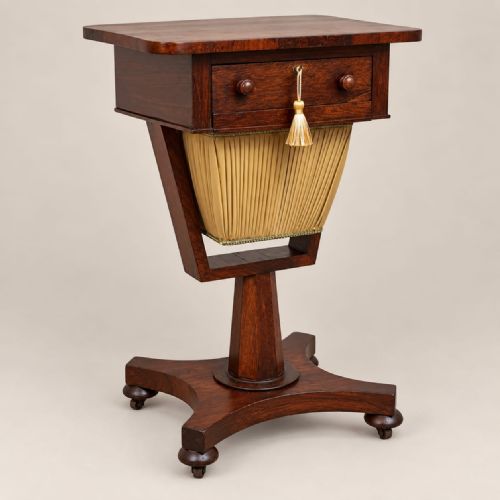
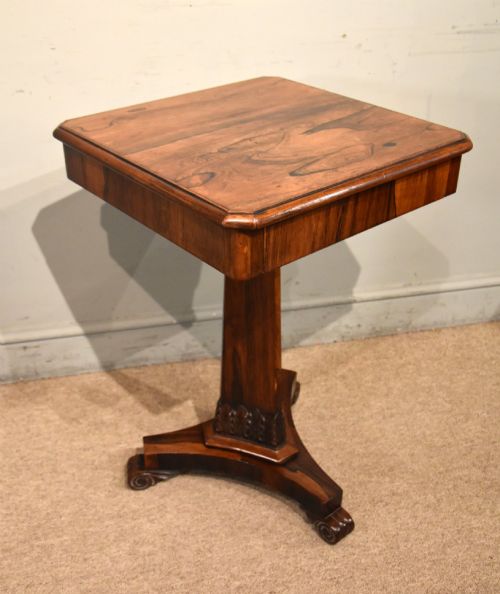
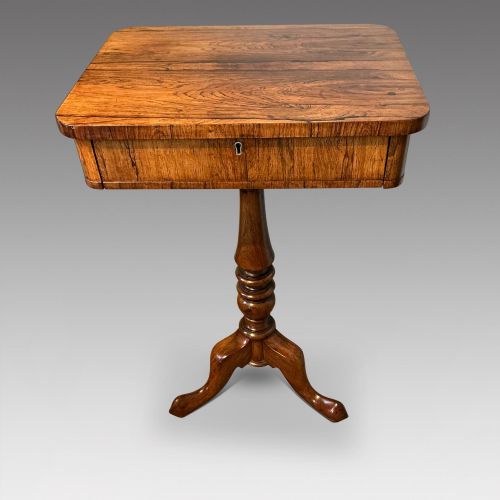
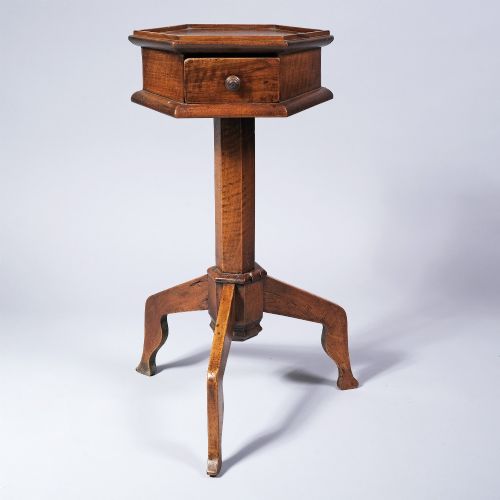
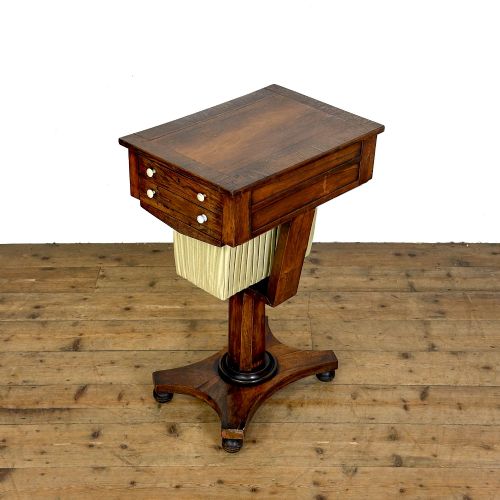
A regency pedestal work table serves as a compact piece of furniture designed for needlework and small domestic tasks, resting on a central column and platform base. These pieces date principally from the Regency, William IV, and broader nineteenth century periods, with occasional variations spanning into the Georgian era.
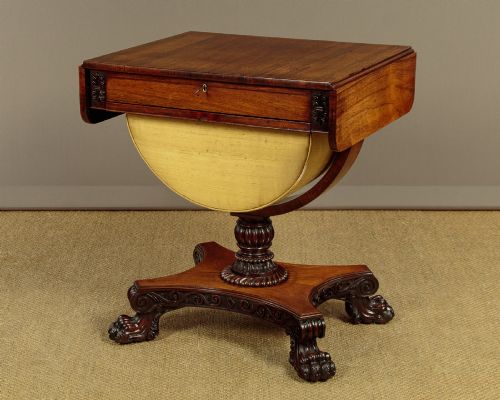
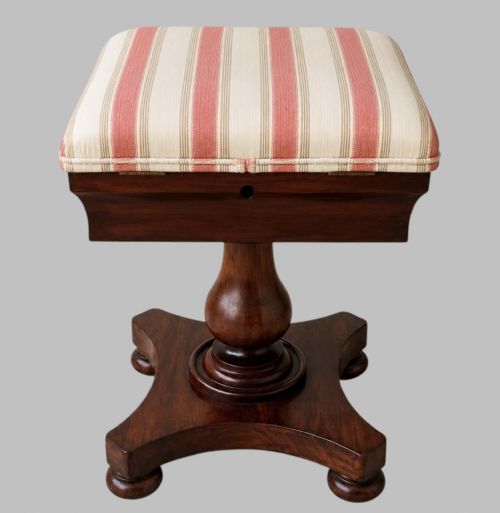
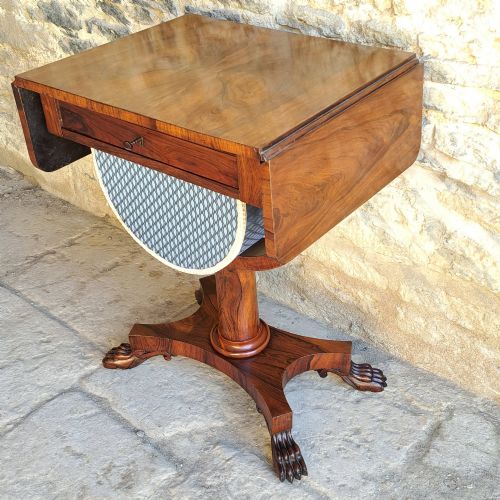
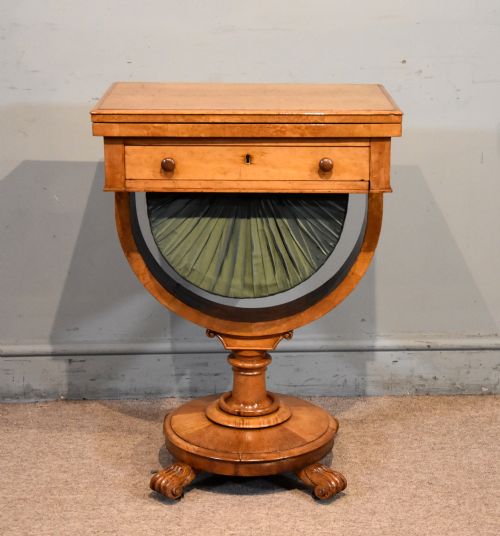
The versions most commonly met on this page feature fitted tops with internal compartments, drawers, or drop leaves, executed in rich hardwoods. They often combine sewing storage with games boards or writing surfaces, reflecting the versatility demanded by period households.
How they were made
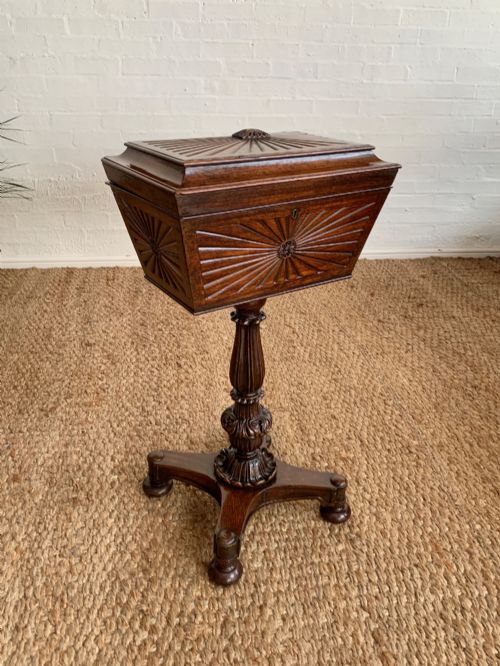
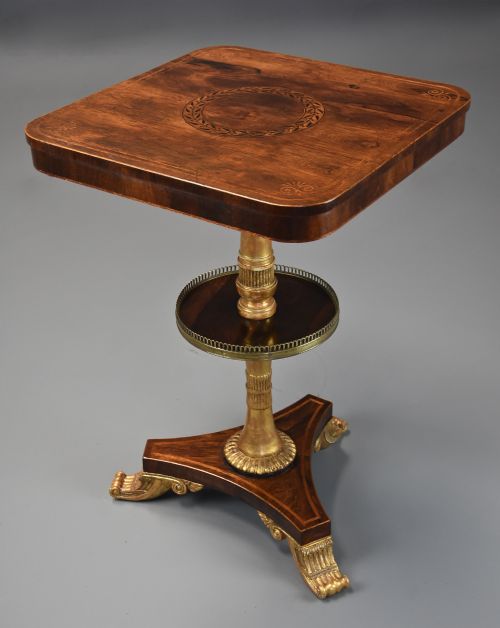
Cabinet makers utilised dense, richly figured timbers such as mahogany, rosewood, and flame mahogany, frequently accentuating the surfaces with boxwood stringing, ebonised details, or intricate sunburst carving. The structural carcasses rely on solid framing and stable pedestals to support the weight of the hinged tops and internal storage boxes.
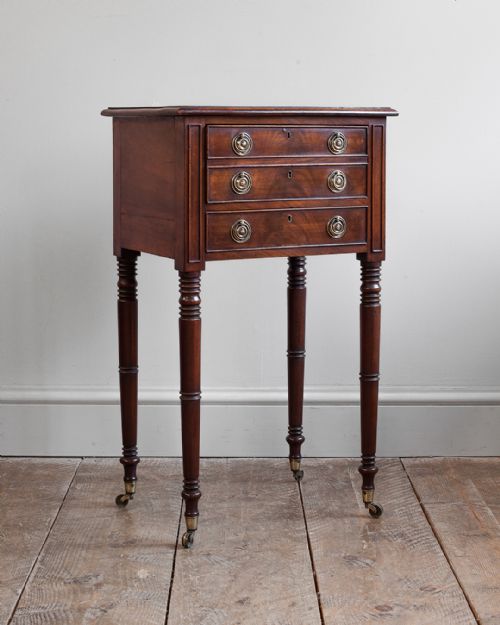
Internal components incorporate textile linings, fabric work bags, and fitted compartments for threads and implements, while the exterior shows precise joinery in the drop leaves and pedestal mounts. Brass castors frequently finish the feet, allowing these heavy timber tables to move easily across rooms.
Recorded forms include Pembroke tables, chess boards, sewing boxes, and two-tier occasional tables from the nineteenth century.
What varies in quality
The grade of timber selection largely dictates the standing of a regency pedestal work table, with figured flame mahogany and richly grained rosewood commanding greater visual depth. Master cabinet makers distinguished their work through crisply carved pedestals, balanced proportions, and seamless integration of drop leaves and drawers.
Fitted interiors also separate standard examples from finer productions, particularly where compartment lids retain original bone or ivory pulls and intricate internal layouts. The stability of the central column assembly and the fidelity of decorative stringing or inlay further define the relative distinction of individual pieces.
The Regency Pedestal Work Table Glossary
- Pedestal
- A central vertical support rising from a platform base or feet to hold the table top. This design replaced traditional four-legged frames to allow greater legroom.
- Work table
- A specialised domestic table equipped with drawers or hanging fabric bags for sewing and needlework. These pieces often double as occasional or games tables.
- Flame mahogany
- Timber sliced from the fork of the mahogany tree to produce a distinctive flickering flame pattern. It was favoured for principal show surfaces during the Regency period.
- Drop leaf
- A hinged flap at the side of a table that can be raised to extend the surface area. Supporting brackets swing out to hold the leaf in position.
- Stringing
- Narrow inlaid lines of a contrasting wood used to outline panels and borders. Boxwood and ebony were common choices for this decorative banding.
Regency Pedestal Work Table: Frequently Asked Questions
What was a regency pedestal work table used for?
These tables served primarily as practical stations for ladies to store sewing, embroidery, and writing materials near the hearth. The fitted top compartments kept needles, threads, and small tools organised during daily domestic tasks.
Many examples also incorporated pull-out fabric bags or integrated chess and backgammon boards. This multifunctionality made them central items for sitting rooms and parlours.
How do you tell Regency from William IV pieces?
Regency pieces generally display restrained classical proportions, delicate brass stringing, and slender, elegant pedestal columns. The lines remain crisp and draw influence from neoclassical and Grecian revival styles.
William IV furniture tends to be heavier and bolder, featuring chunkier carved pedestals, robust paw feet, and dense rosewood or mahogany. The scale is frequently grander with less emphasis on delicate inlay.
Are work tables and sewing tables the same?
The terms are largely interchangeable in period terminology, as both describe furniture built to accommodate needlework and small crafts. Catalogues from the nineteenth century applied both names to tables featuring internal storage boxes.
Minor variations appear in the fittings, where sewing tables more often include suspended silk or fabric bags beneath the drawer, while work tables lean toward compartmentalised timber trays.
How do you fit a work table into a modern room?
Their compact footprints make these tables ideal as bedside surfaces, lamp tables, or hallway stands where space is at a premium. The internal compartments provide discreet storage for modern clutter like keys, chargers, and small accessories.
Placing them beside a sofa allows the drop leaves to remain down until extra surface area is needed. The rich grain of the rosewood or mahogany also introduces warmth and historic texture to contemporary interiors.