

Regency Needlework Table
A regency needlework table brings domestic utility and exquisite timber together in one elegant piece for the drawing room.
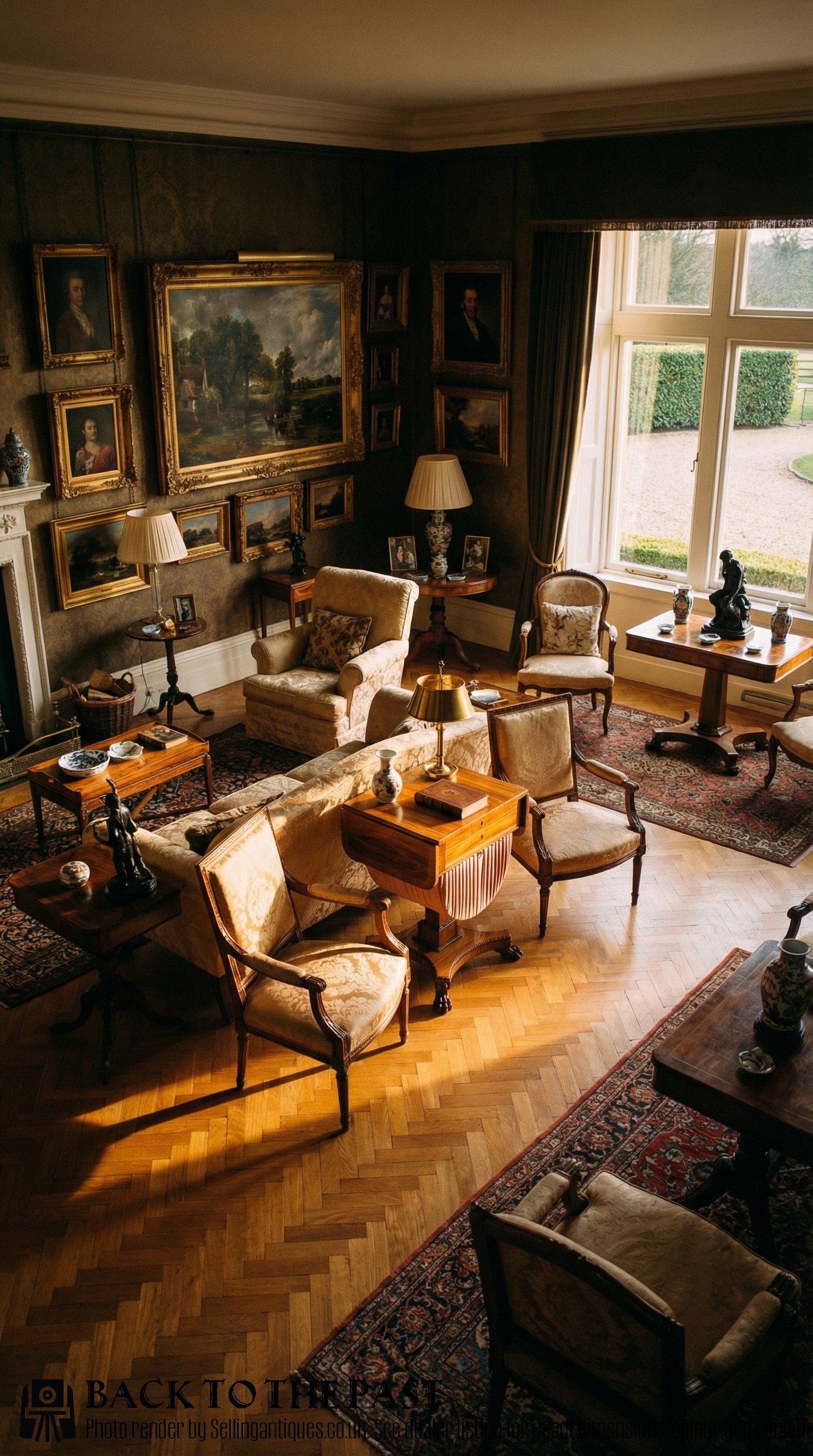
Regency Needlework Table
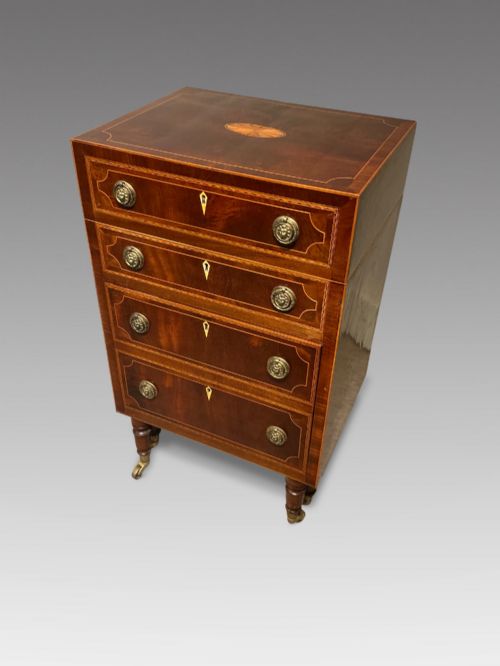
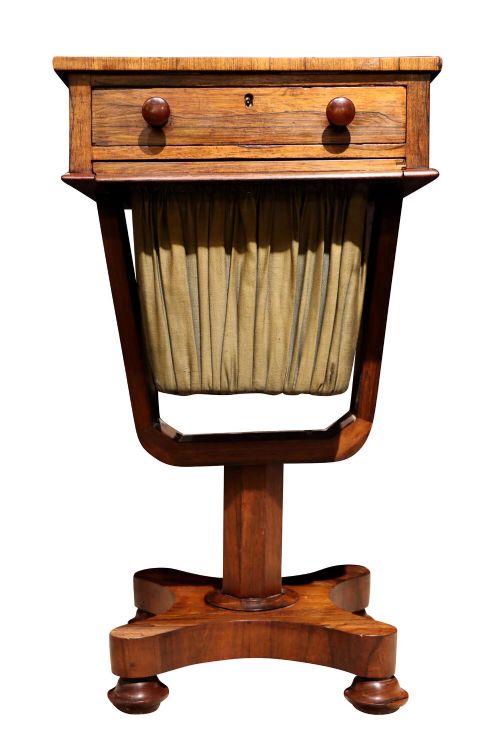
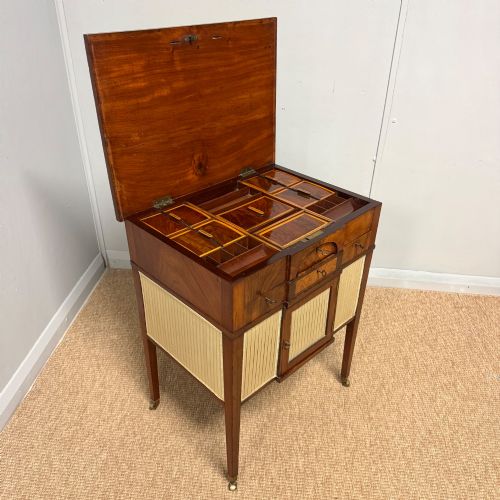
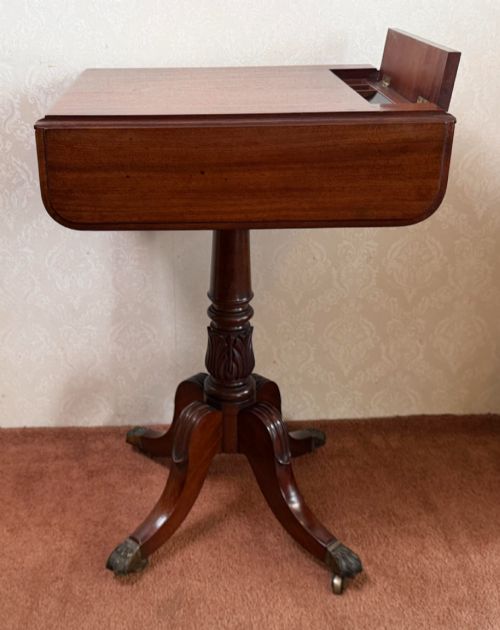
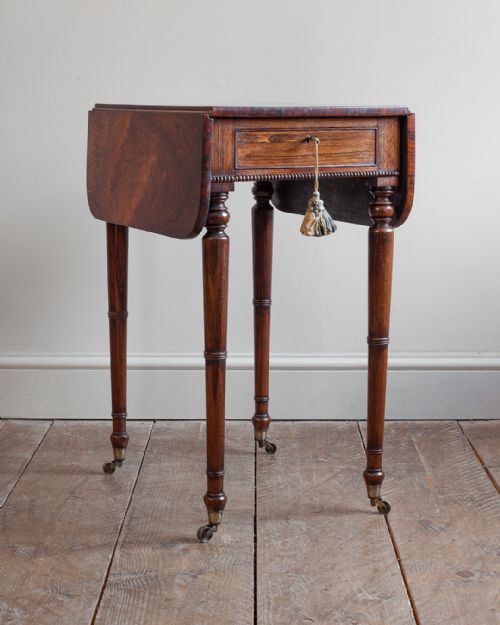
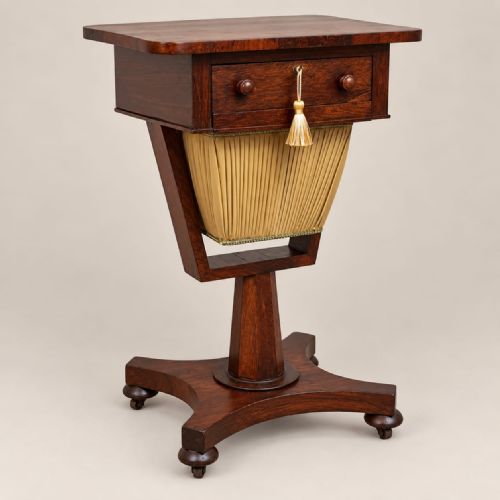
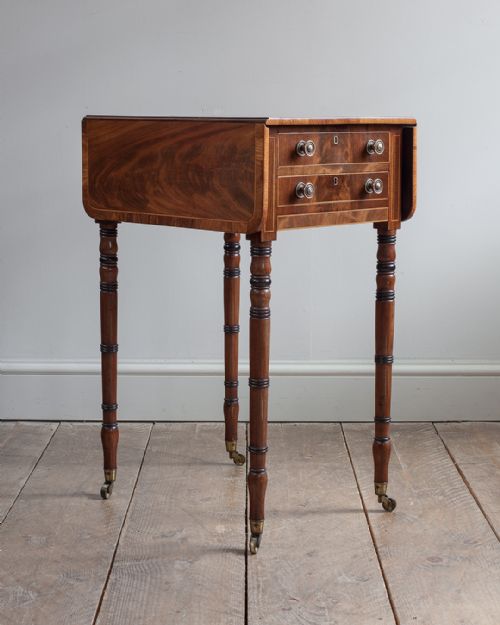
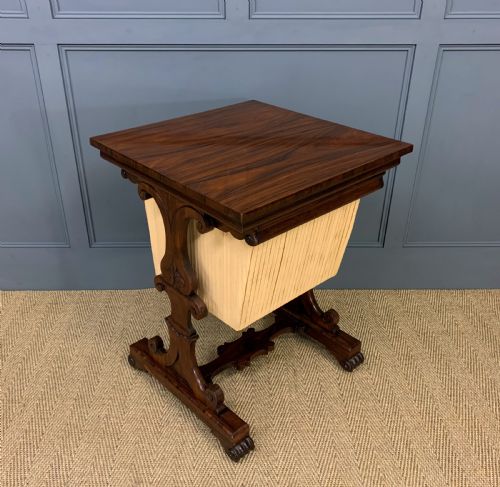
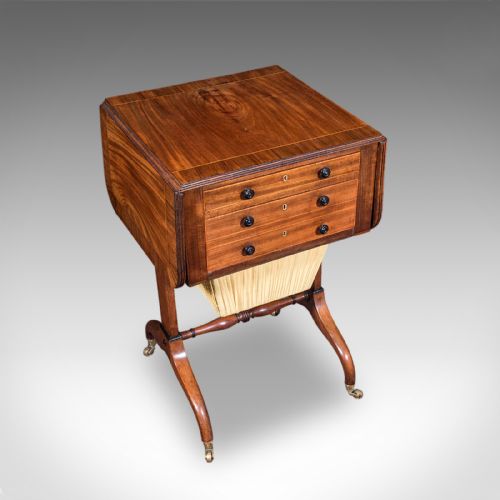
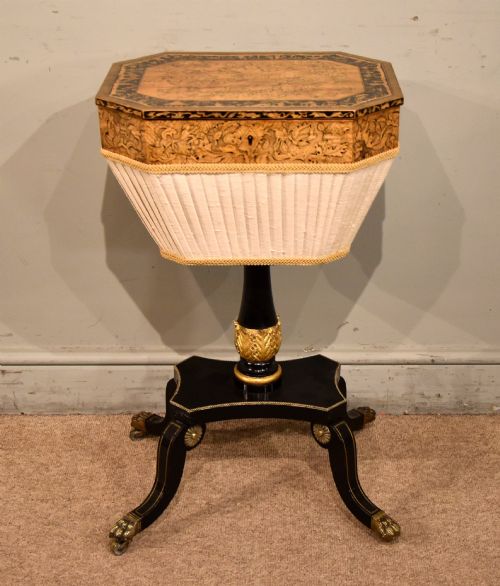
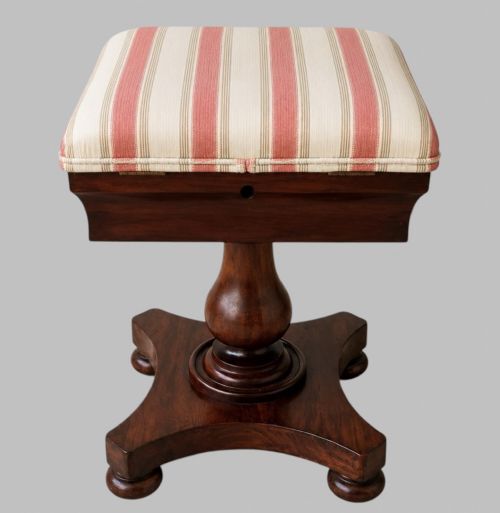
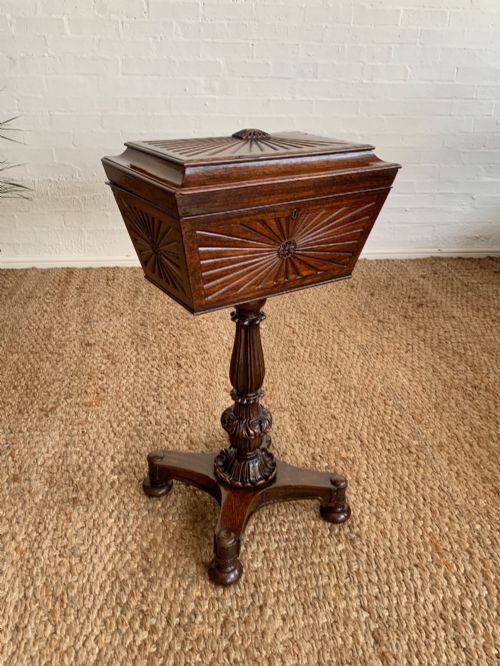
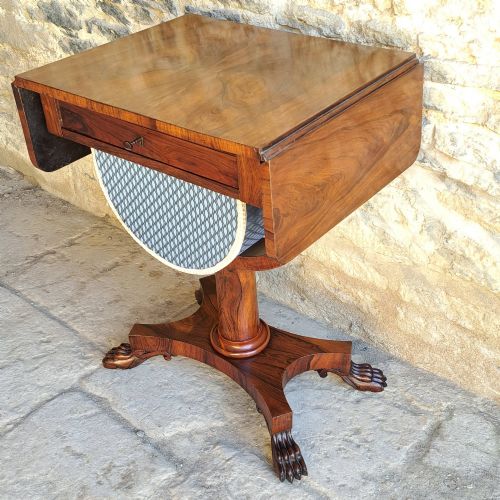
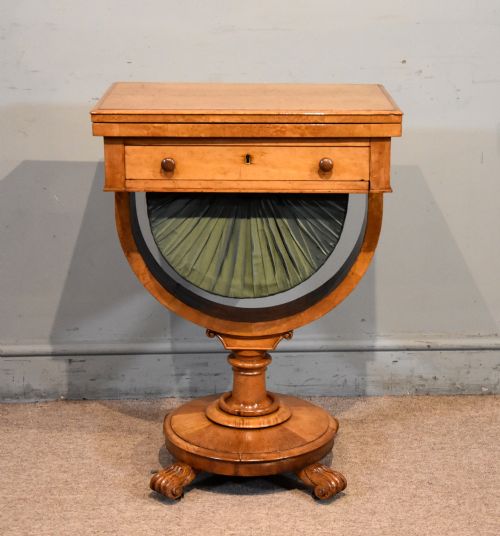
A regency needlework table serves primarily as a compact piece of furniture designed for sewing, games and light writing tasks within the home. These tables often incorporate drop-leaves, fitted interior compartments and hanging fabric bags for storing thread and cloth.
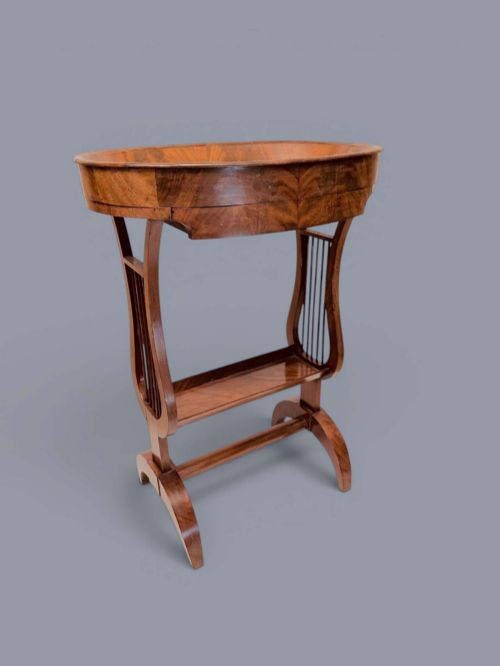
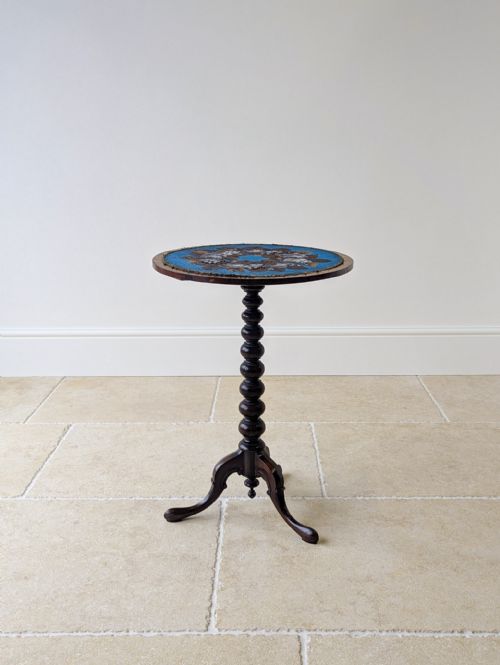
The versions most frequently met on this page span the Regency, William IV and Georgian periods, constructed in rich woods such as rosewood and mahogany. Forms vary from pedestal bases with lyre ends or tripod supports to smaller Pembroke drop-leaf designs and sewing boxes mounted on stands.
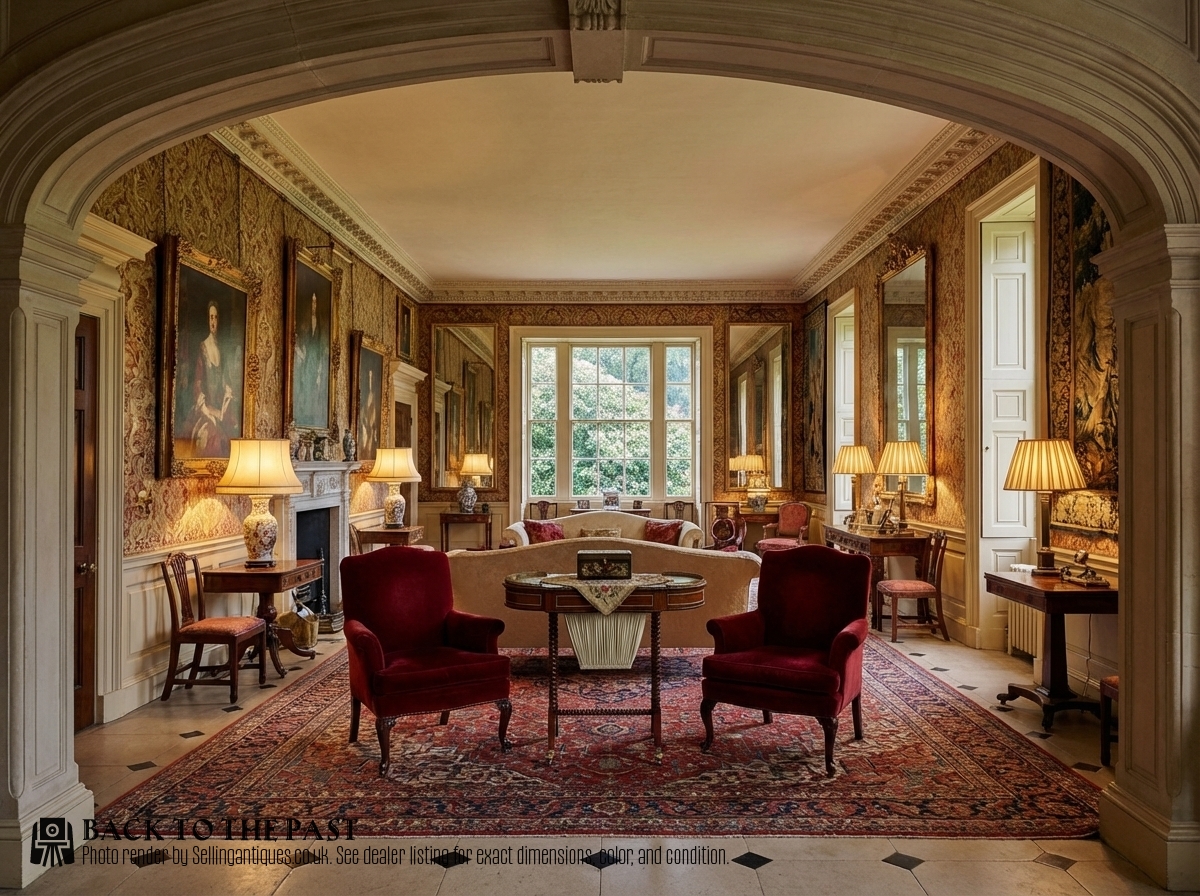
Quality differences across examples
The standard of timber selection and veneer matching defines the upper tier of these pieces, alongside crispness in carved details like sunbursts or lyre supports. Secondary elements such as finely fitted interior compartments and intact silk fabric bags indicate superior original craftsmanship.
Proportion and stability also distinguish individual pieces, where balanced tripod or pedestal bases integrate smoothly with drop-leaf actions. Subtle inlay work in boxwood or satinwood demonstrates greater skill than plain surfaces.
Regency Needlework Table Retail Price Guide 2026
Typical asking prices for regency needlework table among the pieces listed under this phrase on Sellingantiques today, from the lower quarter to the upper quarter. They describe what is for sale here now, not the wider market.
Listings feature mahogany, rosewood, boxwood, satinwood, fabric and silk across nineteenth century periods including Regency, William IV and Georgian.
Gillows
The Regency Needlework Table Glossary
- Drop-Leaf
- A table with hinged flaps on either side that fold down to save space or lift up to extend the surface area.
- Work Table
- A multi-purpose domestic table equipped with drawers, compartments or fabric bags specifically intended for sewing and needlework.
- Lyre-Ended
- A form of table support shaped like an ancient Greek lyre instrument, popular during the Regency period.
- Tunbridge Ware
- Small wooden items decorated with intricate mosaic patterns made from tiny wood blocks of different natural colours.
- Pembroke Table
- A small rectangular table featuring two hinged drop leaves on opposing sides.
Regency Needlework Table: Frequently Asked Questions
What is a regency needlework table?
A regency needlework table is a small functional piece of furniture from the early nineteenth century designed to hold sewing equipment, threads and cloth.
These tables frequently feature drop leaves, internal compartments and fabric bags suspended beneath the main top for domestic craft work.
How were these tables used originally?
Wealthy households used these tables in drawing rooms and parlours for needlework, embroidery, writing and light card games.
They provided a movable surface that kept sewing materials organised out of sight within fitted drawers and hanging fabric bags.
Which woods are most common?
Rosewood and mahogany form the vast majority of the surviving examples found in this category of furniture.
Cabinet makers also used boxwood and satinwood for fine stringing, inlay work and contrasting decorative details.
How do I spot a period piece?
Period pieces display characteristic Regency or William IV architectural details such as lyre ends, turned pedestal columns and flame mahogany veneers.
Construction methods utilise traditional cabinet-making joints, hand-cut dovetails in drawers and native secondary timbers appropriate to the early nineteenth century.