



Regency Needlework Sampler
These regency needlework sampler examples are framed works of stitched silk and linen carrying alphabets, maps, and moral verses made by young hands.
Regency Needlework Sampler
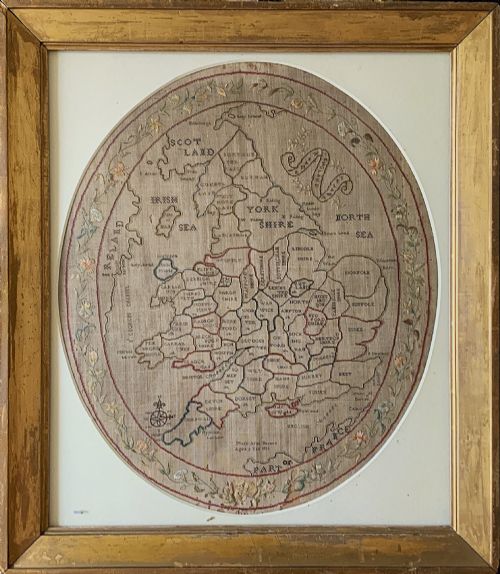
A regency needlework sampler represents a disciplined domestic exercise in stitchery, typically worked by girls learning needlecraft during the early nineteenth century. These pieces record alphabets, genealogical notes, and cartographic designs such as maps of England and Wales.
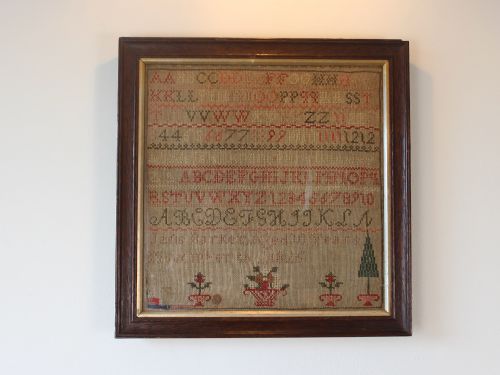
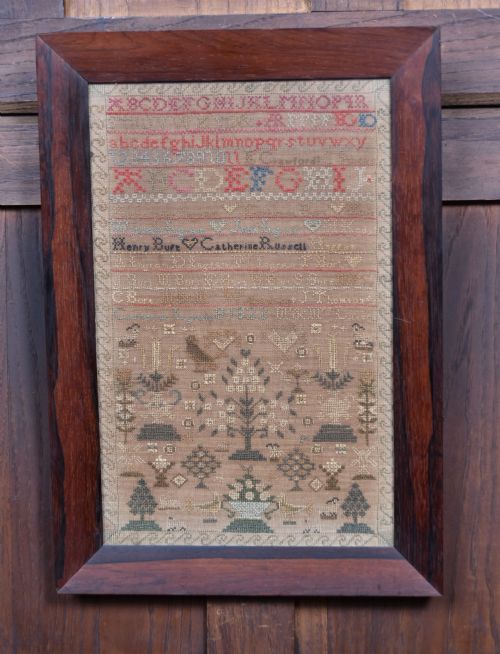
The most common format encountered here is the framed needlework panel, often executed on a linen ground using silk thread. Examples range from simple alphabetical grids to elaborate pictorial scenes depicting moral tales or stories like Jack and the Beanstalk.
Originating largely within Georgian and Regency contexts, these textiles frequently bear the maker's name, age, and a date. Pieces span the early nineteenth century, encompassing both schoolroom exercises and decorative household furnishings mounted into fire screens or timber frames.
Materials and construction methods
Makers stitched their designs using fine silk thread upon a plain woven linen ground, applying counted-thread techniques to form letters, figures, and borders. The resulting textiles rely on the contrast between the natural linen support and the dyed silk yarns.
Framing methods for these embroideries typically involved period timber mouldings, with maple, gilt wood, and plain wood frames protecting the fragile textile behind glass. Some specialised forms were mounted directly into functional household items like needlework sampler firescreens.
Regency Needlework Sampler Retail Price Guide 2026
Typical asking prices for regency needlework sampler among the pieces listed under this phrase on Sellingantiques today, from the lower quarter to the upper quarter. They describe what is for sale here now, not the wider market.
Mary Banion stitched her map of England and Wales at the tender age of nine.
Assessing quality and execution
Quality in a regency needlework sampler rests upon the precision of the stitch work, the complexity of the composition, and the legibility of the lettering or cartography. Padded elements and pictorial depth elevate certain narrative pieces above standard alphabetical exercises.
The preservation of the original materials dictates the standing of a piece, particularly the survival of vibrant silk thread colours against the linen ground and the retention of period framing under glass. The inclusion of documented makers, dates, and detailed geographic subjects adds contextual depth to the work.
The Regency Needlework Sampler Glossary
- Sampler
- A piece of embroidery produced as a demonstration or test of skill in various stitches. These works frequently record alphabets, numbers, and pious verses.
- Linen
- A textile made from the fibres of the flax plant providing the traditional woven ground for needlework. This fabric offers a sturdy and stable base for detailed stitching.
- Silk Thread
- A fine protein fibre spun by silkworms used to create lustrous embroidery stitches. It holds dye well, producing vivid details in pictorial and map samplers.
- Firescreen
- A standing piece of furniture designed to shield a person's face from the heat of an open fire. Needlework panels were often mounted into these wooden frames.
Regency Needlework Sampler: Frequently Asked Questions
What subjects appear on these samplers?
Stitchers worked alphabets, numbers, religious verses, and moral maxims into their linen grounds. More ambitious pieces include genealogical records, pictorial stories, and maps of England and Wales.
Makers also incorporated domestic scenes, floral borders, and architectural elements to demonstrate their proficiency in various needle techniques.
Who made regency needlework samplers?
Young girls and pupils in schoolrooms produced these embroideries as part of their formal education in needlecraft and deportment. Many pieces record the maker's name, age, and the specific year of completion.
Signatures such as Mary Banion, Sarah Baker, and Eleanor Grady appear directly within the stitched composition, alongside dates spanning the early nineteenth century.
How should I display a sampler?
Display these textiles away from direct sunlight to prevent the silk threads from fading against the linen ground. Keeping them behind protective glass shields the delicate fibres from dust and atmospheric moisture.
Mounting them in their original frames, whether maple or gilt wood, preserves the structural integrity of the antique piece.
How do I identify a Regency period piece?
Regency and Georgian examples display specific stylistic markers in their lettering fonts, border motifs, and framing materials. The presence of dates from the early nineteenth century helps anchor the piece within this specific era.
Materials such as maple frames and particular silk thread palettes provide further physical clues to distinguish these works from later Victorian imitations.