



Regency Needlepoint Art
Regency needlepoint art brings vibrant silk and wool needlework into the home, capturing historic stories and detailed maps framed for display.
Regency Needlepoint Art
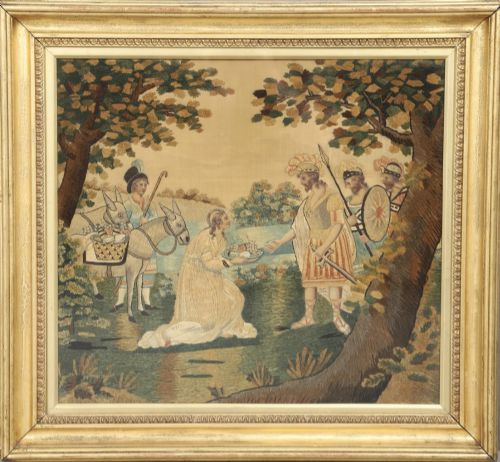
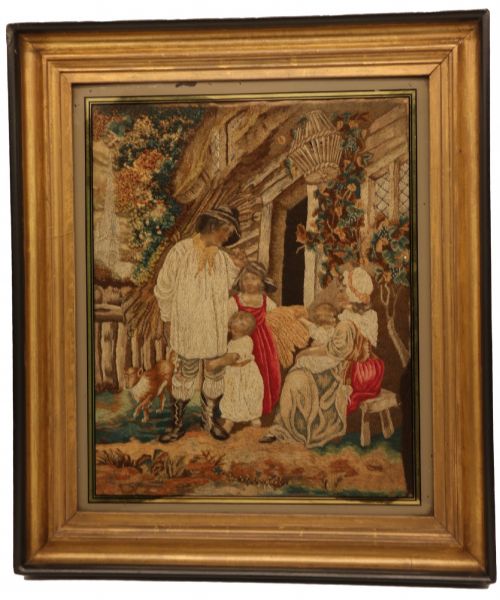
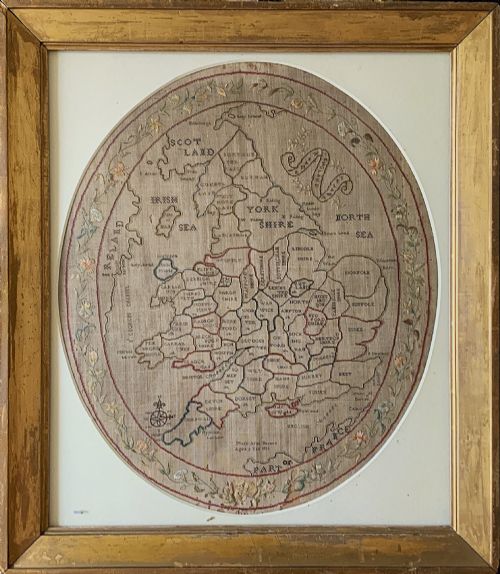
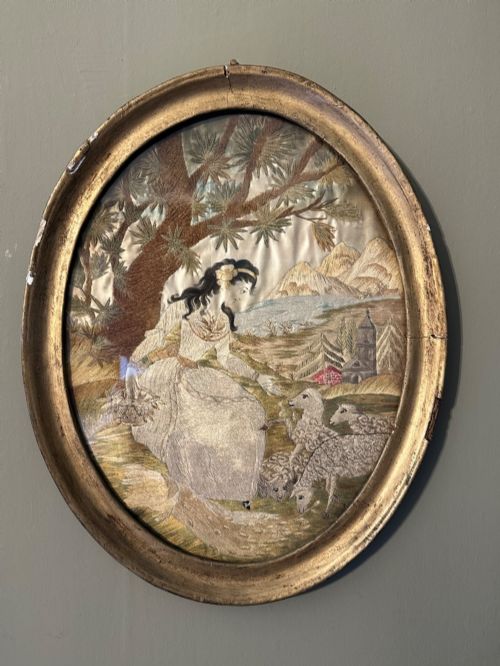
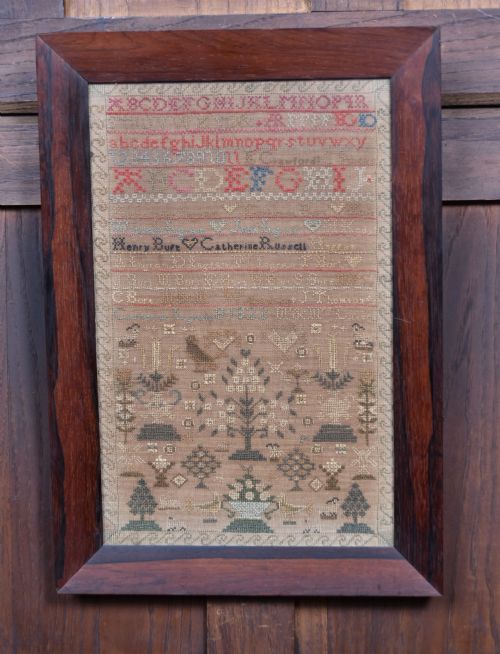
When you search for regency needlepoint art, you encounter textile pieces created during the Regency, Georgian, and broader nineteenth-century periods. These works span framed wall art, detailed needlework samplers, and embroidered pictures depicting biblical scenes, garden portraits, and maps.
The most common formats on this page include framed silk and chenille embroidery pictures, woolwork pieces, and cartographic samplers stitched by young makers such as Mary Banion and Mary Pinfold. Pairs of long stitch silk pictures and oval woolwork works also appear frequently.
Originating across English and Scottish workshops, these textiles reflect both domestic accomplishment and professional needlecraft. Each piece offers a tangible link to early nineteenth-century educational practices and decorative interior tastes.
Materials and Construction
Makers utilised fine textiles such as silk, linen, felt, and wool, often combining them with hand-painted elements on silk backgrounds. Chenille thread added tactile depth to figurative scenes, whilst crewel work brought varied texture to floral and landscape compositions.
Framing played an integral role in preservation and presentation, incorporating giltwood, gold leaf, glass, and decorative verre églomisé or gilt mezzotint frames. These protective enclosures secured the delicate stitching and painted details against environmental wear.
Regency Needlepoint Art Retail Price Guide 2026
Typical asking prices for regency needlepoint art among the pieces listed under this phrase on Sellingantiques today, from the lower quarter to the upper quarter. They describe what is for sale here now, not the wider market.
The inventory records map samplers from England and Wales alongside narrative textile scenes depicting traditional fairy tales and biblical histories.
Assessing Quality and Execution
The distinction between standard and superior pieces rests upon the precision of the stitching and the complexity of the pictorial composition. Works incorporating figurative narratives, such as biblical histories or fairy tales, demand higher technical skill than standard samplers.
Preservation of the original materials heavily dictates overall quality, particularly the retention of vivid colour in the silk and wool threads. Additionally, the presence of period frames, such as original giltwood or verre églomisé surrounds, elevates the integrity of the piece.
The Regency Needlepoint Art Glossary
- Sampler
- A piece of needlework demonstrating various stitches and alphabets, often including genealogical records or maps. These served as proof of a maker's skill and education.
- Chenille
- A fuzzy yarn resembling a caterpillar, utilised in embroidery to create velvety textures and three-dimensional effects. It was especially popular during the Regency period.
- Verre églomisé
- A process of applying gold or silver leaf to glass and etching a design before framing. It provides a decorative, reflective border often seen on nineteenth-century oval pictures.
- Long stitch
- An embroidery technique where threads span a significant distance across the canvas to form smooth, parallel lines. It allowed makers to achieve painterly shading in silk pictures.
- Crewel work
- Embroidery executed using fine wool yarn on a sturdy linen foundation. This technique produced robust, textured designs for wall hangings and pictorial works.
Regency Needlepoint Art: Frequently Asked Questions
What is regency needlepoint art?
Regency needlepoint art encompasses embroidered pictures, samplers, and textile panels produced during the early nineteenth century. These works use silk, wool, and chenille on linen grounds to depict scenes, maps, and figures.
Created largely by women and girls as both decorative home furnishings and educational exercises, these textiles preserve historic stories and domestic artistry from the Georgian era.
How should I display these textiles?
Display these framed textile works away from direct sunlight to protect the fragile silk and wool threads from fading. Maintaining stable indoor humidity levels also prevents the degradation of antique linen and backing materials.
Most pieces arrive within period frames such as giltwood or glass surrounds, which should remain intact to preserve the historical context and physical stability of the artwork.
How do I identify the period?
Dating relies upon stylistic markers, materials, and explicit inscriptions left by the makers, such as dates stitched directly into samplers like those from eighteen-ten or eighteen-twenty-two. Subject matter also offers clues, mirroring Regency tastes for classical literature, cartography, and pastoral scenes.
Frame construction and materials like verre églomisé or gilt mezzotint moulding further assist in confirming nineteenth-century origins.
Who made these embroidered pieces?
Many surviving pieces were stitched by young women and girls in domestic or school settings, sometimes recording their age and name alongside maps or moral scenes. Professional embroiderers also produced elaborate silk and chenille pictures for commercial sale.
These varied makers utilised structured samplers to demonstrate household management skills and artistic accomplishment.