





Georgian Textile Picture
A georgian textile picture brings needlework and silk thread together to record biblical tales, family alphabets, and pastoral scenes.
Georgian Textile Picture
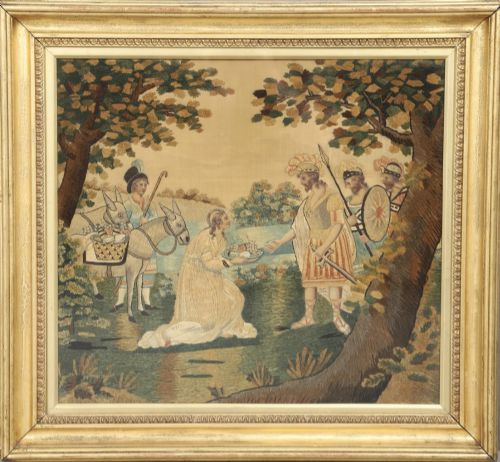
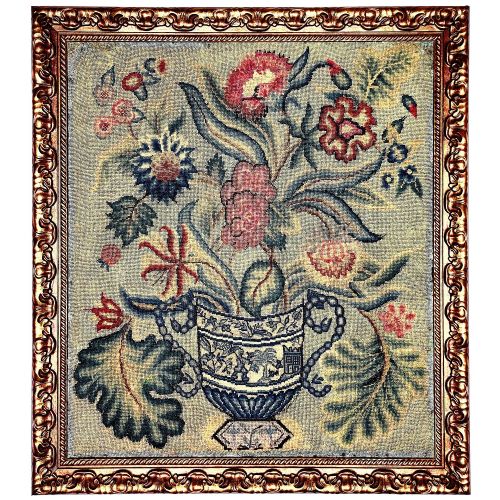
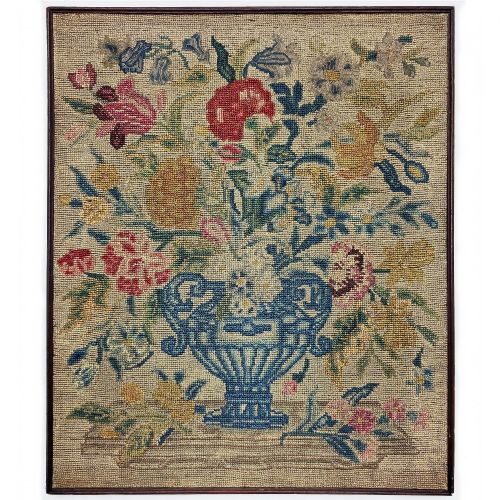
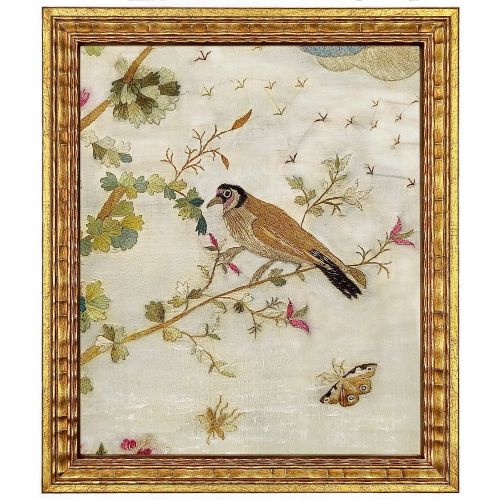
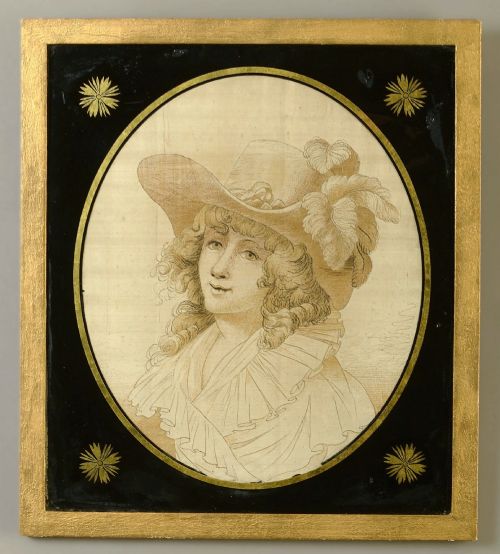
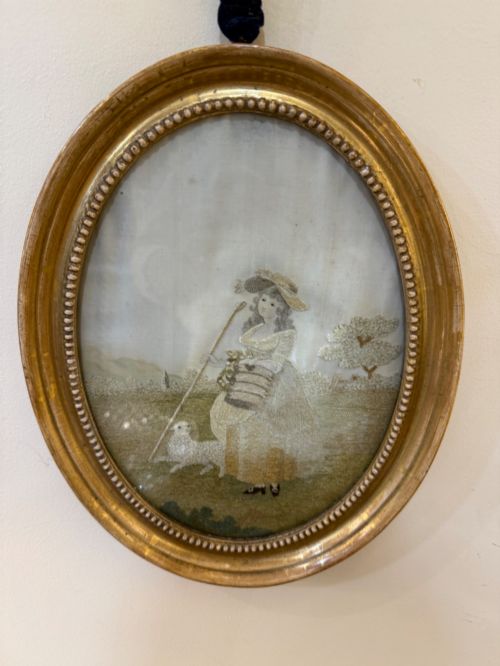
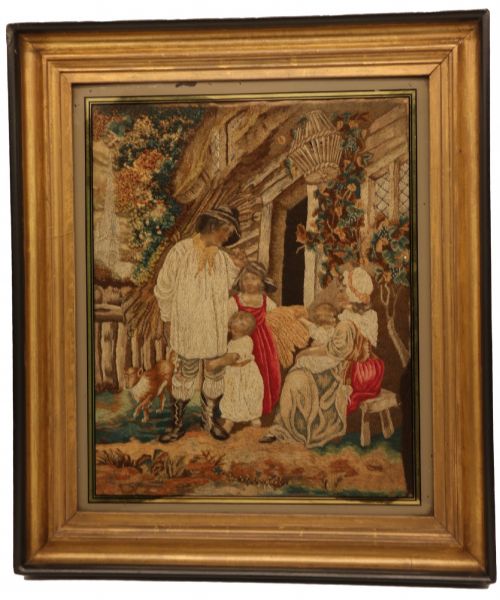
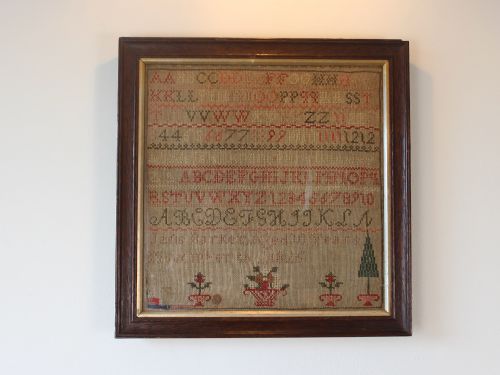
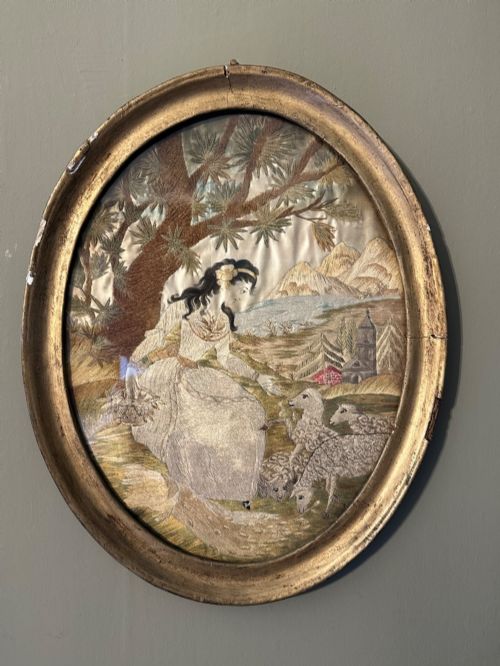
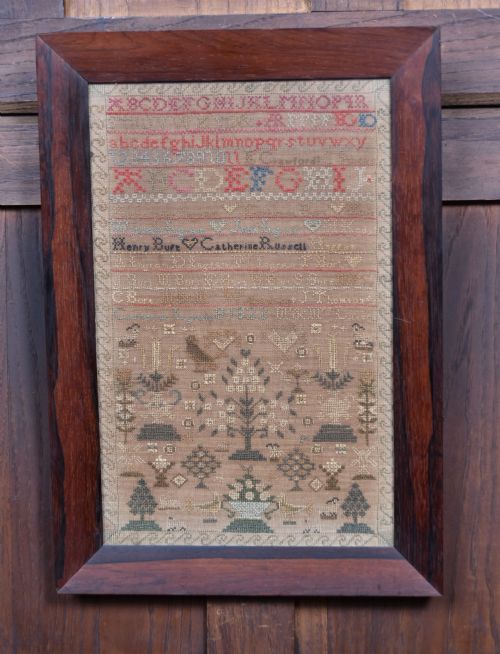
A georgian textile picture is a framed work of needlework, embroidery, or collage created during the eighteenth and nineteenth centuries. The pieces on this page span the georgian and regency periods, taking forms such as needlework samplers, embroidered silk panels, and woolwork pictures. Common subjects include biblical narratives, portraits, maps, bird studies, and literary scenes worked by hand.
The materials reflect domestic and professional needlecraft, utilising silk, wool, linen, and paper mounted within period frames. Silk and chenille embroidery dominate the finer pictorial works, whilst samplers often incorporate linen grounds and alphabet woolwork. Many pieces retain their original glass and wood surrounds, including giltwood and verre églomisé frames.
How They Were Made
Framing protected these delicate textile works, employing wood moulded into giltwood, water-gilded oval surrounds, or glass decorated with verre églomisé techniques. The combination of textile art and specialised framing preserved the organic threads against atmospheric damage over centuries.
Georgian Textile Picture Retail Price Guide 2026
Typical asking prices for georgian textile picture among the pieces listed under this phrase on Sellingantiques today, from the lower quarter to the upper quarter. They describe what is for sale here now, not the wider market.
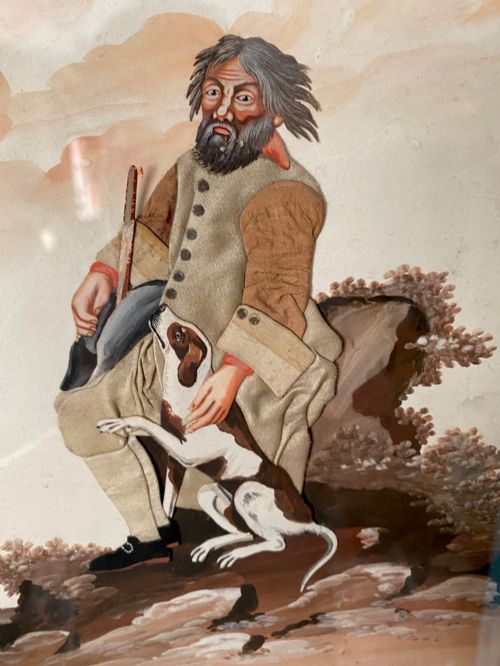
Needleworkers occasionally immortalised local characters, such as an eighteenth-century gamekeeper with his dog or an oyster seller.
What Varies in Quality
The refinement of the stitchwork and the preservation of the delicate silk and wool threads determine the distinction between examples. Pieces that maintain vibrant thread colours without excessive fading or linen degradation demonstrate superior original materials and careful subsequent preservation.
The quality of the accompanying frame significantly impacts the piece, with original giltwood, water-gilded mounts, or verre églomisé glass panels elevating the status of the textile artwork far above those in later replacement mouldings.
Susan Mary Williams of the Lozells Establishment·Mary Mason
The Georgian Textile Picture Glossary
- Sampler
- A piece of needlework produced as a demonstration or test of skill in various stitches, often featuring alphabets, numerals, and motifs. These exercises were frequently signed and dated by young makers.
- Verre Églomisé
- A process of applying cold painting and gold or silver leaf to the reverse side of glass to create an ornate decorative border. This technique often frames regency silk pictures and oval woolwork.
- Chenille
- A type of fuzzy yarn resembling a caterpillar, utilised in regency and nineteenth-century embroidery to add velvety texture and three-dimensional depth to foliage and garments.
- Crewel Work
- A type of surface embroidery using wool yarn to create flowing floral and animal designs on linen twill. This traditional technique produces robust, tactile wall art.
- Giltwood
- Wood that has been covered with a thin layer of gold leaf or gold paint, frequently used for the ornate frames enclosing eighteenth-century silk embroideries.
Georgian Textile Picture: Frequently Asked Questions
How were georgian textile pictures displayed?
These framed embroideries hung in parlours and drawing rooms as decorative wall art, showcasing the needle skills of domestic makers.
Owners protected the delicate silk and wool threads behind glass within timber frames, often selecting giltwood or verre eglomise borders to complement domestic interiors.
What subjects appear on these samplers?
Makers stitched alphabets, numerals, maps, and religious stories, such as the tale of Abigail before King David or scenes from literature.
Some pieces recorded family genealogies or educational exercises, whilst others depicted pastoral landscapes, birds, and figures like an oyster seller.
How do I care for antique silkwork?
Keep the framed textile out of direct sunlight to prevent the silk floss and wool threads from fading.
Maintain stable indoor humidity and leave the original backing and glass undisturbed to protect the fragile fabric from atmospheric moisture.
Are these works signed by the maker?
Many samplers and pictorial embroideries include the stitched name of the maker, often accompanied by an age or a date.
Schoolgirl pieces frequently record establishments like the Lozells, providing historical context for the domestic needlework.