




Regency Framed Textile
These regency framed textile pieces combine delicate needlework with period frames, offering a tangible link to early nineteenth century craft and education.
Regency Framed Textile
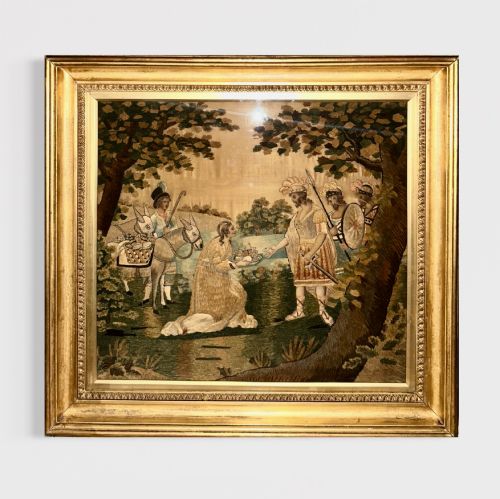
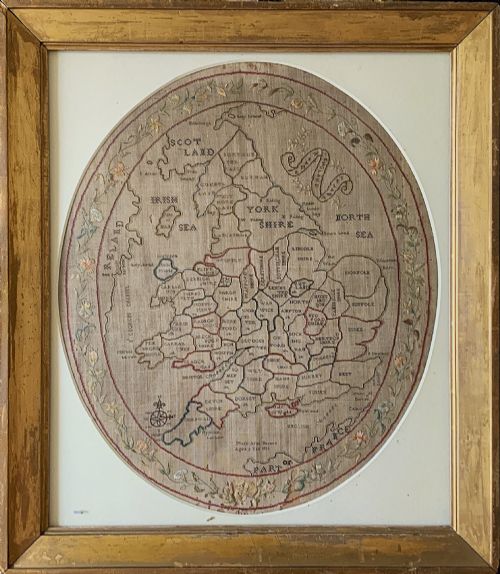
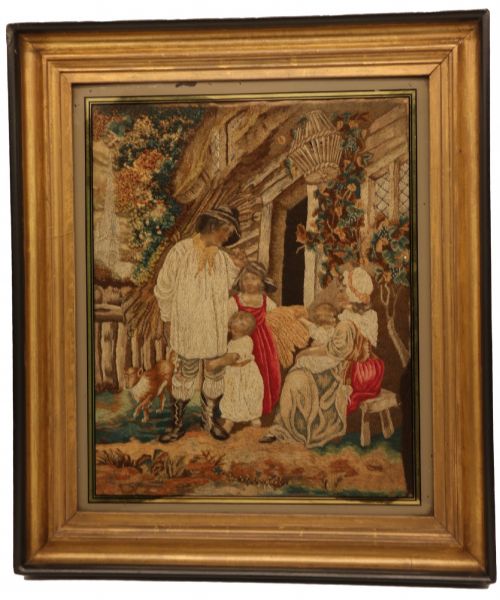
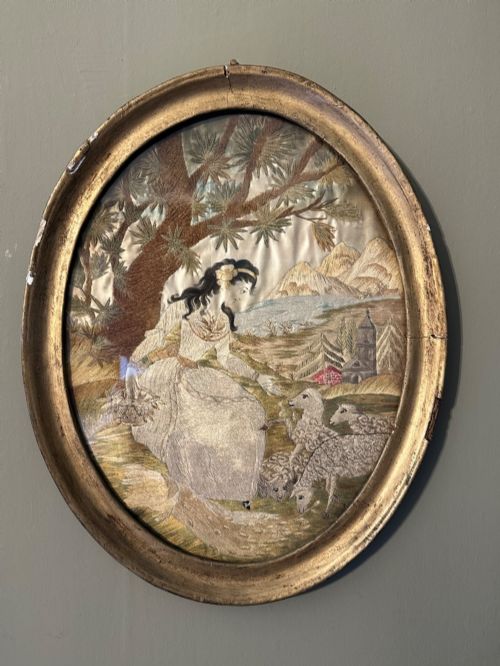
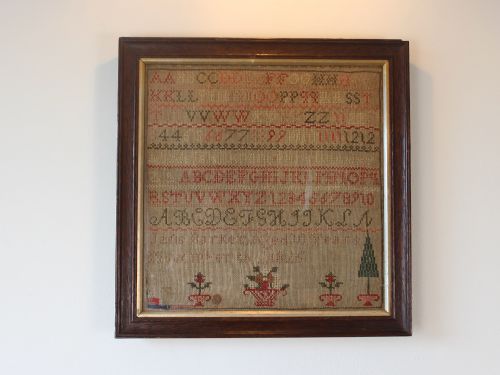
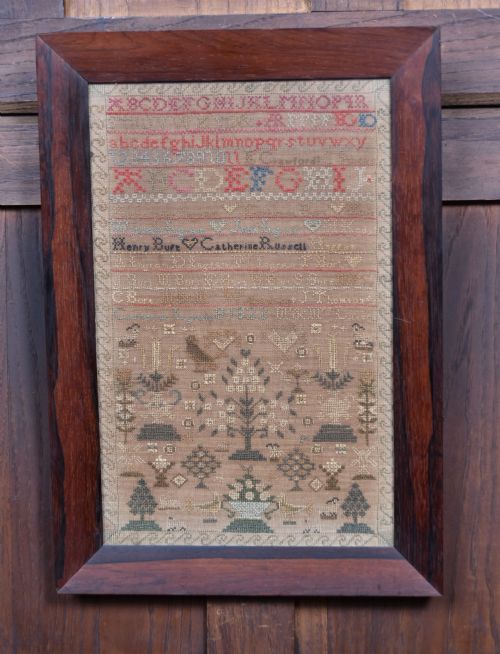
When you search for regency framed textile, you encounter works produced during the Georgian and Regency periods, spanning the early nineteenth century. The selection ranges from maps of England and Wales to alphabet samplers and pictorial embroideries depicting figures in gardens or moral stories.
Makers utilised various fabrics and threads, mounting their needlework within timber or gilt frames protected by glass. Many surviving examples carry dates and the names of young makers, recording domestic education and household accomplishments.
How they were made
Framing involved timber mouldings, frequently finished with gold leaf or rendered as verre églomisé glass panels. These protective enclosures preserved fragile textiles from dust and handling over subsequent centuries.
Regency Framed Textile Retail Price Guide 2026
Typical asking prices for regency framed textile among the pieces listed under this phrase on Sellingantiques today, from the lower quarter to the upper quarter. They describe what is for sale here now, not the wider market.
The selection includes works dated across the early nineteenth century, featuring both 1800s Georgian examples and Regency period pieces.
What varies in quality
The sophistication of the needlework and the clarity of the composition determine the standing of each piece. Elaborate pictorial subjects and detailed cartography demand greater technical skill than basic alphabet drills.
The condition of the textile ground and the originality of the frame substantially influence the overall integrity. Surviving glass and untouched gilt surrounds preserve the piece as originally displayed.
Mary Banion·Sarah Baker·Martha Hall·Eleanor Grady·Mary Pinfold
The Regency Framed Textile Glossary
- Sampler
- A piece of needlework produced to demonstrate proficiency in various stitches and lettering alphabets. They often record the maker's name, age, and date.
- Verre églomisé
- A process of applying gold or silver leaf to glass along with painting, used here for decorative borders on picture frames.
- Silkwork
- Embroidery executed primarily in silk threads, frequently combined with painted elements to create pictorial wall art.
- Crewel work
- Embroidery using wool yarn on a heavy linen or twill ground, producing textured designs often seen in early nineteenth century pieces.
Regency Framed Textile: Frequently Asked Questions
How do I date a framed textile?
Many pieces carry embroidered dates or maker signatures directly within the composition. Style markers, frame construction, and materials like early glass also help establish the period.
Needlework samplers often include the age of the maker and the exact year of completion. Comparing the lettering styles and motifs to dated examples provides further confirmation.
What is verre églomisé?
Verre églomisé is a technique where artists paint and apply gold or silver leaf onto glass panels. In these frames, it creates a decorative border around the central textile.
This method adds a reflective, finished edge that complements the delicate stitching within. It requires careful handling to prevent damage to the historic glass surface.
Were these always intended for display?
Domestic needlework from this era was created to showcase household accomplishments and educational attainment. Once completed, families mounted them behind glass for wall display in parlours and drawing rooms.
Samplers and pictorial embroideries served as both decorative art and testaments to a young maker's skill. Framing protected the fragile silk and wool threads from daily wear.
How should I care for a textile frame?
Keep framed textiles away from direct sunlight to prevent the fading of silk threads and wool yarns. Stable indoor humidity protects both the antique timber frame and the fabric ground.
Clean the glass gently with a soft cloth, avoiding any moisture near the exposed edges of the historic frame. Professional framing support ensures the textile remains secure without tension.