




Regency Music Chair
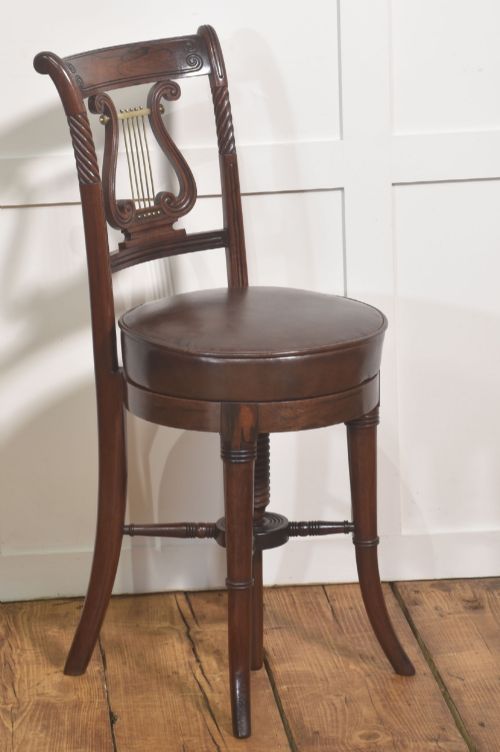
Regency music chairs are adjustable seating forms designed for musicians, and you find them crafted in mahogany and rosewood with revolving tops.
Regency Music Chair
A regency music chair is a specialised seat designed for keyboard players, harpists, and cellists during the nineteenth century. These pieces appear frequently as revolving piano stools, rise and fall music chairs, and specialised harpist chairs.
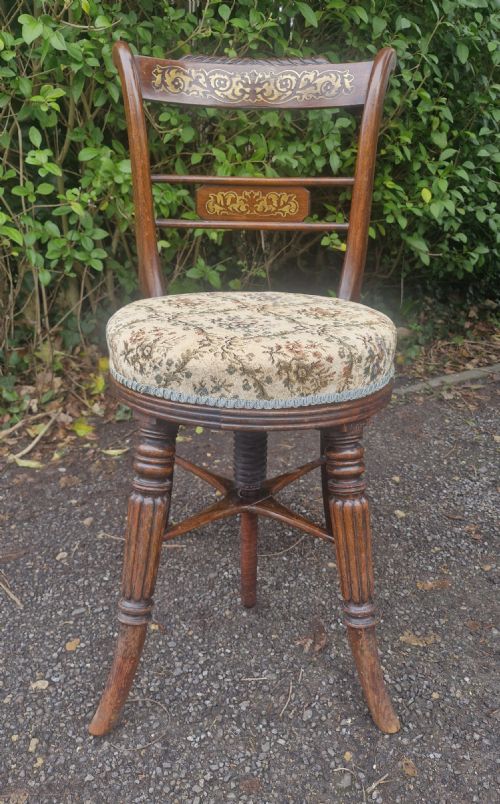
The material palette centres on mahogany and rosewood, often enriched with brass inlay, gilt paint, or leather upholstery. Makers produced these forms across the Georgian, Regency, and William IV periods, alongside later Victorian and Sheraton Revival interpretations.
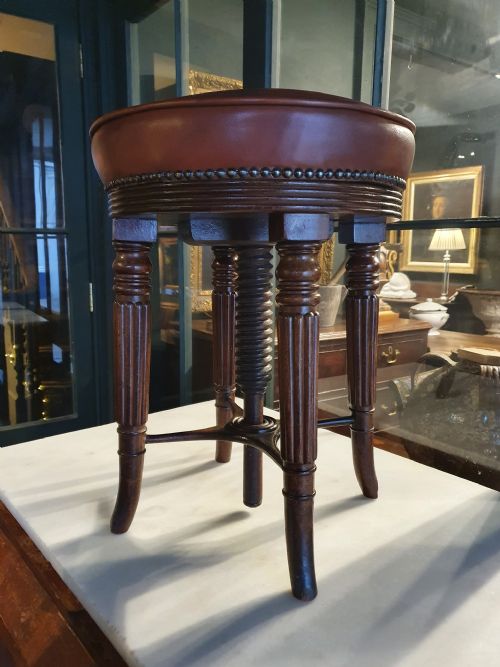
You most commonly meet mahogany and rosewood examples featuring screw-top adjustment mechanisms or revolving seats. The selection spans straightforward dressing table chairs up to elaborately decorated music stools with floral painted decoration.
How They Were Made
Upholstery forms an integral part of the construction, utilising fabric, velvet, and leather pads over wood frames. Turning and joinery created the stable three or four-legged bases required to support a revolving or rising seat.
Listings feature mahogany, rosewood, and satinwood alongside brass and leather materials across nineteenth century periods.
What Varies in Quality
The refinement of the timber selection and the complexity of brass inlay set higher examples apart from standard workshop output. Dense grain in the rosewood or mahogany and crisp execution of brass details indicate superior cabinetmaking.
The mechanical ingenuity of the rise and fall screw action or revolving pivot dictates the functional success of the piece. Smooth operation of the adjustable height mechanism demonstrates the original precision of the maker.
Gillows
The Regency Music Chair Glossary
- Revolving piano stool
- A seat featuring a central screw mechanism or pivot allowing the top to turn freely. This permits the musician to shift position easily while seated at an instrument.
- Rise and fall
- A mechanical system utilising a threaded screw column to raise or lower the seat height. It allowed players of different statures to adjust their seating posture.
- Harpist chair
- A specialised seat often designed with modified or absent arms to accommodate the posture and instrument of a harp player. These forms frequently incorporate revolving tops or adjustable heights.
- Brass inlay
- The technique of embedding thin strips or shaped pieces of brass into the wooden surface of the furniture. This method created contrasting geometric or floral patterns on rosewood and mahogany.
- Simulated rosewood
- A painted surface treatment mimicking the distinct grain and rich colouration of genuine rosewood. Cabinetmakers applied this finish to secondary timbers to achieve a uniform appearance.
Regency Music Chair: Frequently Asked Questions
What is a regency music chair?
A regency music chair is an adjustable nineteenth-century seat built for musicians like pianists and harpists. They typically feature revolving wooden tops and specialised mechanisms for height control.
These pieces utilise fine timbers including mahogany and rosewood, often complemented by brass inlay or leather upholstery. They served both practical musical functions and elegant domestic interiors.
How do you adjust the height?
Many examples employ a central screw mechanism that raises or lowers the seat when turned. This rise and fall action allowed performers to customize their seating level.
Other variants use simple revolving pivots or fixed-height frames with upholstered pads. The engineering ensures stability while the musician moves during performance.
What woods were used?
Cabinetmakers primarily selected mahogany and rosewood for their rich grain and structural strength. Satinwood and simulated rosewood finishes also appear across the surviving pieces.
Secondary woods provided internal support while the primary hardwoods formed the visible turned legs and revolving seats. Brass elements frequently accented these timber surfaces.
How do I identify the period?
Period identification relies on stylistic cues from the Georgian, Regency, and William IV eras. Details like brass inlay, turned supports, and specific upholstery styles help date the construction.
Late Regency and nineteenth-century examples often combine revolving actions with decorative painted finishes or elaborate harpist configurations. Comparing the timber quality and mechanism type clarifies the era of manufacture.