
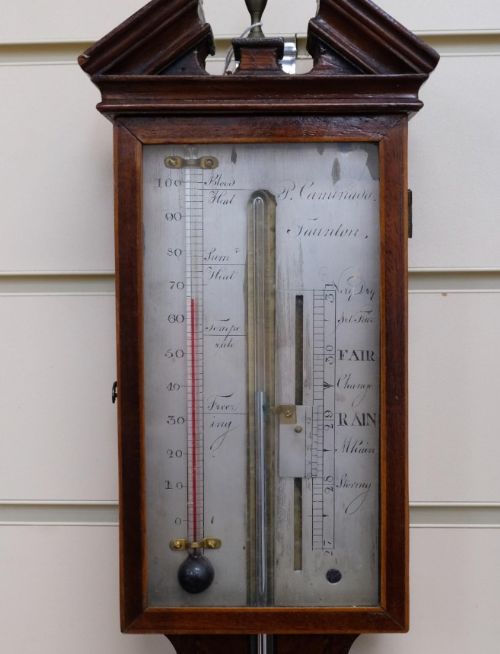
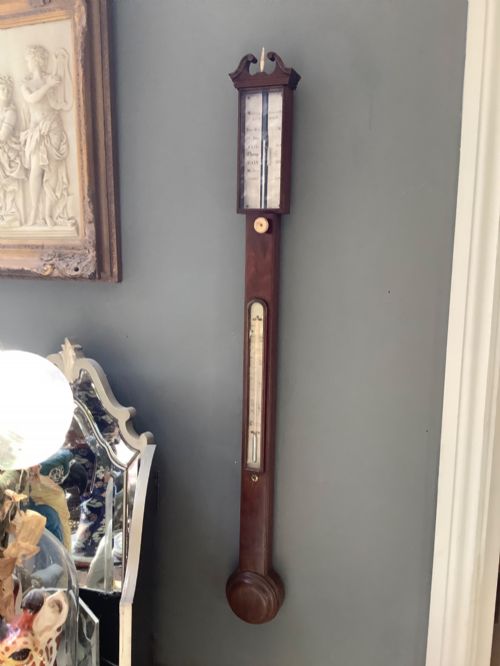


Regency Mercury Barometer
A regency mercury barometer brings reliable atmospheric tracking and fine cabinetmaking together, making it a functional centrepiece for any traditional hallway.
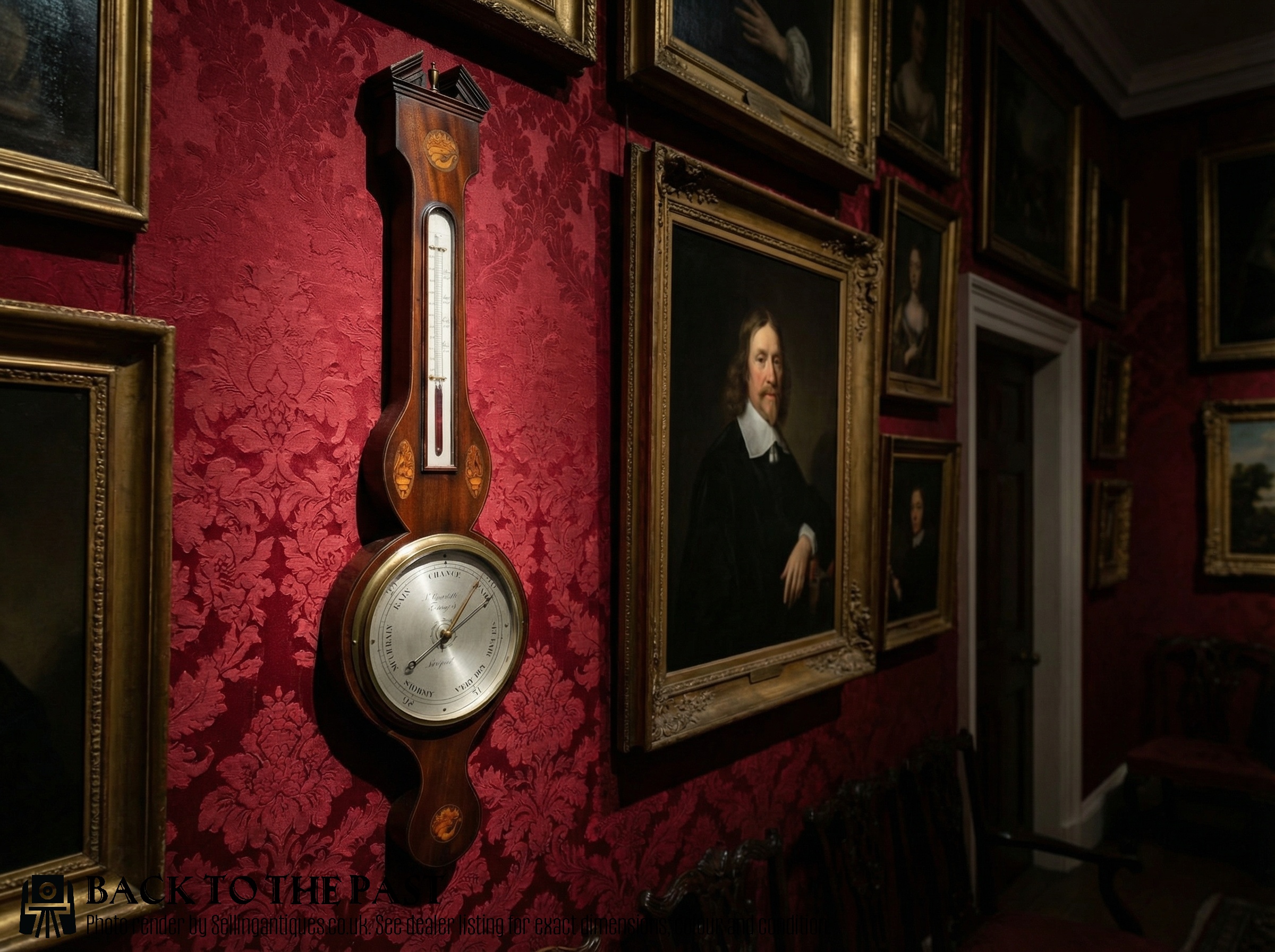
Regency Mercury Barometer
When searching for a regency mercury barometer, collectors look at precision weather instruments housed in refined timber cases from the nineteenth century and Georgian periods. These pieces record atmospheric pressure changes using column heights, combining scientific utility with domestic elegance.
The selections available here showcase distinct regional makers and diverse domestic forms, spanning wheel barometers, stick barometers, and banjo variants. Mahogany and rosewood form the primary housing materials, frequently enhanced with boxwood stringing or bone dials.
Most examples originate from the Georgian and Regency eras, though Victorian interpretations and later nineteenth-century pieces also appear. Buyers encounter signed dial plates from makers working across provincial towns and major cities alike.
How they were made
Cabinetmakers constructed the slender or curved housings using dense timbers like mahogany and rosewood, often shaping them into bow fronts or banjo profiles. Boxwood inlay and bone fittings provided subtle contrast to the dark wood surfaces.
Instrument makers integrated silvered brass or silvered metal dials to display weather readings, mounting delicate glass tubes filled with mercury to measure atmospheric pressure. Signed inscriptions were frequently engraved directly onto the metal plates.
Listings feature eighteenth and nineteenth century periods alongside materials including glass, brass, mahogany, and rosewood.
What varies in quality
The distinction between standard examples and superior pieces rests largely on the sophistication of the cabinetwork and the renown of the instrument maker. Crisp bone dial engraving, intricate boxwood stringing, and well-proportioned timber housings elevate an item's standing.
Provenance and signature clarity also influence the stature of a barometer, with signed works by recognised provincial or London instrument makers holding greater interest for collectors than unsigned alternatives.
P. Caminada·Dollond of London·Ganthony of London·JB Bergna·Molton of Norwich·Bate of London·L Casatelli·Roncoroni·Sandrino of Liverpool·Vecchio & Co·A. Rivolta·Bassi·J C Moretti·F Salteri & Co·Dominic Gatty·Corti of Exeter·Malacrida of Dublin·Russell of Liverpool·L. Malacrida·George Dollond·Schiavi of Chesham·Vaughan of Newport
The Regency Mercury Barometer Glossary
- Mercury barometer
- An instrument that measures atmospheric pressure by balancing the weight of mercury against the pressure of the atmosphere. The rising and falling column indicates impending weather changes.
- Wheel barometer
- A dial-type barometer where a float on the mercury column connects to a pulley and pointer, translating vertical movement into circular gauge readings. These often incorporate hygrometers or thermometers on the face.
- Stick barometer
- A vertical instrument that displays the mercury column directly within a narrow wooden trunk, often topped with a sliding vernier. This form offers a purer scientific reading without dial linkages.
- Silvered brass
- A metal alloy treated with silver powder to create a bright, reflective surface suitable for engraving scale graduations. These plates provide clear legibility for readings.
- Boxwood stringing
- Fine inlaid lines of pale boxwood set flush into darker cabinet timbers like mahogany or rosewood. This decorative technique frames the edges of barometer trunks and panels.
Regency Mercury Barometer: Frequently Asked Questions
How do I read a mercury barometer?
Read the main dial by observing the position of the pointer relative to engraved weather descriptions like fair or rain. Use the movable index hand to mark the current pressure so future shifts become immediately apparent.
Changes in the column height indicate rising or falling pressure, which historically helped households anticipate local weather patterns. Sudden drops typically warn of approaching storms.
Where were barometers placed in homes?
These instruments typically hung in hallways, libraries, or entrance foyers where residents could check the weather before stepping outdoors. Their decorative timber cases suited the formal reception rooms of period properties.
Placement required stable interior walls away from direct heat sources to ensure accurate atmospheric readings without thermal interference.
How do I tell stick and wheel barometers apart?
Stick barometers feature a long, narrow vertical trunk where the mercury column remains directly visible behind glass. They offer a direct view of the scientific mechanism.
Wheel barometers house the tube internally and display readings on a large circular dial face. This format often includes secondary instruments like thermometers.
Can antique barometers still track weather?
Original mechanisms can register atmospheric changes provided the mercury column remains intact and air-free. Many surviving examples retain their core functional capability.
Professional calibration may be necessary to ensure accurate readings, as historical instruments respond to local pressure shifts much like modern barometers.