
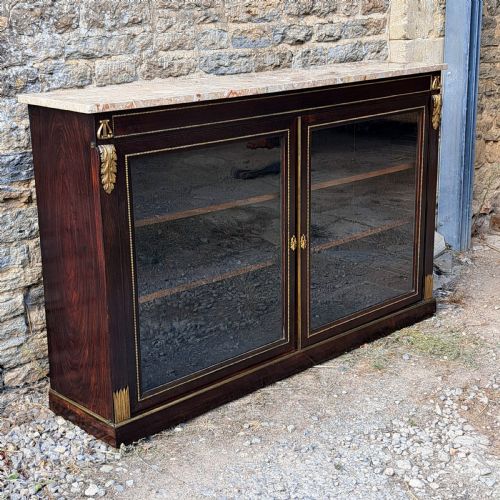
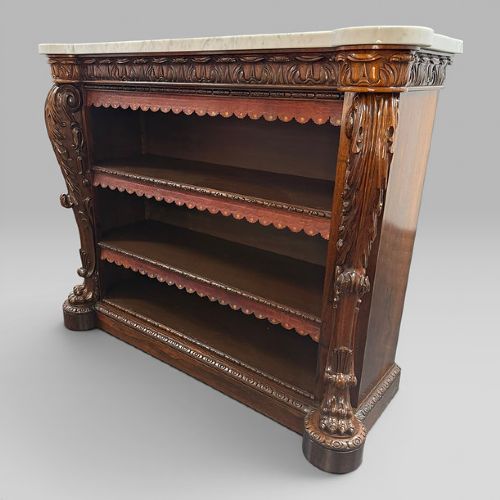


Regency Marble Cabinet
A regency marble cabinet brings the weight of solid stone and dark woods into a room with formal restraint.
Regency Marble Cabinet
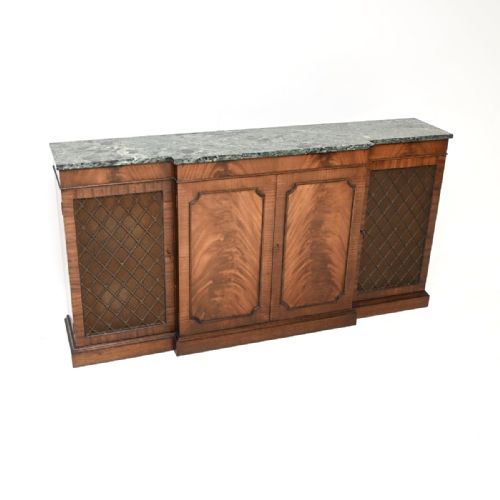
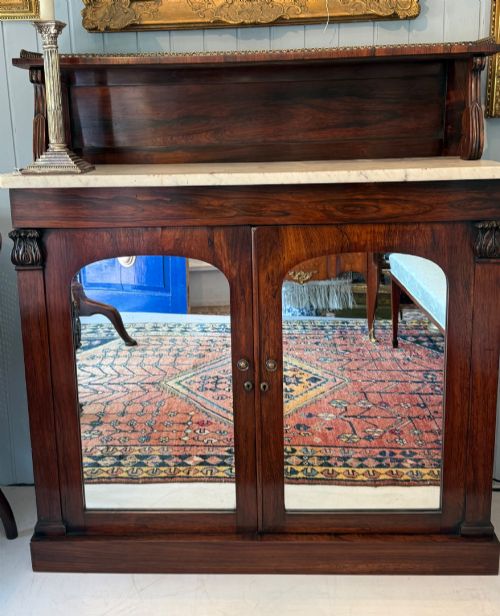
A regency marble cabinet typically takes the form of a side cabinet, chiffonier, or breakfront bookcase designed during the early nineteenth century. These low-slung case pieces combine heavy stone surfaces with timber carcases intended for display and storage in formal reception rooms.
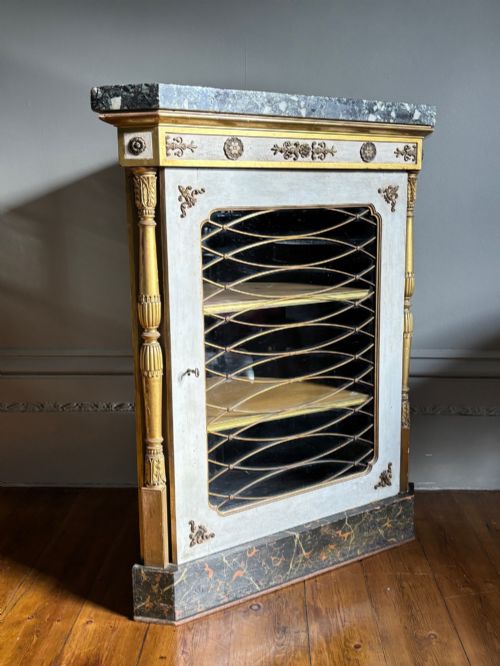
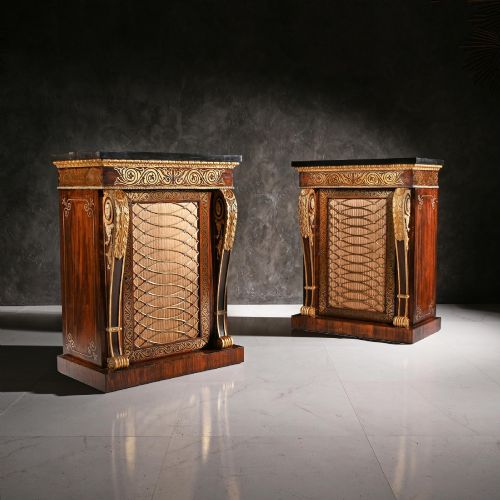
The version most commonly encountered on this page pairs a rosewood or mahogany carcase with a contrasting inset slab of marble, frequently featuring brass grill doors or gilt mounts. They sit low against a wall, often functioning as serving surfaces or low bookcases beneath art and mirrors.
Materials and construction methods
Makers built these carcases from dense tropical hardwoods like rosewood and mahogany over pine or oak framing, frequently adding brass inlay, parcel gilt details, and silk-backed wire grills. Timber surfaces received hand-rubbed French polish to bring out the grain of flame or fiddle back figures.
Slabs of Carrara or varicoloured marble were cut to fit the exact profile of the top, resting directly on the timber moulding. Metal components such as brass sphinx mounts, galleries, and hinges were cast and chased by hand before being fitted to the doors and pilasters.
Listings feature rosewood, mahogany, and burr yew timbers alongside Carrara and varicoloured marble tops.
Judging the quality of construction
Quality rests primarily in the selection of timber veneers and the weight of the marble top. Superior pieces utilise dense Rio rosewood or figured mahogany matched symmetrically across the doors, paired with thick, finely polished stone rather than thin slate substitutes.
Joinery detail and mount chasing separate workshop standards. Better examples feature tight dovetailing in internal drawers, substantial brass grills rather than stamped wire, and crisp cast mounts that remain firmly pegged to the timber carcase.
Louis Constantin Le Gaigneur·Gillows·John Mclean·S Jamar
The Regency Marble Cabinet Glossary
- Chiffonier
- A low cabinet fitted with doors enclosing shelves, often topped with a raised shelf supported by small pillars. It developed during the nineteenth century as a convenient piece for dining rooms and drawing rooms.
- Breakfront
- A piece of furniture where the central section projects forward from the flanking wings. This configuration breaks up the flat line of a wall and allows for varied internal storage.
- Carrara marble
- A type of white or blue-grey marble quarried in the city of Carrara in Italy. It appears frequently on nineteenth-century English case furniture for its smooth surface and durability.
- Parcel gilt
- Wood or metal partially covered with gold leaf to highlight carved details or mouldings. It provides a measured contrast against dark rosewood and mahogany surfaces.
- Fiddle back
- A figure in mahogany timber where the grain ripples in narrow parallel bands resembling the back of a violin. Cabinet makers prized this figure for prominent door panels.
Regency Marble Cabinet: Frequently Asked Questions
Where should I place a regency marble cabinet?
Position your cabinet along a principal wall in a dining room or drawing room where the stone top remains clear for display. Keep the timber away from direct heat sources and sunlight to protect the French polish.
Because the top is heavy stone, ensure the floor is level so the doors hang true and close evenly against the frame.
How do I clean the marble top?
Wipe the stone surface using a damp cloth with mild, neutral soap and dry it immediately with a soft lint-free cloth. Avoid acidic cleaners, vinegar, or lemon juice, which etch polished marble.
Apply a specialist stone wax periodically to maintain the sheen and protect against minor liquid marks.
How can I tell if the marble is original?
Examine the underside of the stone slab and the rebate in the timber top where it rests. Original marble matches the exact period proportions and shows matching weathering, edge chamfers, and historical adhesive or positioning marks.
Replacements often fit too loosely or feature modern machine-cut edges that differ from nineteenth-century standards.