

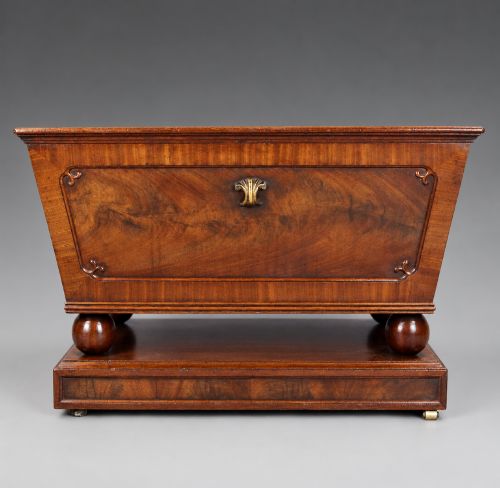
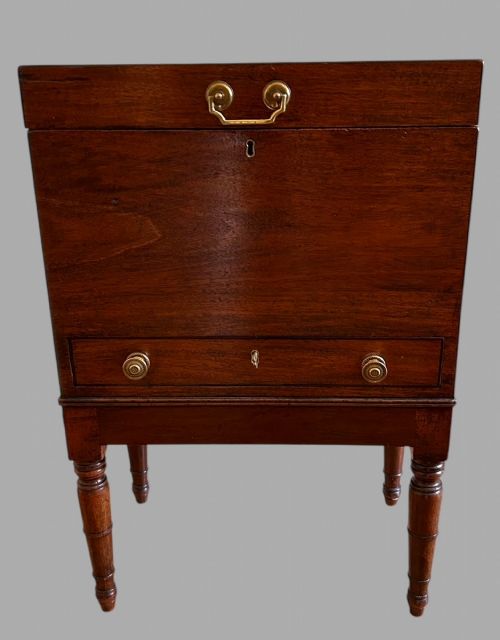
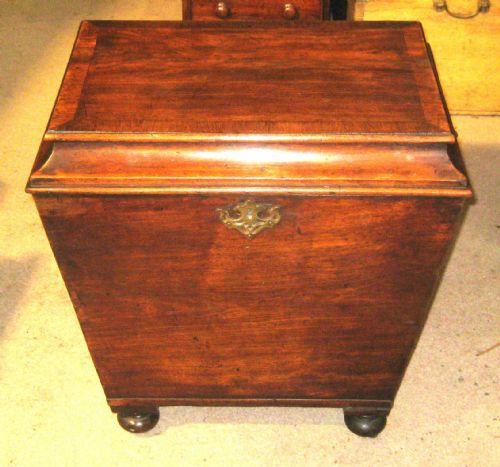
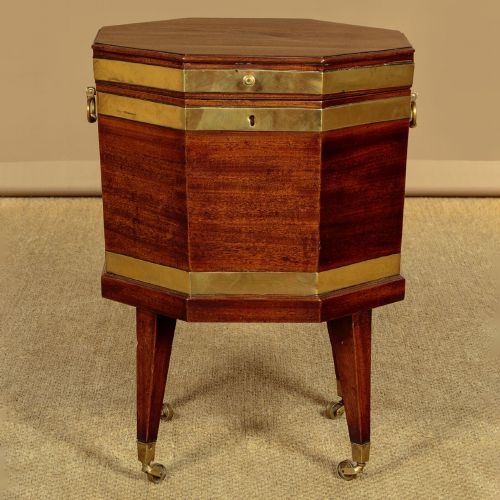
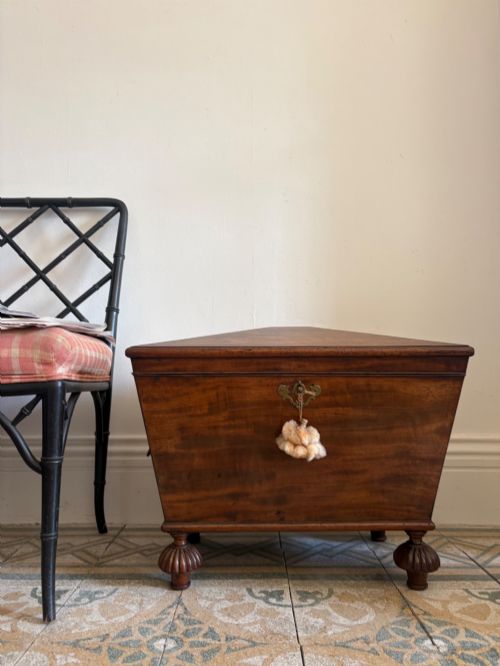


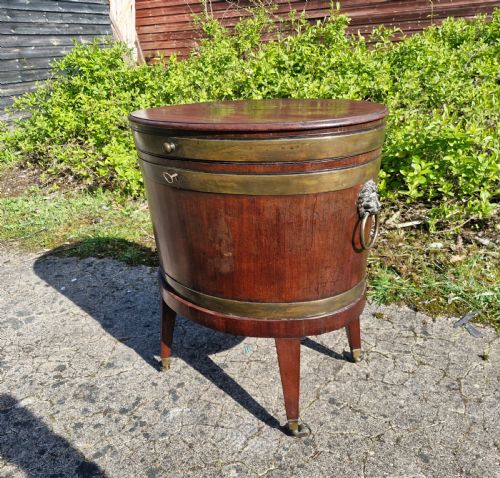


Regency Mahogany Wine Sarcophagus
These substantial regency mahogany wine sarcophagus pieces bring classical grandeur to dining rooms while keeping bottles cool.
Regency Mahogany Wine Sarcophagus
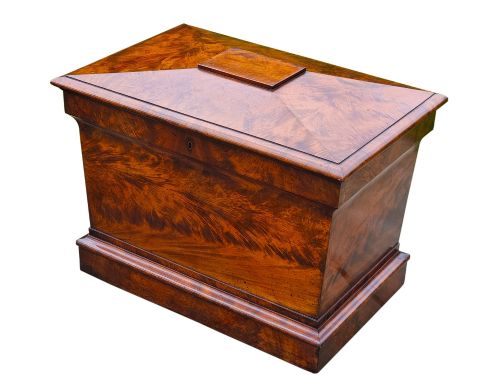
A regency mahogany wine sarcophagus takes the classical shape of an ancient stone coffin and adapts it into a heavy, lidded storage chest for bottles and ice during grand meals. Most examples seen span the Georgian, Regency and William IV periods, crossing into later revival styles while keeping their low, blocky proportions.
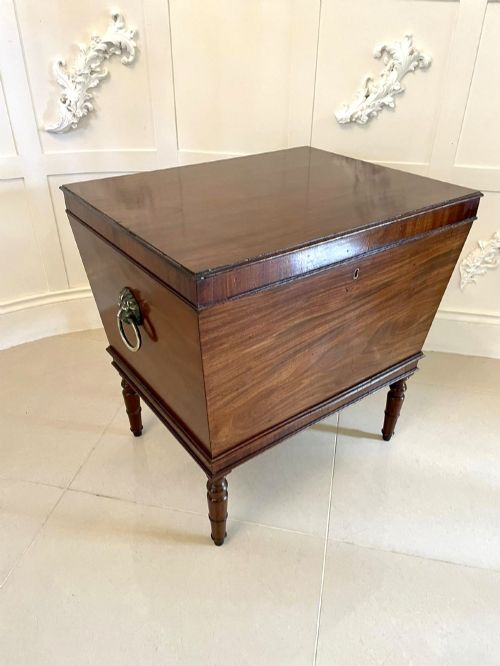
The objects appear under several historical names including cellarettes, wine coolers and wine cellarets, but the function remains consistent. They sit directly on the floor, often supported on substantial feet or resting on low pedestals.
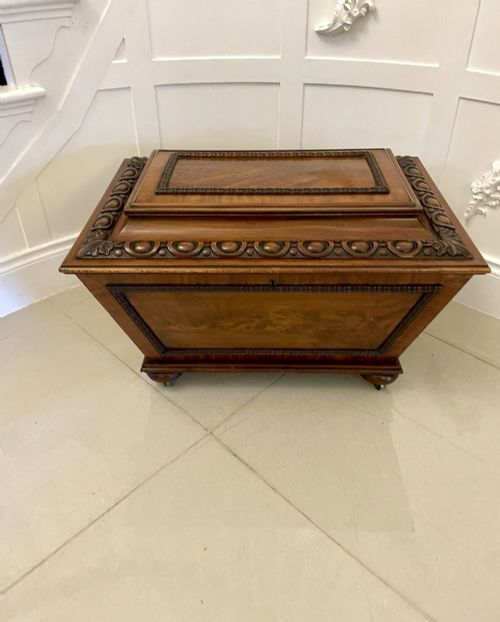
Makers shaped these vessels with classical motifs drawn from architectural pattern books, aligning with the taste of elite dining rooms. The form responds directly to the social rituals of the period, providing functional bottle storage that doubled as a sculptural statement.
Materials and Construction
Cabinet makers built these pieces using solid mahogany and figured flame mahogany veneers laid over secondary timbers, occasionally accented with ebonised wood stringing. The choice of dense tropical hardwood provided the stability needed for large panel construction.
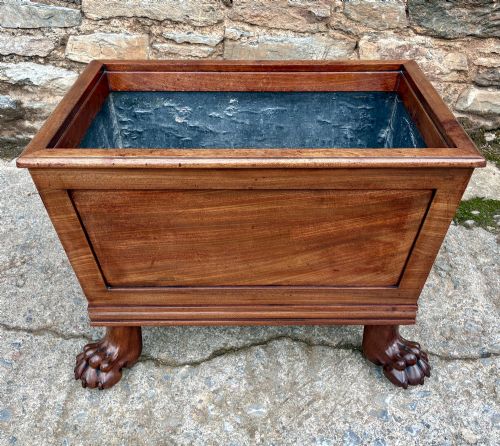
Metal components played a critical structural and decorative role, featuring heavy brass bandings, cast ormolu mounts and drop ring handles. Interiors frequently retain original lead linings or metal divisions designed to hold ice and wet bottles without rotting the surrounding wood.
Regency Mahogany Wine Sarcophagus Retail Price Guide 2026
Typical asking prices for regency mahogany wine sarcophagus among the pieces listed under this phrase on Sellingantiques today, from the lower quarter to the upper quarter. They describe what is for sale here now, not the wider market.
Early dining rooms required heavy lockable wine chests because servants occasionally sampled the expensive vintages unsupervised.
Evaluating the Pieces
Quality rests primarily in the selection of timber veneers and the crispness of applied carving or cast metal mounts. Flame mahogany figures with dramatic grain patterns signal superior material choice by the workshop.
Proportion and architectural detail distinguish standard production from exceptional examples, such as those with carved paw feet or intricate brass inlay. The presence of intact interior lead liners and original internal divisions adds significant weight to an evaluation.
Gillows of Lancaster and London·Thomas Hope·T. Feetham·Maples and Co·Robert Strahan and Co
The Regency Mahogany Wine Sarcophagus Glossary
- Cellarette
- A lockable container used for storing wine bottles near the dining table. They evolved from simpler buckets into elaborate architectural furniture during the Regency period.
- Sarcophagus
- An antique container style mimicking ancient Roman stone coffins featuring a low, heavy rectangular body with a gabled or domed lid. Cabinet makers adapted this classical silhouette for domestic dining room storage.
- Ormolu
- Gilded bronze mounts applied to furniture for decorative contrast. The technique involves treating metal with a mercury and gold amalgam before firing.
- Flame mahogany
- A veneer cut from the fork of a mahogany tree where the branches join the trunk. This cutting method produces a distinctive rippled, flame-like grain pattern prized by Regency cabinet makers.
Regency Mahogany Wine Sarcophagus: Frequently Asked Questions
How were regency mahogany wine sarcophagus pieces used?
Servants filled the internal lead-lined compartments with ice and water to chill wine bottles before and during formal dinner service.
The heavy lockable lids kept expensive vintages secure from household staff while maintaining the desired temperature throughout long meals.
Where should I place a wine cooler at home?
These low, substantial chests sit best freestanding in a dining room or hallway against a prominent wall.
Their finished backs and detailed sides allow them to anchor large spaces without needing support from surrounding furniture.
How do I identify a Regency period piece?
Look for classical architectural proportions, flame mahogany veneers and heavy brass or ormolu mounts typical of the early nineteenth century.
Details like carved paw feet and reeded mouldings further separate authentic Regency examples from later Victorian revivals.
What is inside a traditional cellarette?
Interiors typically feature partitioned wooden slots or lead-lined wells designed to hold individual wine bottles securely.
Many retain their original drop-in lead trays and metal dividers intended to separate ice from the liquid contents.