

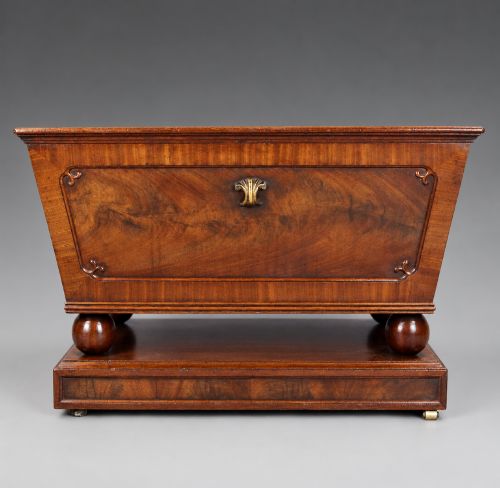


Antique Dining Room Wine Chest
An antique dining room wine chest brings serious period architecture to the floor, built to chill bottles in style.
Antique Dining Room Wine Chest
An antique dining room wine chest primarily takes the form of a wine cooler or cellarette, designed to sit in the dining room and hold bottles ready for service. You are most likely to meet mahogany examples shaped as low sarcophagi, standing on short feet or castors.
The pieces on this page span the nineteenth century, taking in Regency, William IV, and Victorian periods alongside later Georgian revivals. They range from compact domestic boxes to massive carved containers intended for substantial dining spaces.
How they were made
Cabinet makers constructed these bodies predominantly from mahogany and flame mahogany, occasionally turning to walnut or ebonised wood for specific aesthetic effects. Selected panels show boxwood inlay, while brass handles, mounts and linings assist with functionality and structure.
Internal lead linings and metal fittings were integrated to hold melting ice without damaging the surrounding timber structure. Carved details and serpentine outlines required skilled timber manipulation by period artisans.
Antique Dining Room Wine Chest Retail Price Guide 2026
Typical asking prices for dining room wine chest among the pieces listed under this phrase on Sellingantiques today, from the lower quarter to the upper quarter. They describe what is for sale here now, not the wider market.
Listings feature mahogany, walnut, and flame mahogany timber bodies enhanced with brass, boxwood inlay, and lead linings.
What varies in quality
Quality rests heavily on the selection of timber grain, where highly figured flame mahogany or figured walnut elevates a piece far above plain stock. The ambition of the form also dictates standing, moving from simple rectangular boxes to deeply carved sarcophagus shapes with serpentine profiles.
Hardware and internal execution separate standard production from exceptional examples, particularly where heavy brass mounts, boxwood inlay and intact lead linings survive. Finer proportions and crisper carving denote a higher tier of workshop output.
The Antique Dining Room Wine Chest Glossary
- Cellarette
- A lockable container used in dining rooms for holding wine bottles before they were served at the table. These vessels often sit low to the ground near the sideboard.
- Wine Cooler
- A container designed to hold ice and bottles for chilling wine during dining. They frequently share forms with cellarettes in the nineteenth century record.
- Sarcophagus
- A monumental coffin-like architectural shape with a sloping lid, adopted by cabinet makers for grand wine containers. This form dominates Regency examples.
- Flame Mahogany
- A veneer cut from timber where the branch meets the trunk, producing a rippling flame pattern. It is prized for its decorative visual movement.
Antique Dining Room Wine Chest: Frequently Asked Questions
Where did these chests sit?
These pieces sat directly on the dining room floor, usually positioned near the sideboard or under the serving table during meals.
Their low profile kept them out of the way of servants while remaining close at hand for bottle retrieval.
How were bottles kept cold?
Pewter or lead linings inside the timber chest held ice packed directly around the wine bottles.
Melted ice water collected safely in the base or drained away through integrated internal plumbing channels.
Can I use one as a coffee table?
Their low height and generous proportions make some larger sarcophagus examples tempting for alternative domestic placement.
However, altering a historic piece removes its original context as a dedicated dining room vessel.
How do I spot a Regency piece?
Regency examples often feature architectural sarcophagus shapes, heavy brass lion paw feet, and bold classical proportions.
They rely on clean lines and rich mahogany grain rather than heavy applied carving.