

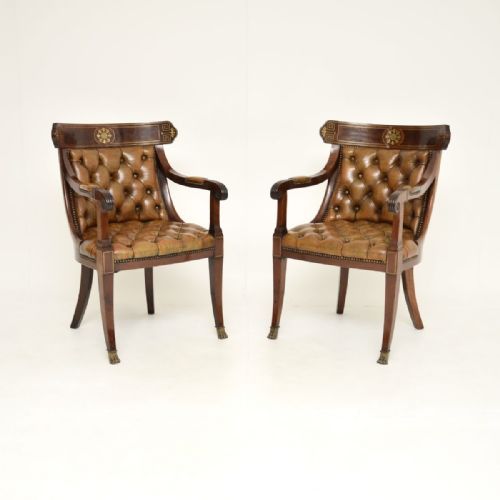


Regency Mahogany Tub Chair
These regency mahogany tub chairs bring architectural line and deep comfort to a room, valued for their enclosed backs and library scale.
Regency Mahogany Tub Chair
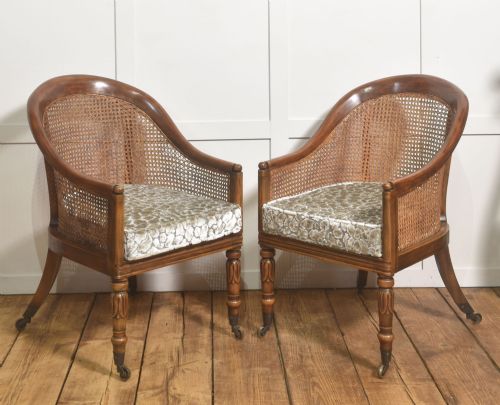
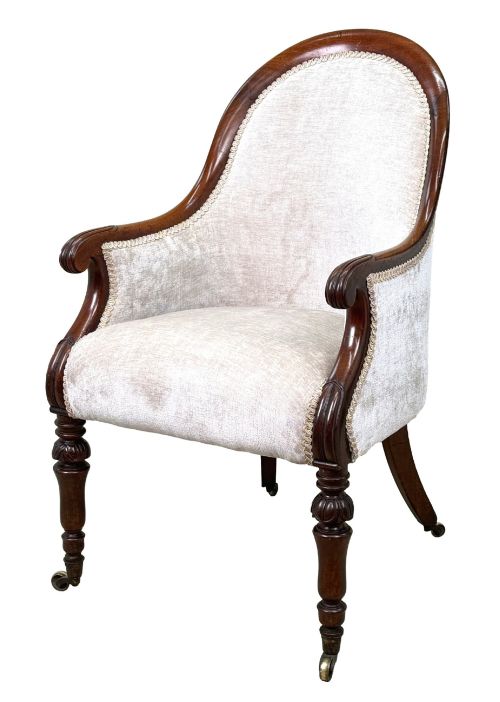
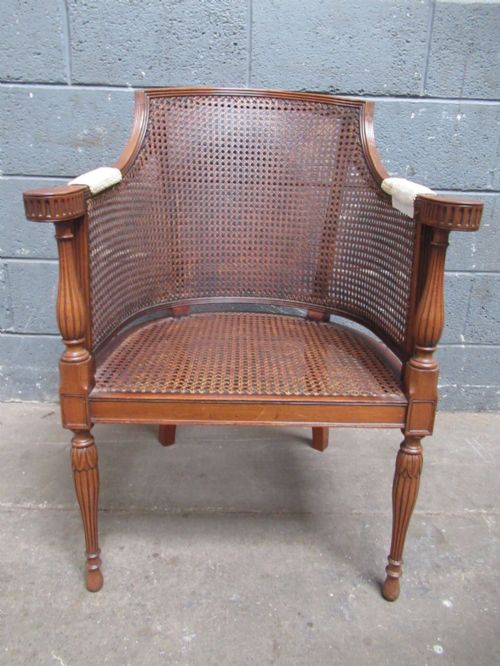
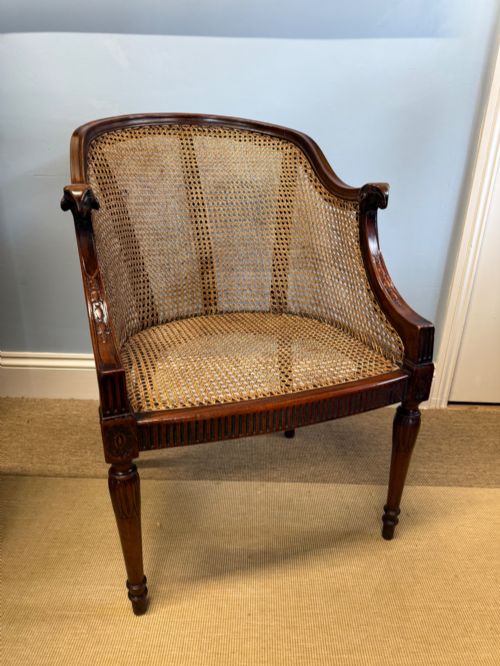
A regency mahogany tub chair combines a curved, enclosing back with sturdy timber construction designed for the library or study. You will frequently find pieces that incorporate caning or leather upholstery within the curved framework.
The materials and forms span the Regency and William IV periods, alongside later Victorian and Edwardian interpretations. Pieces range from standard library armchairs to low child versions and specialised desk seating.
Makers working in the Regency style produced these chairs to offer practical support during long hours of reading. The evidence shows variations including brass inlay, lyre fronts, and curule cross frames.
Materials and construction
Makers selected dense mahogany for its strength, allowing them to carve slender framing members that retain structural integrity. This timber takes a deep natural polish that highlights the grain across the curved back and arm supports.
Caning and rattan cane provide flexible panels for seats and sides, while leather, velvet, and calico supply traditional upholstery surfaces. Brass inlay appears frequently to accent the dark wood frames with fine metallic lines.
Joinery techniques secure the continuous curved rail to the uprights, often supported by turned or sabre legs. Master cabinetmakers shaped the solid wood components to create the distinctive barrel shape without losing stability.
Even miniature occupants needed proper study habits, as proven by surviving child-sized cane bergere chairs from the Georgian era.
Distinctions in craftsmanship
Superior examples demonstrate tighter joinery and more refined carving in the woodwork, particularly along the curved back rail and arm terminals. The crispness of brass inlay and the fineness of the cane work separate standard production from master craftsmanship.
Proportion and stance dictate the visual balance of the piece, with better chairs maintaining harmonious curves from every angle. The quality of the original timber selection determines how well the surface ages and holds its finish over time.
Attribution to known workshops often accompanies higher standards of execution in the turning and structural framing. Chairs showing thoughtful integration of upholstery materials alongside well-figured mahogany occupy the upper tier.
Gillows
The Regency Mahogany Tub Chair Glossary
- Bergère
- An enclosed upholstered armchair with wooden framing, often featuring cane panels on the back and sides. This form provides a lighter visual weight than fully upholstered club chairs.
- Tub chair
- A seat featuring a continuous curved back and arms forming a single semi-circular enclosure. The design derives from traditional barrel shapes intended to block drafts.
- Curule
- A form of X-shaped furniture base inspired by ancient Roman magistrate seats. This structural design appears on select library armchairs in the evidence.
- Sabre leg
- A chair leg that curves outward in a concave sweep resembling a cavalry sword. This profile is typical of Regency seating design.
- Caning
- Woven rattan material used to form resilient panels on chair backs and seats. It offers both flexibility and ventilation.
Regency Mahogany Tub Chair: Frequently Asked Questions
What is a tub chair?
A tub chair is an armchair with a continuous curved back and arms that wrap around the sitter in a protective semicircle. The enclosed shape originally helped shield occupants from drafts in large rooms.
Today, these chairs function well as reading seats or occasional furniture in studies and bedrooms. Their compact footprint allows them to fit easily into corners while maintaining a strong decorative presence.
How do I identify a Regency period chair?
Regency chairs typically display classical restraint, featuring dark mahogany, sabre legs, and occasional brass stringing or inlay. The silhouettes draw heavily on Neoclassical design influences from the early nineteenth century.
Cabinetmakers of this era focused on clean lines and structural harmony rather than heavy carving. Examining the timber grain and the method of joining the curved back rail helps confirm the period.
What is the difference between a bergere and a tub chair?
A bergere specifically designates an armchair with enclosed sides, which are frequently filled with cane work rather than solid wood or solid upholstery. Many bergere designs also take a tub shape, creating an overlap between the two terms.
While all tub chairs share the curved enclosing back, not all of them feature woven cane panels. The distinction often rests on whether the frame incorporates open woven work or solid padding.
How were these chairs used historically?
These seats served primarily as library chairs for reading, studying, or resting in private dressing rooms. Their supportive curved backs made them comfortable for extended periods of sitting.
Writing desks and occasional tables were frequently paired with these chairs to provide practical workspace seating. The sturdy mahogany frames ensured they could withstand daily domestic use.
Are these chairs suitable for modern daily use?
Solid mahogany frames and sturdy joinery make these antique chairs remarkably durable for contemporary living spaces. Many examples have survived centuries of use because of their robust initial construction.
Upholstered components and cane panels can be maintained or restored when necessary without altering the historic frame. Placed in a study or sitting room, they provide functional seating alongside period character.