


Regency Cane Armchair Pair
These regency cane armchair pair selections offer matched seating defined by period grace and tactile woven panels, built for sophisticated rooms.
Regency Cane Armchair Pair
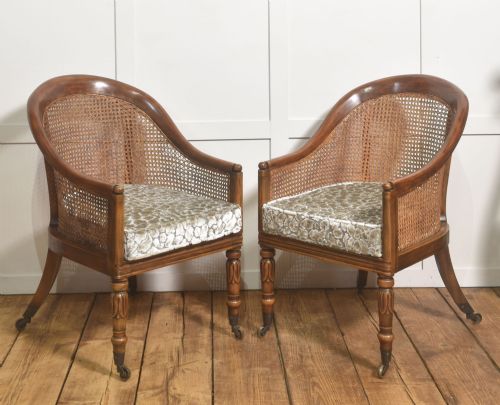
A regency cane armchair pair brings symmetrical elegance to a room, offering matched seating with open woven backrests or seats. You will frequently encounter nineteenth-century originals alongside later revival pieces produced in the twentieth century.
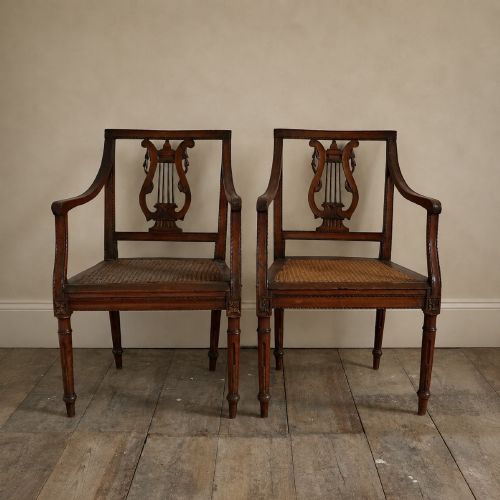
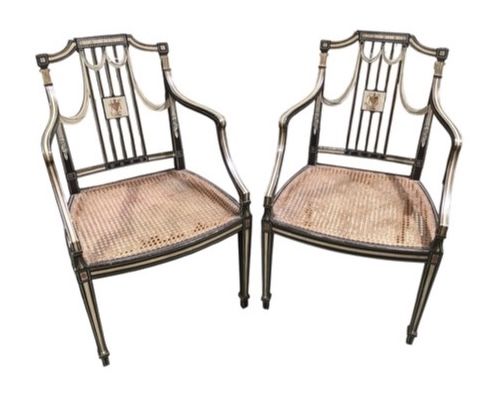
The forms span library bergère chairs with enclosed sides, lighter painted frames, and distinctive lyre-back or faux bamboo designs. These seating pairs originate from both the Regency period itself and subsequent revival phases drawing on Chinese export and classic British design.
How they were made
Cabinetmakers utilised dense timbers such as mahogany and rosewood, alongside ebonised wood and painted or gilded surfaces. Frames were frequently shaped into intricate supports, incorporating faux bamboo turnings or carved lyre motifs.
The defining feature is the woven cane seating and back panels, which provided lightweight strength and airflow. Selected examples integrate leather upholstery details or brass accents to elevate the finished seat.
Listings feature mahogany, rosewood, and painted finishes alongside cane and leather materials.
What varies in quality
The distinction between ordinary and exceptional pairs lies in the crispness of the timber carving and the uniformity of the cane weaving. Superior pieces display refined proportions and cohesive matching between the two chairs.
Original period execution from the early nineteenth century commands attention through authentic patination, whereas revival pieces demonstrate varying degrees of decorative paintwork and structural solidity.
The Regency Cane Armchair Pair Glossary
- Cane
- Woven material made from the peeled bark of rattan palms. It provides a resilient, breathable surface for chair seats and backs.
- Bergère
- An enclosed upholstered armchair featuring solid sides and a cane or upholstered back. This French-inspired form often includes a loose seat cushion.
- Ebonised
- Timber treated with a dark stain or finish to imitate ebony. This technique was favoured during the Regency era for dramatic contrast.
- Lyre back
- A chair backrest shaped to resemble the ancient musical instrument. It forms a central splat often seen in Regency designs.
Regency Cane Armchair Pair: Frequently Asked Questions
How do I style a pair?
Position them symmetrically opposite a fireplace or flanking a central cabinet to balance a room. Their open cane panels keep spaces feeling light and uncluttered.
Combine them with wooden side tables or position them in a study to echo traditional library arrangements.
Are revival chairs valuable?
Later revival pairs from the early twentieth century offer accessible entry points into classic aesthetics while retaining traditional craftsmanship. They replicate earlier Regency forms with varying degrees of decorative detail.
Period originals from the early nineteenth century carry historical distinction and distinct material patination that collectors prize.
How do I care for cane?
Maintain cane panels by dusting them regularly with a soft brush and keeping them away from direct heat sources. Moisture helps prevent the natural material from becoming brittle over time.
Avoid placing heavy concentrated weight on the woven surfaces to preserve the tension of the weave.
What defines Regency style?
Regency design draws inspiration from classical antiquity, featuring clean lines, restrained ornamentation, and architectural symmetry. It bridges Georgian formality and later Victorian elaboration.
Exotic woods, brass mounts, and painted finishes are hallmarks of this decorative period.