
Vintage Bergere Seats
Vintage bergere seats bring classic woven cane and deep wooden frames into the room, offering an inviting seat with centuries of French and English craft behind them.
Vintage Bergere Seats
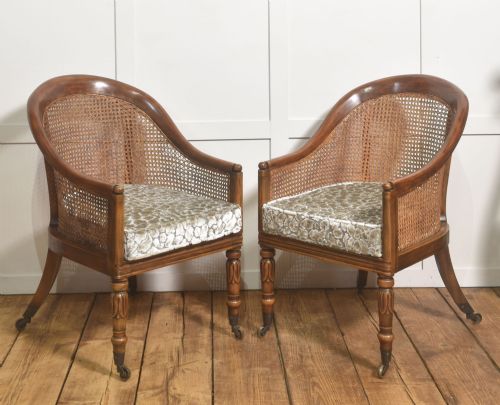
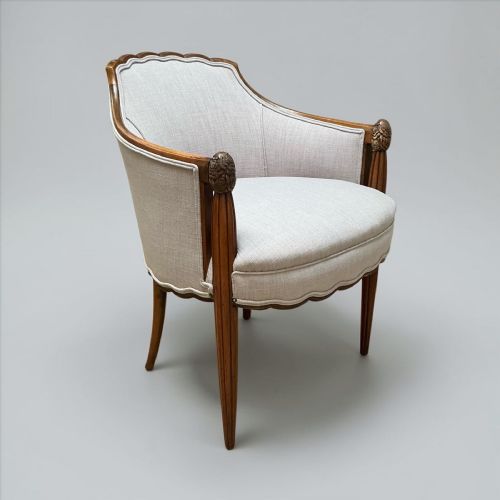
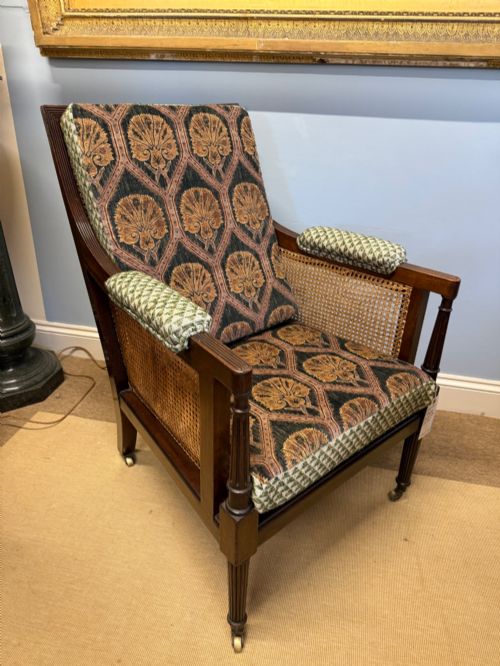
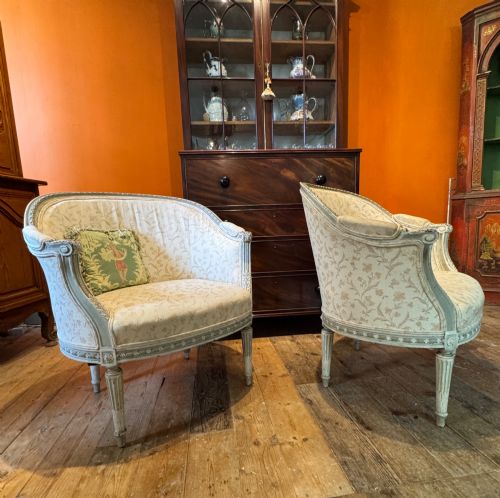
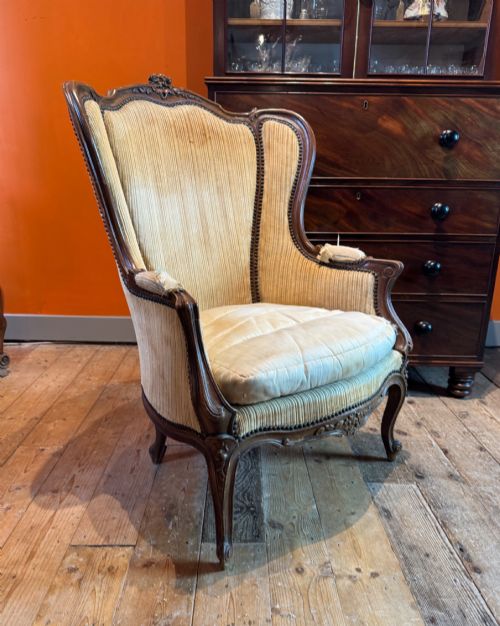
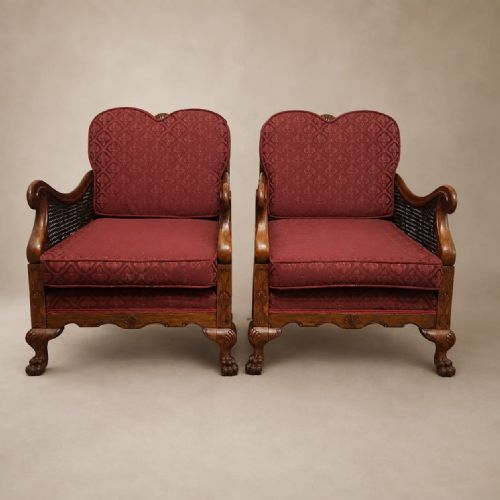
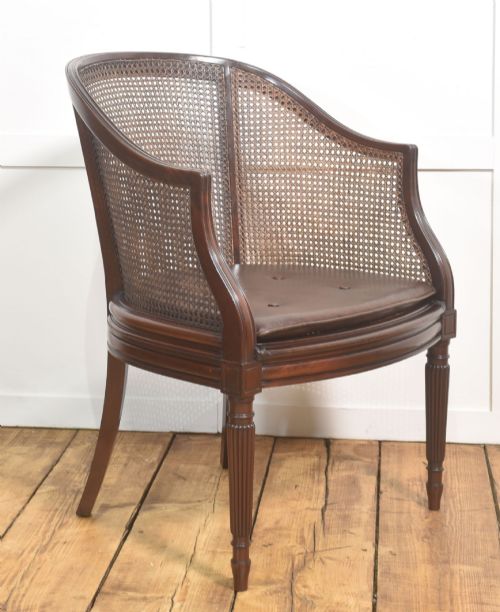
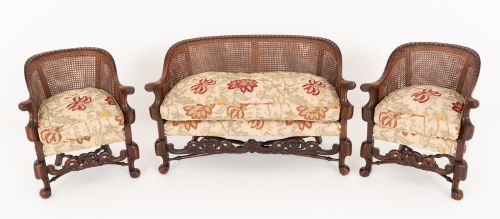
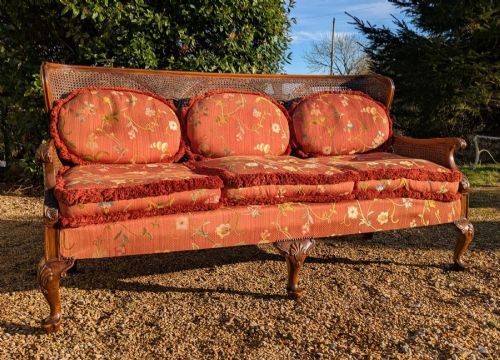
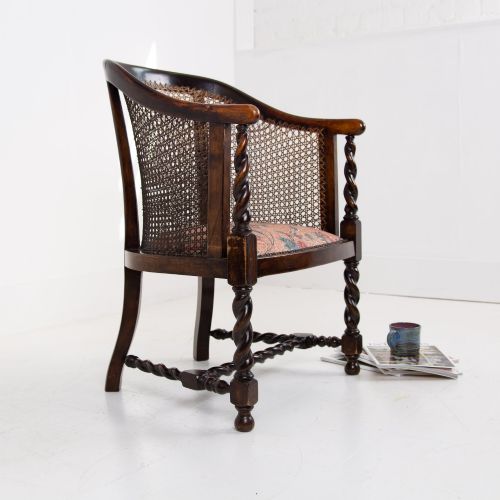
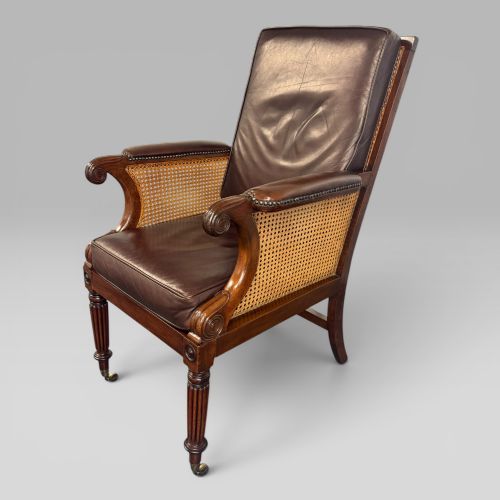
When you search for vintage bergere seats, you encounter upholstered or caned lounge furniture originating from periods spanning the nineteenth century through the mid twentieth century. The inventory on this page consists predominantly of armchairs, tub chairs, and library chairs, alongside occasional sofas, settees, and children's high chairs.
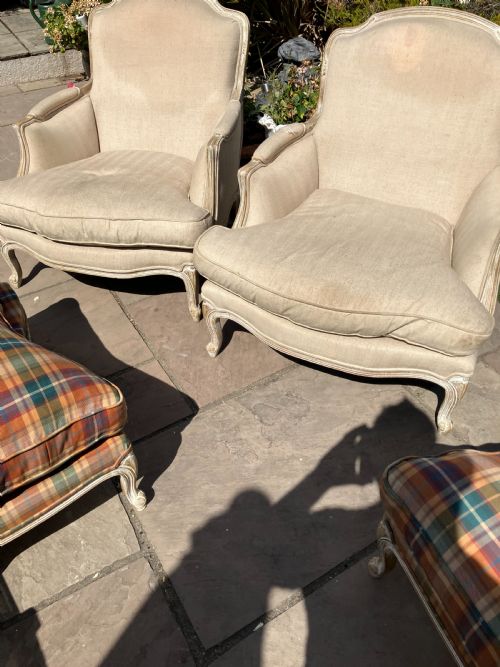
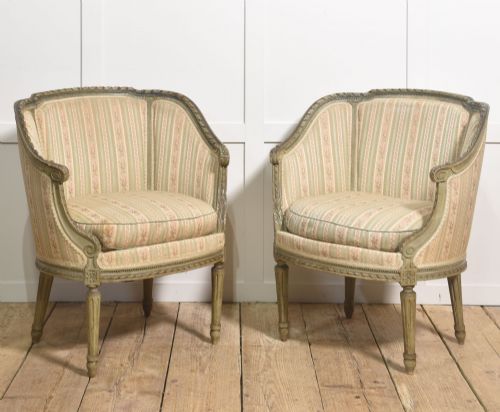
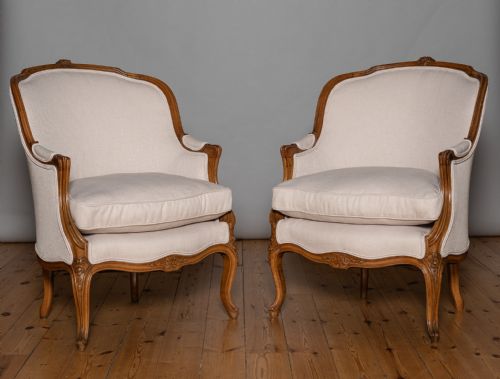
The styles range widely across French Louis XV and Louis XVI revivals, Regency designs, Edwardian pieces, and Jacobean or Carolean revivals. Buyers find single armchairs, pairs, and occasional suites suited to sitting rooms and libraries.
How they were made
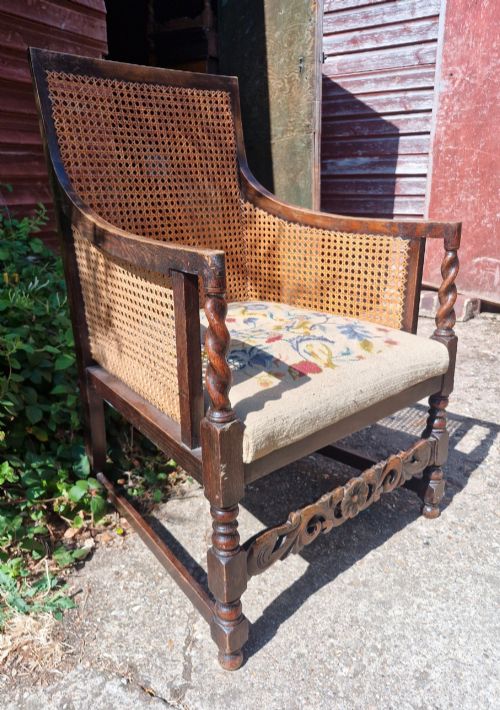
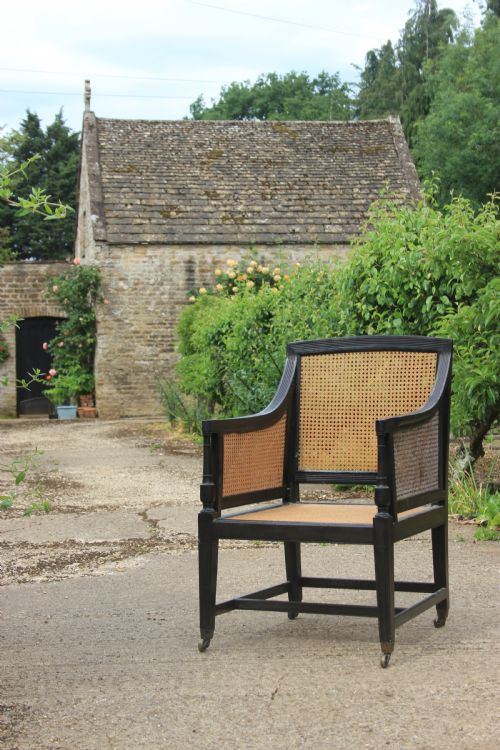
Makers built the structural frames using hardwoods such as mahogany, walnut, oak, rosewood, ebony, and gilt-wood, often shaping the timber with carved details or original paint finishes. Panels of cane, including split cane, form the distinctive woven backrests and seats.
Makers incorporated cushions filled with feathers or upholstered surfaces in leather, velvet, and various fabrics. Brass fittings and campaign elements appear on specific folding or library variants.
One remarkably travelled seating option even folds flat for travel as an antique campaign lounge chair.
What varies in quality
The distinction between tiers rests upon the crispness of the timber carving, the choice of dense hardwoods like rosewood or mahogany over standard woods, and the integrity of the woven cane panels. Well-drawn frames with generous proportions demonstrate superior design and comfortable ergonomics.
Original paint finishes and retained period upholstery materials elevate certain examples above standard pieces that have undergone modern alterations or replacement cane work.
The Vintage Bergere Seats Glossary
- Bergere
- An enclosed upholstered armchair with wooden frames and woven cane sides and back panels. These seats originated in France and appeared in various revival styles throughout the nineteenth and twentieth centuries.
- Cane
- Strips of rattan woven in intricate mesh patterns to form breathable seat and back panels. This material requires careful tension during manufacture.
- Fauteuil
- An open-framed upholstered armchair with exposed wood arms originating in France. They share stylistic links with bergere chairs.
- Tub chair
- An armchair featuring a rounded, enclosed backrest that curves continuously into the arms. These seats offer a compact and supportive form.
- Campaign chair
- Portable furniture designed for travel, featuring folding frames and robust construction. These pieces often include brass hardware.
Vintage Bergere Seats: Frequently Asked Questions
Where should I place a bergere armchair?
These armchairs suit sitting rooms, studies, and bedrooms where their woven cane panels and timber frames add texture and structure to the interior layout.
Pairing a single chair with a reading lamp or placing a matching pair beside a fireplace creates a balanced focal point in a traditional or eclectic room.
How do I care for cane seats?
Keep woven cane panels clean by dusting them gently with a soft brush and maintaining consistent indoor humidity to prevent the natural fibres from becoming brittle.
Avoid placing these seats in direct sunlight or close to intense heat sources which dry out the rattan over time.
Are these chairs comfortable for daily use?
Many designs incorporate loose feather cushions or upholstered squabs that provide substantial support for reading or relaxing.
Deep library chairs and generous tub formats offer supportive seating geometry developed during the nineteenth and early twentieth centuries.
How do I identify a French style bergere?
French revival models usually display carved walnut, gilt-wood, or painted frames with cabriole legs and sweeping curves derived from Louis XV or Louis XVI aesthetics.
English variants tend to favour Regency mahogany or Edwardian satinwood with simpler geometric lines and Library chair proportions.