
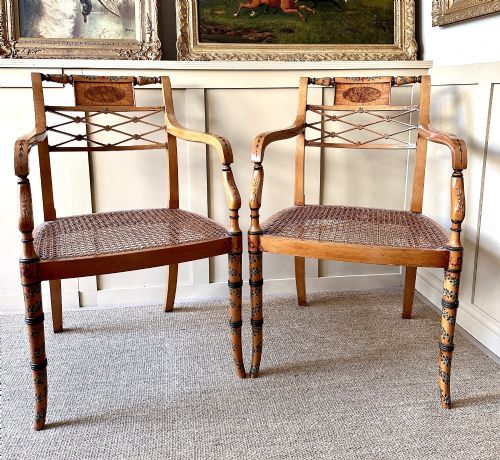
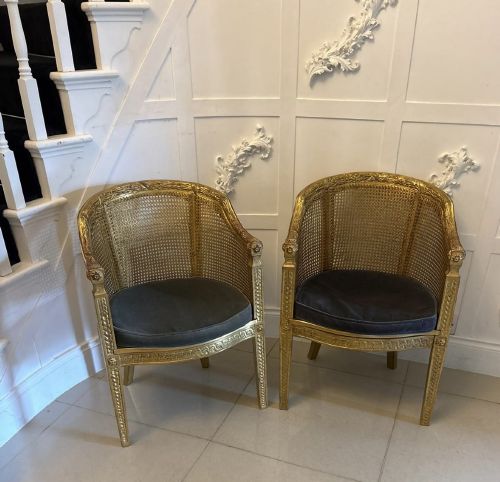
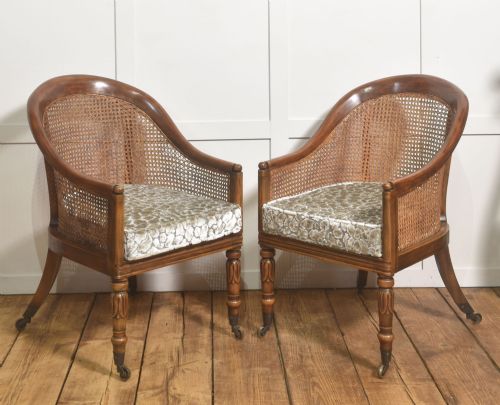
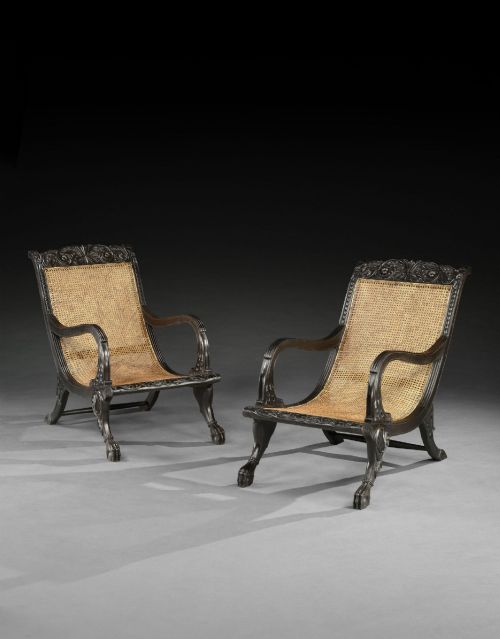
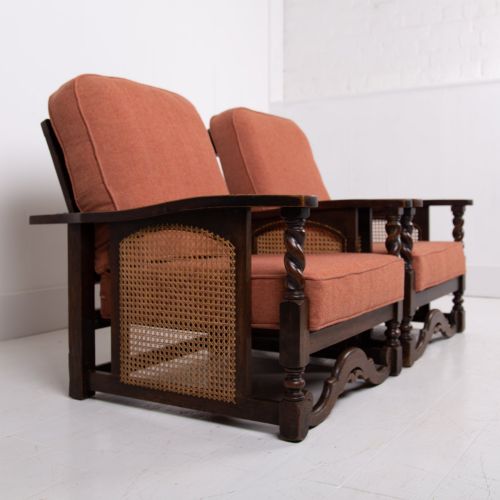
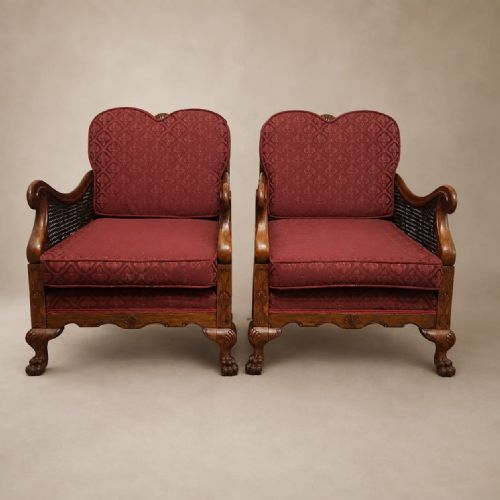
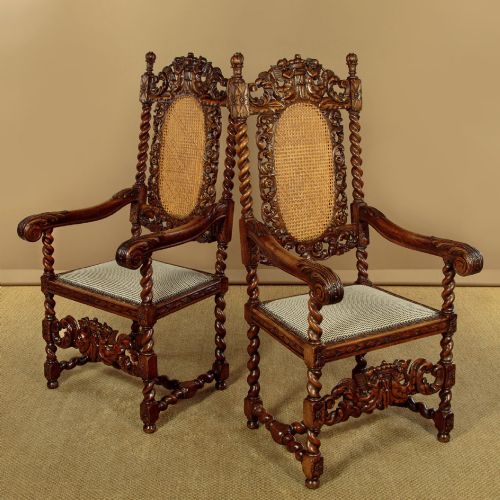
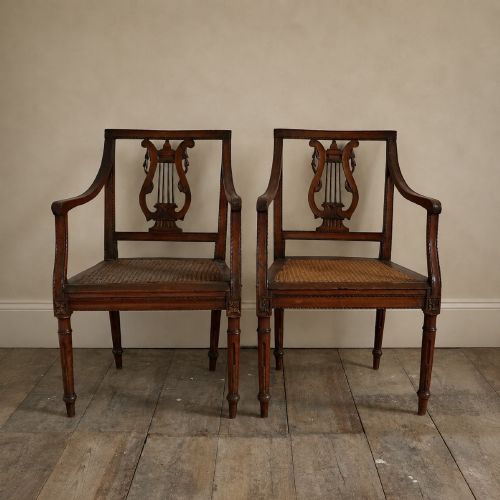
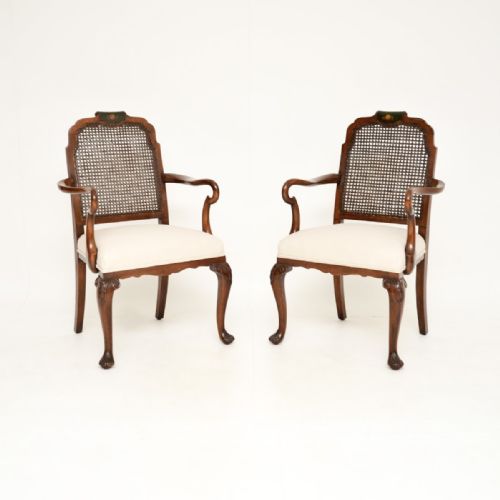


Pair Caned Armchairs
Pair caned armchairs bring tactile woven texture and structural timber frames together, offering seating with historical depth and enduring utility.
Pair Caned Armchairs
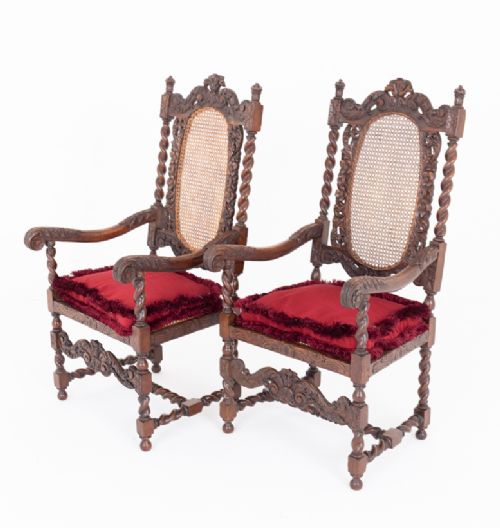
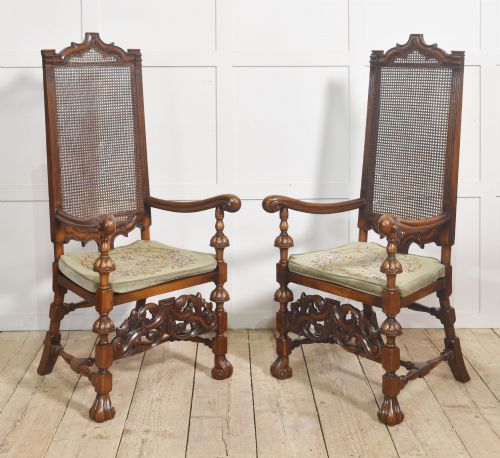
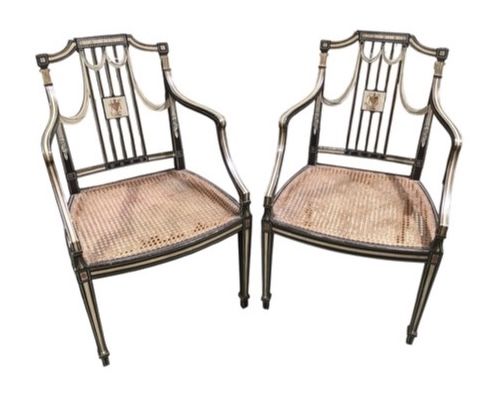
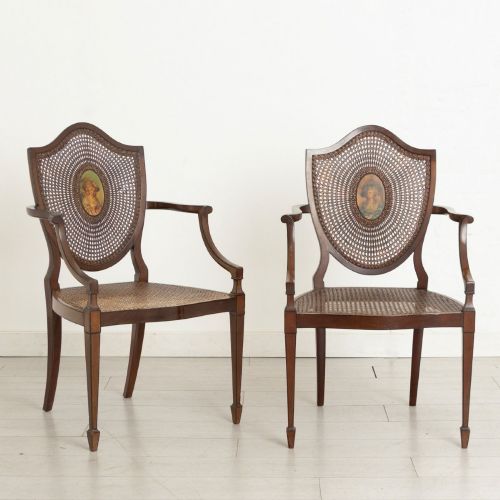
When you search for pair caned armchairs, you encounter dual seating pieces featuring woven cane panels set within solid timber frames. These twin chairs appear across multiple historical periods, ranging from the Regency era through to the 1930s.
The selections available span various design movements, including Louis XV style, Anglo-Indian, and Art Deco interpretations. Walnut, oak, and mahogany frequently form the structural foundations of these matched sets.
How they were made
Craftsmen built the structural frames using hardwoods such as walnut, oak, mahogany, and teak, often joining the timber with traditional cabinet-making techniques. Ebonised wood, paint, and lacquer additionally surface on selected regional and revival pieces.
Cane panels were hand-woven through drilled holes or channels around the seat and back perimeters. Some examples incorporate supplementary upholstery, velvet, or loose cushions alongside the woven framework.
Listings feature frames constructed from walnut, oak, mahogany, teak, and ebonised wood across the Regency, Victorian, and Edwardian eras.
What varies in quality
The refinement of the timber carving and the uniformity of the cane weaving distinguish different tiers of manufacture. Crisp detail in carved walnut or mahogany frames indicates a higher standard of workshop execution.
The structural integrity of the wood joinery and the preservation of original decorative surfaces, such as lacquer or paint, shape the overall character of the piece.
The Pair Caned Armchairs Glossary
- Cane
- Woven material made from the peeled bark of rattan palm, utilised for flexible seating panels. It provides both structural support and decorative openwork.
- Bergere
- A closed-arm upholstered armchair with wooden framing, frequently incorporating cane panels on the back and sides. This French form dates back to the eighteenth century and inspired many later revivals.
- Japanned
- European imitation of East Asian lacquerwork, applied to furniture frames using layered varnish and decorative painting. It creates a glossy, dark surface often highlighted with metallic motifs.
- Ebonised
- Timber treated with chemical stains or dark finishes to simulate ebony wood. This technique appears on nineteenth-century frames seeking a dramatic dark contrast.
- Chinoiserie
- European decorative style reflecting Chinese artistic influences, frequently applied through painted or lacquered surface decoration on furniture frames.
Pair Caned Armchairs: Frequently Asked Questions
How do I care for cane panels?
Keep woven cane panels clean by gently dusting them with a soft brush and maintaining moderate indoor humidity levels to prevent the rattan from becoming brittle.
Avoid placing these chairs in direct sunlight or beside intense heat sources, which can dry out and weaken the natural fibres over time.
Were these chairs used in libraries?
Many examples of this seating form were designed specifically as library or salon armchairs, providing comfortable support for reading and extended sitting.
Their open arm structures and supportive cane backs made them practical for domestic sitting rooms and studies during the nineteenth and early twentieth centuries.
How do I identify the period?
Dating relies on observing the combination of timber choices, frame profiles, and decorative vocabulary such as Regency faux bamboo or Art Deco geometry.
Comparing the stylistic revival details against known nineteenth and early twentieth-century manufacturing traits helps narrow down the production era.
Can damaged cane be repaired?
Traditional hand-woven cane panels can be repaired by skilled restorers who weave new rattan strands through the existing frame holes.
Professional re-caning preserves the original timber framework while restoring the structural tension required for regular seating use.