
Regency Mahogany Tilt Top
When you search for regency mahogany tilt top, you are looking at practical English tables designed to fold flat and save space.
Regency Mahogany Tilt Top
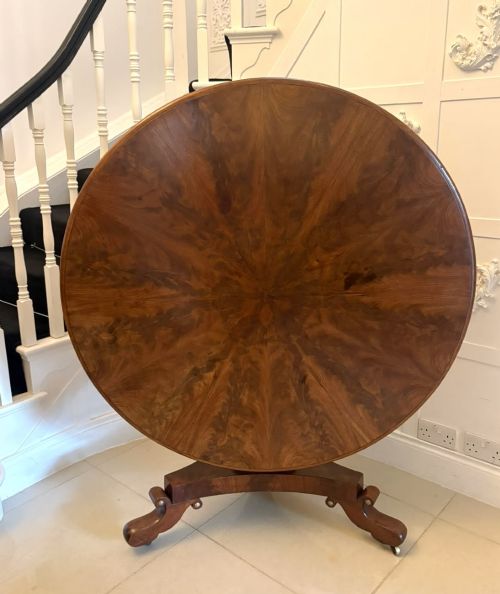
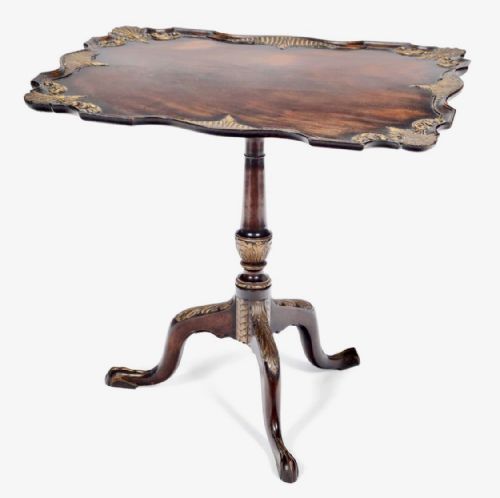
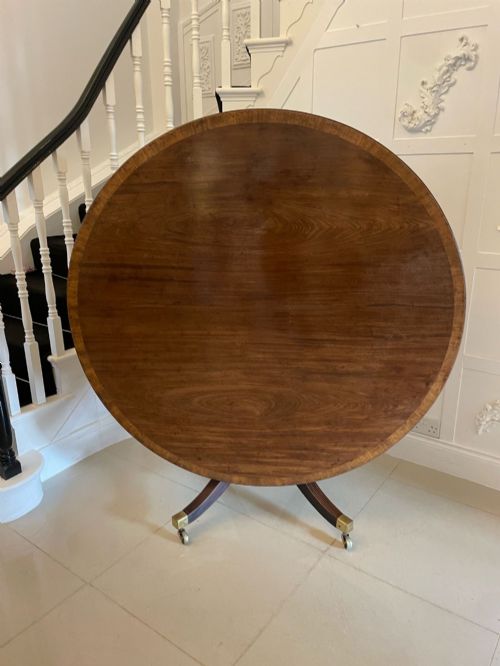
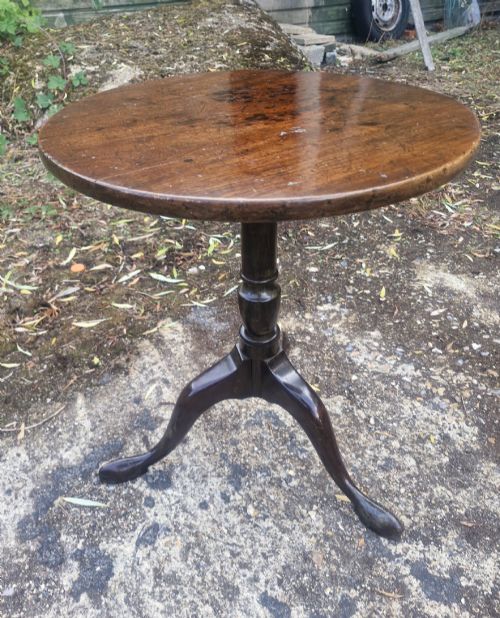
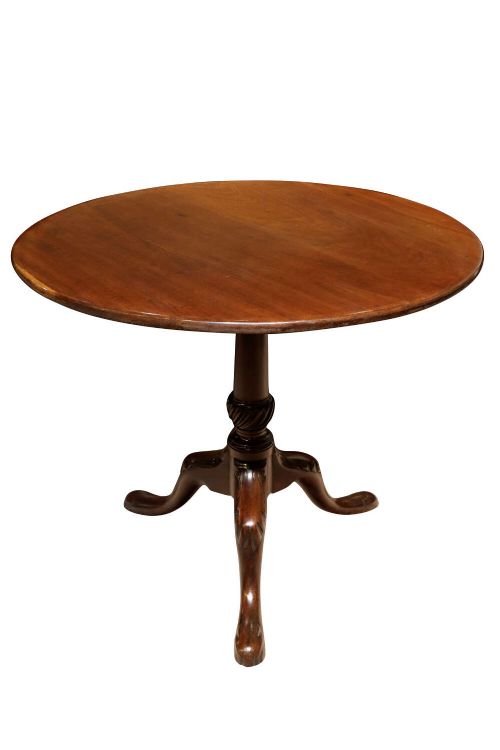
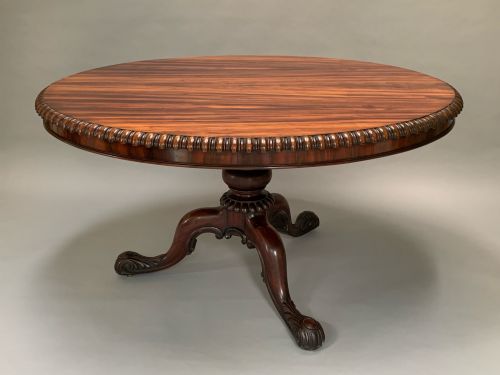
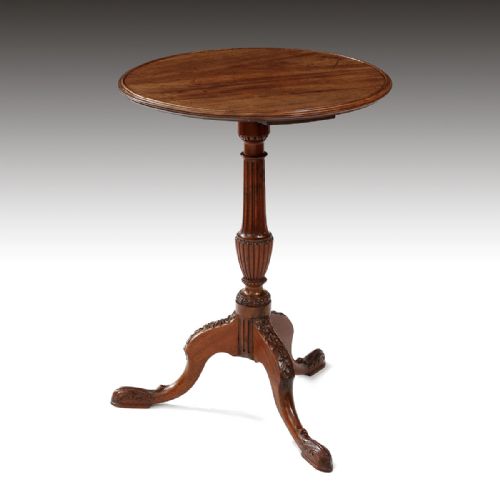
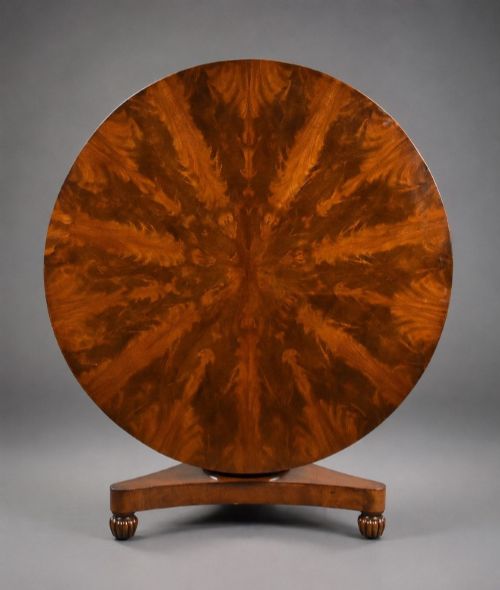
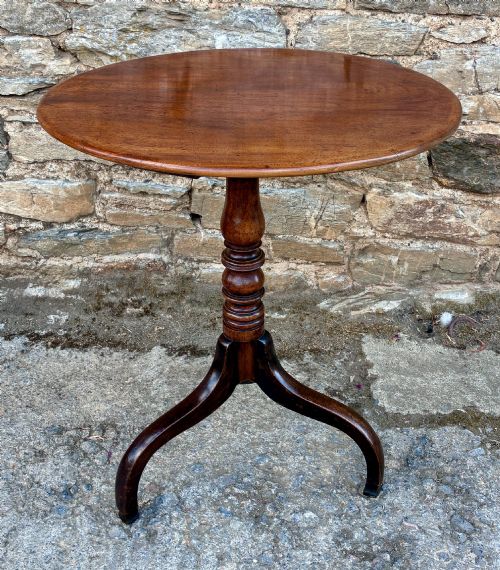
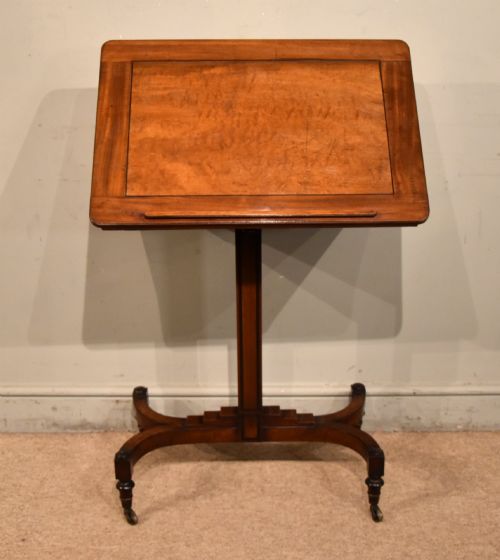
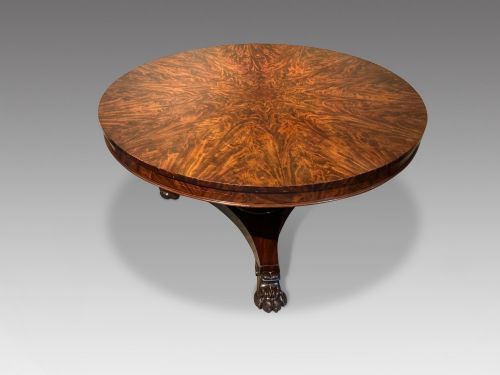
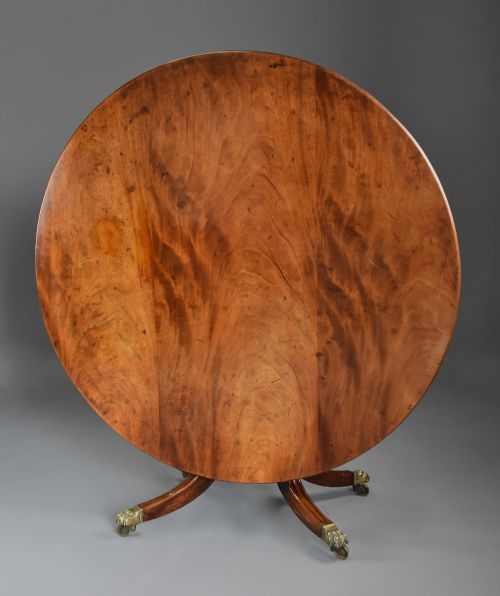
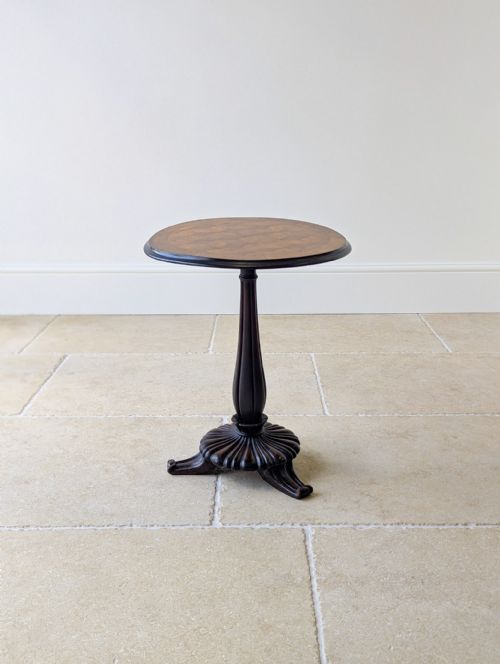
A regency mahogany tilt top table serves multiple functions in a room, shifting easily from a dining surface or breakfast table to a compact wall-hugging board when the mechanism is released. You will most frequently meet circular breakfast tables and small tripod occasional or wine tables on this page, originating predominantly from the Georgian and Regency periods alongside later revivals.
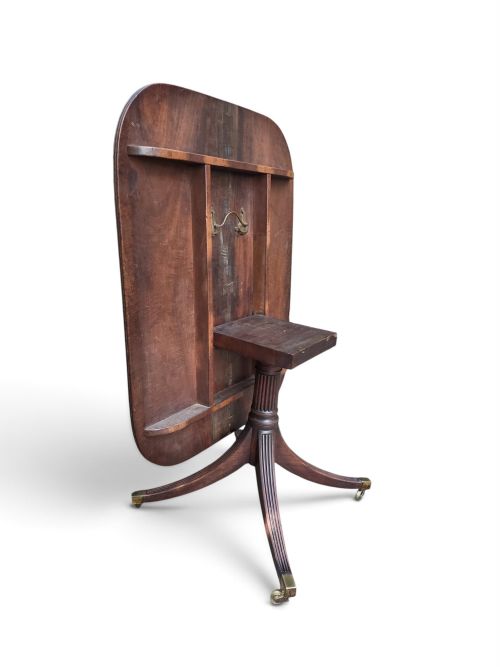
The form relies on a central pillar, often raised on three outward-curving legs terminating in brass casters or paw feet. Larger examples easily seat several diners for formal meals, while smaller variations suit corners or beside seating as lamp and tea stands.
Makers of the period balanced robust engineering with elegance, ensuring the heavy pivoting mechanism locks securely in place during use. These pieces reflect a domestic culture that prized versatility and refined timber work within domestic interiors.
Timber and Construction
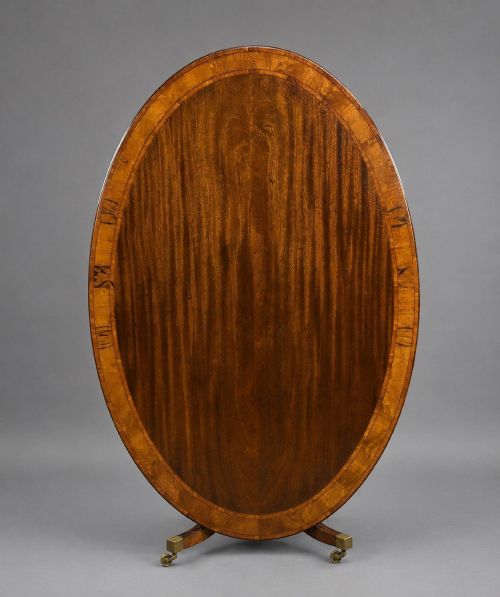
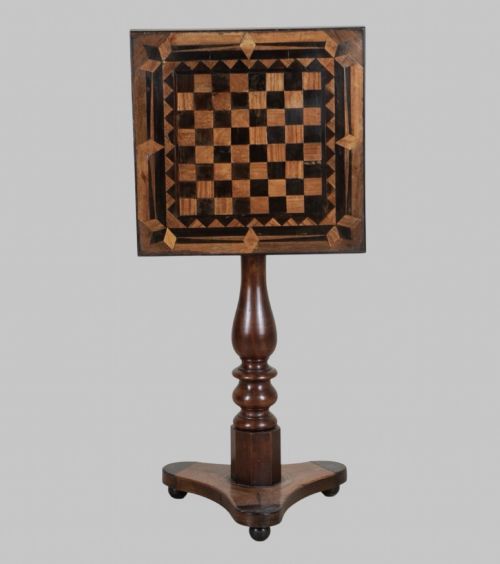
Cabinet makers utilised dense imported mahogany, frequently selecting figured or flame veneers to accentuate the grain across wide circular and oval boards. Crossbanding in contrasting timbers such as satinwood or boxwood frames the central top, while subtle parcel gilt accents highlight carved tripod bases.
The clever tilt action depends upon a sturdy wooden or brass catch fitted to a central block beneath the board, connecting the surface to a turned or octagonal pedestal. Joinery remains concealed yet robust, supporting heavy timber tops without sagging when extended horizontally.
The selection spans the eighteenth, nineteenth, and early twentieth centuries, including Georgian and Regency periods.
Distinctions in Execution
The hierarchy among these tables rests largely on the choice of timber and the dexterity of the cabinet maker. Superior examples display rich, faded patination on matched flame mahogany boards, whereas simpler pieces utilise plain timber planks with minimal figuring.
Refinement in the carving of the pedestal base and the crispness of inlaid borders dictate the upper tier of craftsmanship. Smooth operation of the revolving mechanism and original brass hardware further separate standard utilitarian pieces from exceptional workshop output.
Gillows·Walker-Lancaster
The Regency Mahogany Tilt Top Glossary
- Tilt-top
- A tabletop hinged to a central pillar allowing the surface to pivot vertically for storage. This clever mechanism lets households clear floor space when the table is not in use.
- Crossbanding
- A narrow strip of veneer laid around the perimeter of a tabletop with the grain running perpendicular to the centre. It creates a neat decorative border often seen in lighter woods like satinwood.
- Tripod base
- A support structure comprising three legs radiating from a central column. These legs frequently terminate in pad feet, brass claws, or casters.
- Breakfast table
- A large pedestal table originating in the Georgian and Regency eras, generally circular or oval. They often feature the characteristic tilt mechanism for convenience.
- Patina
- The deep surface sheen and mellow colour developed by aged wood through decades of handling and polishing. Collectors prize a warm, untouched finish.
Regency Mahogany Tilt Top: Frequently Asked Questions
What was a tilt top table used for?
These tables served flexible roles in period homes, functioning as dining surfaces, tea tables, or card tables when horizontal. Between meals, the board tipped vertically so the furniture could slide against a wall to free up floor space.
This space-saving design made them essential in drawing rooms and parlours where rooms needed to accommodate dancing or entertaining.
How do you operate the tilt mechanism?
A brass or wooden catch beneath the tabletop unlocks the pivot, allowing the heavy timber board to swing upward against the central column. A corresponding bolt or spring lock secures the surface in position when lowered.
Operating the mechanism requires steady hands to balance the weight of the solid mahogany board during the transition.
Are these tables suitable for modern dining?
Larger breakfast and centre tables provide stable surfaces that accommodate contemporary seating and daily meals quite comfortably. Their sturdy pedestal construction leaves ample legroom for diners.
Care should be taken with hot dishes and liquids to protect the historic polish and timber surface.
How do I distinguish Regency from later revival pieces?
Original Regency pieces exhibit construction methods, timber density, and hand-cut joinery characteristic of the early nineteenth century. Natural fading and wear patterns on the mahogany reveal genuine age.
Revival pieces from the Edwardian era or later often feature heavier secondary woods, machine-cut elements, and finishes applied with different chemical compositions.