

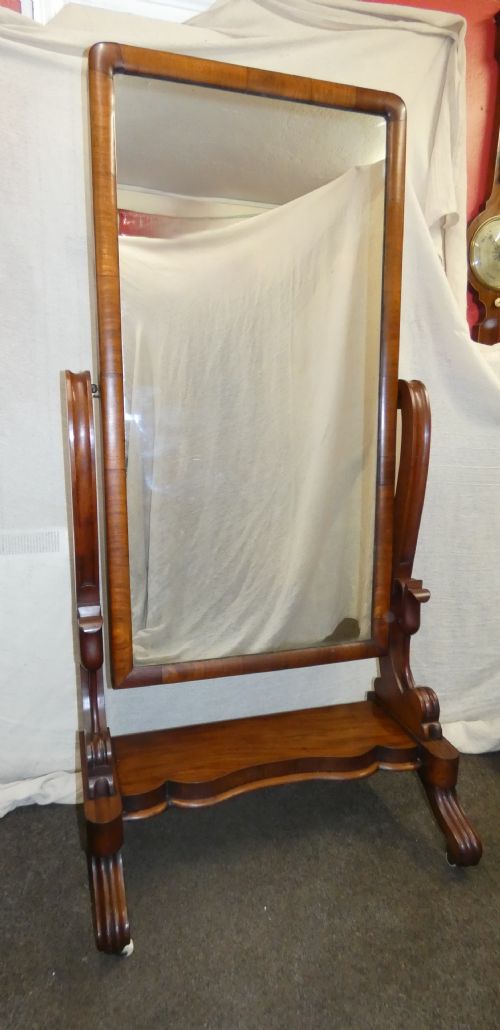


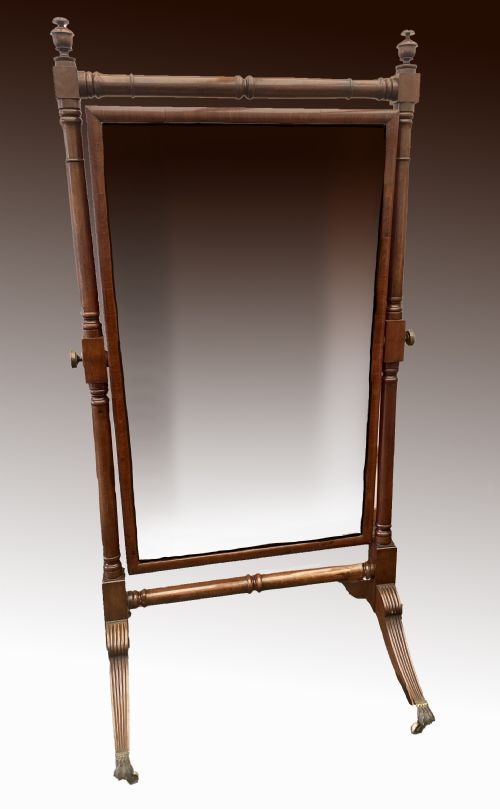


Regency Mahogany Tilt Mirror
A regency mahogany tilt mirror brings proportion and clear glass to a room, offering the adjustable angle that makes dressing effortless.
Regency Mahogany Tilt Mirror
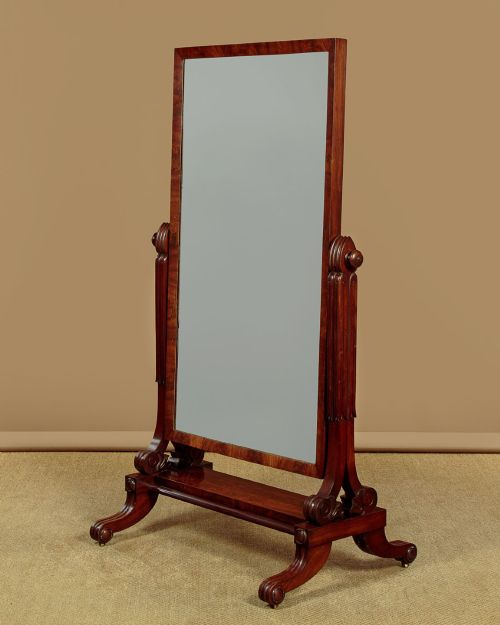
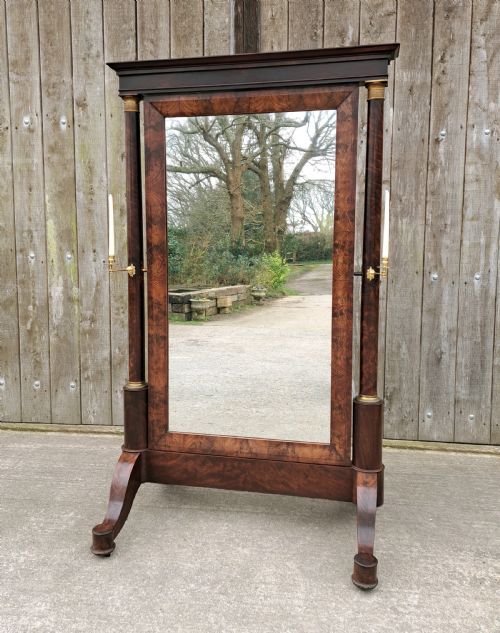
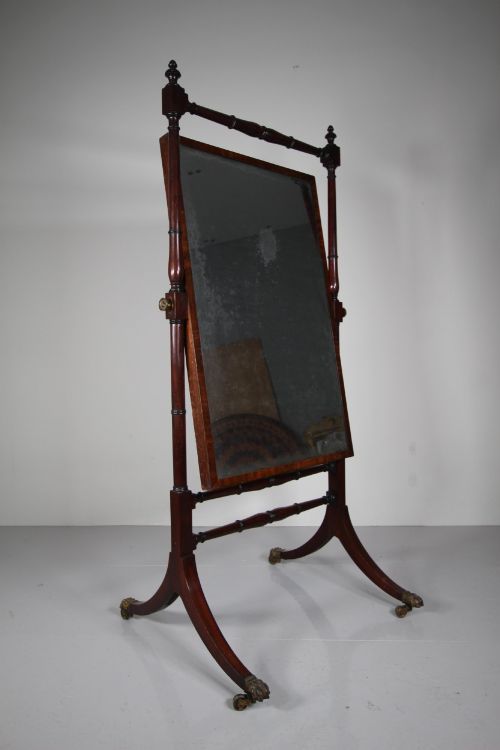
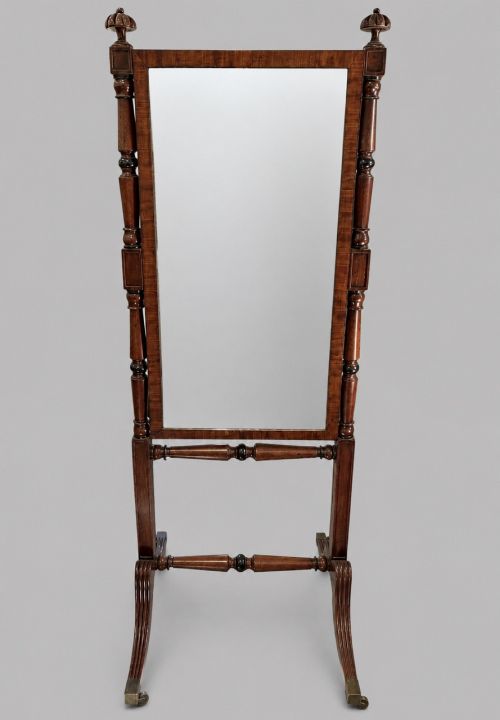
A regency mahogany tilt mirror is a substantial floor-standing or dressing-table glass designed to swivel within an upright frame. When you search for a regency mahogany tilt mirror, you encounter large cheval mirrors and dressing glasses constructed during the Regency, William IV, and Victorian periods.
The pieces listed on this page span the early nineteenth century into the Victorian era, including dated examples from eighteen ten, eighteen twenty-five, eighteen thirty, eighteen forty, eighteen fifty, and eighteen sixty. Most of what you meet here takes the form of a cheval mirror, alongside dressing mirrors mounted on stands.
The design relies on a pivoting plate held between vertical posts, allowing the user to tilt the glass as required. These mirrors served primarily in dressing rooms and bedrooms, combining practical function with the architectural lines characteristic of the period.
How they were made
Makers built these frames using solid mahogany and mahogany veneers, selected for deep grain and rich colour. Joinery was executed by hand, forming sturdy uprights and stable bases designed to support the heavy pivoting mirror frame.
Metal components played a structural and decorative role, with brass hardware such as sabots and castors fitted to the legs of certain examples. Mirror glass was set within adjustable frames, often accompanied by gold leaf detailing on select enrichments.
Regency Mahogany Tilt Mirror Retail Price Guide 2026
Typical asking prices for regency mahogany tilt mirror among the pieces listed under this phrase on Sellingantiques today, from the lower quarter to the upper quarter. They describe what is for sale here now, not the wider market.
The periods represented in the current selection include Regency, Victorian, and William IV, with specific dates spanning eighteen ten to eighteen sixty.
What varies in quality
Quality in a regency mahogany tilt mirror rests on the selection of timber and the proportion of the frame. Finer examples display well-figured mahogany grain and balanced turnings or sabre legs that support the weight securely.
The sophistication of the brass mounts and the integrity of the pivoting mechanism distinguish the work. Robust construction of the upright supports ensures the glass tilts smoothly and holds its position without sagging.
The Regency Mahogany Tilt Mirror Glossary
- Cheval mirror
- A large standing mirror supported on a frame with four legs, designed to show the full figure. These tall glasses swing freely between vertical posts.
- Sabre leg
- A curved, outwardly tapering leg of circular or rectangular section that sweeps away from the body. This form frequently appears on Regency and William IV furniture bases.
- Sabot
- A metal sleeve fitted over the foot of a furniture leg to protect the wood and add decoration. They are typically cast in brass on these stands.
- Castor
- A small wheel mounted in a swivel fixture attached to the base of a leg. It allows heavy standing furniture to be moved across the floor with ease.
- Gold leaf
- Beaten gold applied to decorative portions of the frame for enrichment. This finish highlights carved details and mouldings.
Regency Mahogany Tilt Mirror: Frequently Asked Questions
Where were these mirrors placed in the home?
These mirrors stood in bedrooms and dressing rooms to provide a full-length reflection for checking attire. Their adjustable tilt mechanism made them practical for daily personal use.
They also functioned as decorative furniture that added light and a sense of space to chambers and hallways. The substantial wooden frames suited the formal interiors of nineteenth-century houses.
How do I adjust the tilt on the glass?
The glass hangs on pivots or screw pins set into the upright posts on either side. Adjusting the tension on these fixings allows the mirror to move forward or back and stay in place.
Ensuring the support frame remains stable on its base prevents undue strain on the pivot points when the glass is angled.
What is the difference between a cheval mirror and a dressing mirror?
A cheval mirror is a tall, floor-standing glass designed to reflect the entire person. They typically feature four legs, often with castors for mobility.
A dressing mirror is smaller and intended to sit upon a chest of drawers or a dressing table. Both share the pivoting frame construction characteristic of the period.
How can I tell a Regency mirror from a Victorian one?
Regency mirrors date from the early nineteenth century and often exhibit clean classical lines, sabre legs, and restrained brass mounts. They reflect the neoclassical taste of the Regency and William IV periods.
Victorian examples from eighteen fifty or eighteen sixty may feature heavier proportions or variations in turning and joinery while retaining the core form.