

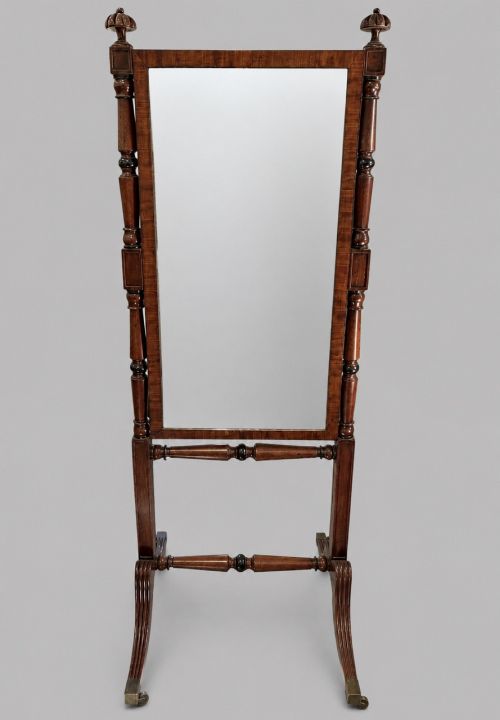


Regency Free Standing Mirror
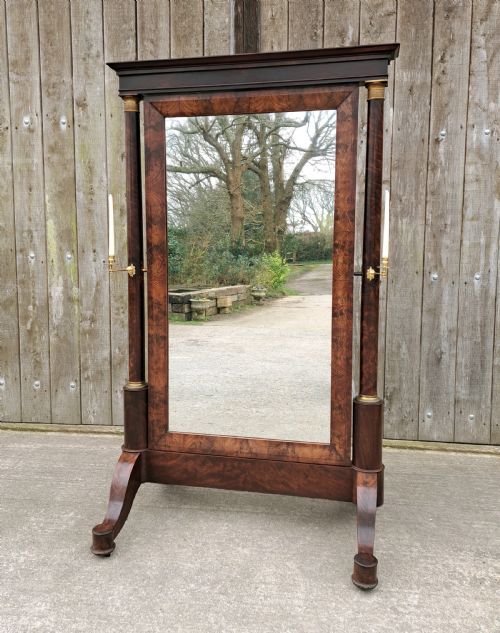
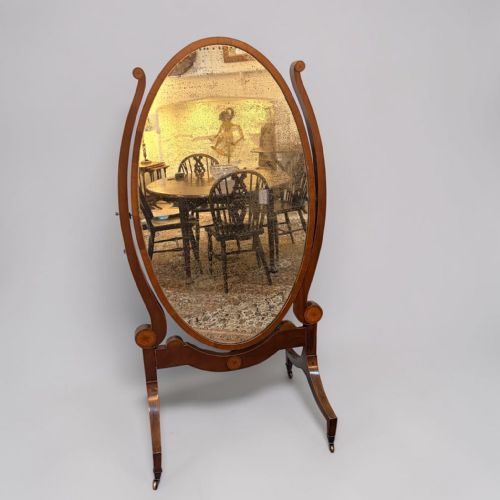
These regency free standing mirror pieces are substantial dressing glasses designed for full-length reflection in the bedroom or hallway.
Regency Free Standing Mirror
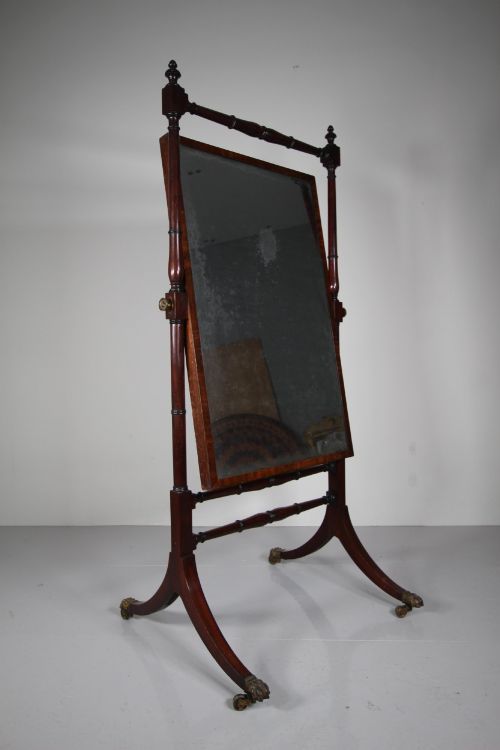
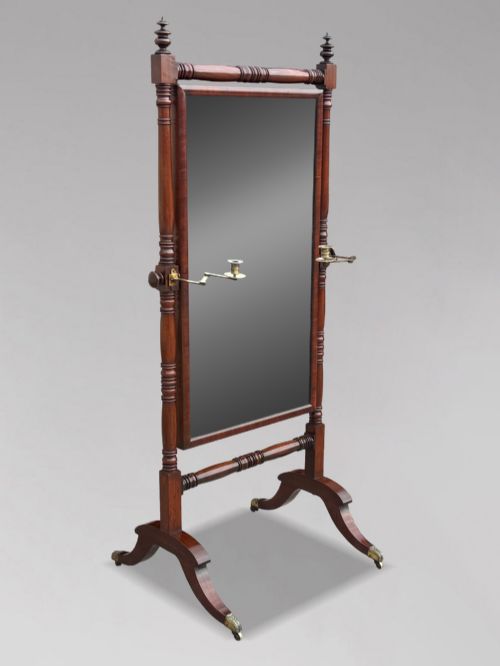
A regency free standing mirror, frequently termed a cheval mirror or dressing mirror, stands upright on its own four feet or a stable frame. The forms seen span the Regency, William IV, and Victorian periods, alongside early 19th-century examples.
Most pieces encountered on this page utilise rich mahogany timber, often taking the form of a large scale dressing mirror with a swivelling glass plate supported by upright pillars.
How They Were Made
Cabinetmakers constructed these frames primarily from solid and veneered mahogany, sometimes enriched with satinwood details, brass fittings, and occasionally mounted on marble bases.
The heavy glass mirror plates are housed within pivoting wooden frames that allow the user to tilt the angle of reflection at will.
Regency Free Standing Mirror Retail Price Guide 2026
Typical asking prices for regency free standing mirror among the pieces listed under this phrase on Sellingantiques today, from the lower quarter to the upper quarter. They describe what is for sale here now, not the wider market.
Listings feature mahogany predominantly, accompanied by occasional uses of brass, satinwood, glass, and marble across 19th-century periods.
What Varies in Quality
The distinction between standard domestic mirrors and superior examples lies in the selection of figured mahogany timber and the presence of refined brass mounts or turning on the upright supports.
Proportion and scale dictate the standing of a piece, with larger bespoke dressing mirrors and documented cabinetmaker work commanding greater visual presence than simpler utilitarian equivalents.
Gillows
The Regency Free Standing Mirror Glossary
- Cheval mirror
- A large standing mirror designed to reflect the full figure, supported by a frame with four legs. The word derives from the French for horse, alluding to the four-legged frame.
- Dressing mirror
- A smaller glass used for grooming, though in the context of these listings it often refers to full-height cheval glasses found in bedrooms. They sit independently upon the floor.
- Mahogany
- A durable tropical hardwood prized for its deep reddish-brown tone and stable grain. It served as the principal material for high-quality case furniture throughout the Regency era.
- Pivoting frame
- The mechanism by which the glass plate swings between two vertical pillars on metal pins or screw adjustments. This allows the user to alter the viewing angle.
Regency Free Standing Mirror: Frequently Asked Questions
Where should I place a cheval mirror?
These tall glasses suit bedrooms, dressing rooms, or wide hallways where full-length reflection is practical. Their freestanding nature permits placement against any solid wall without requiring permanent wall fixings.
Ensure the floor beneath is reasonably level to prevent strain on the pivoting frame and the supporting side pillars.
How do I tilt the mirror glass?
Most examples utilise brass thumbscrews or pivot pins set into the upright columns. Gently loosen the side fixtures while supporting the frame to adjust the angle of the glass.
Take care not to force the mechanism, as the weight of the mirror plate places considerable leverage on the wooden uprights.
Are these mirrors original to the period?
The listings span the 19th century, incorporating Regency, William IV, and Victorian eras alongside later 19th and early 20th-century interpretations. Examining the timber grain, construction joints, and backboards helps determine the exact age of each frame.
Mirror glass itself is often replaced over time due to age-related foxing, while the surrounding mahogany frame retains its original patina.
How do I maintain the mahogany frame?
Regular dusting with a soft, dry cloth preserves the finish of the mahogany timber. Avoid silicone-based polishes which can build up a hazy residue over the wood grain.
Feed the wood periodically with traditional beeswax to maintain the rich lustre characteristic of 19th-century cabinetwork.