


English Cheval Mirror
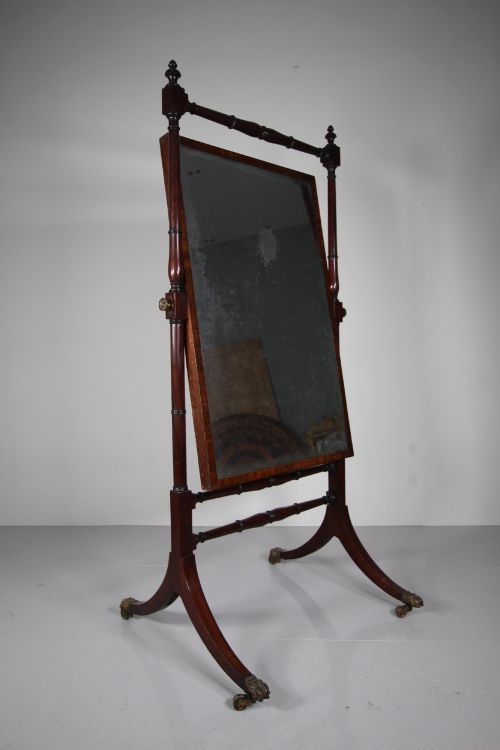
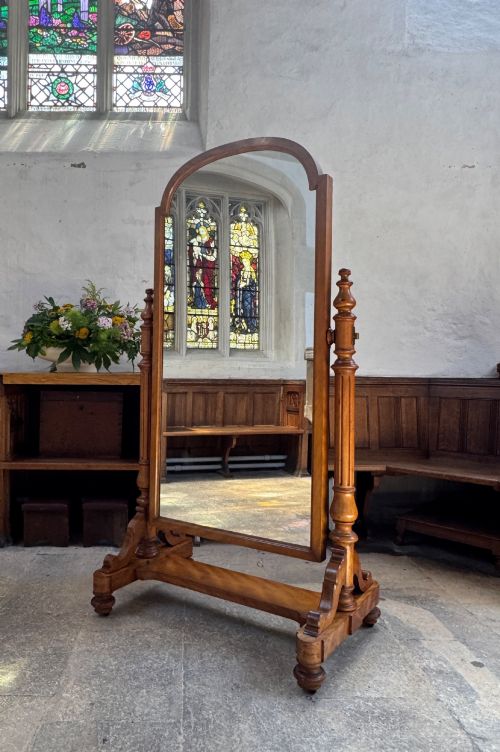
An english antique cheval mirror stands as a heavy floor-length glass designed to pivot within a supportive frame for daily dressing.
English Cheval Mirror
An english antique cheval mirror is a floor-standing dressing glass designed to tilt within a vertical frame, allowing a full-length view for the user.
Most examples found on this page date from the Regency and Victorian periods, constructed as substantial pieces for bedrooms and dressing rooms.
Forms range from simple rectangular floor mirrors to specialised workshop and retail glasses, alongside related table mirrors and boxes.
How they were made
Cabinetmakers constructed the standing frames using dense hardwoods like mahogany and walnut, frequently incorporating satin birch, oak, and ebonised wood.
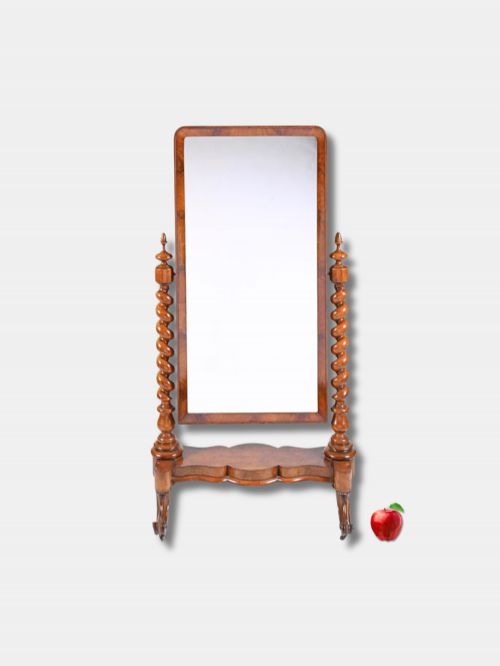
Mirrors utilise clear glass plates set within pivoting mounts, supported by turned pillars, barley twist supports, or stability feet.
Boot makers and outfitters utilised heavy floor mirrors in their shops long before the glass found its permanent home in the bedroom.
What varies in quality
The choice of timber underpins the piece, with figured flame mahogany and burr walnut sitting above simpler secondary woods.
Construction detail reveals itself in the turning of the supports and the robust engineering of the tilting pivots that hold the glass steady.
The English Cheval Mirror Glossary
- Cheval mirror
- A floor-standing dressing mirror supported by a frame with pivoting side screws. The name derives from the French word for horse.
- Barley twist
- A carved spiral column decorating the vertical supports of the frame. This technique appears frequently on mid-nineteenth-century examples.
- Flame mahogany
- A timber grain pattern showing fiery, rippling figures selected for prominent display on cabinet doors and mirror frames.
- Ebonised wood
- Timber stained or treated to imitate ebony. This dark finish creates sharp contrast against lighter panels.
English Cheval Mirror: Frequently Asked Questions
How do I use a cheval mirror?
Position the glass on a flat floor surface where you need a full-length reflection for dressing.
Adjust the brass or wooden side pivots to angle the glass plate to your preferred slant.
How do I date an antique cheval mirror?
Examine the timber species, framing style, and turning details against known periods like Regency or Victorian.
Look for construction clues in the joints and the backing boards to confirm the era of manufacture.
Where were these mirrors placed originally?
These tall glasses stood primarily in bedrooms, grand dressing rooms, and gentleman's outfitters.
Retail shops and boot makers also utilised sturdy floor mirrors for customer fittings.
Are these mirrors heavy to move?
Solid mahogany and walnut frames combined with thick glass plates make these pieces remarkably heavy.
Moving them safely generally requires two people to lift the frame without straining the pivoting joints.