
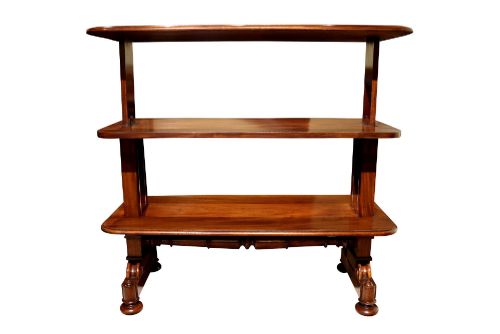
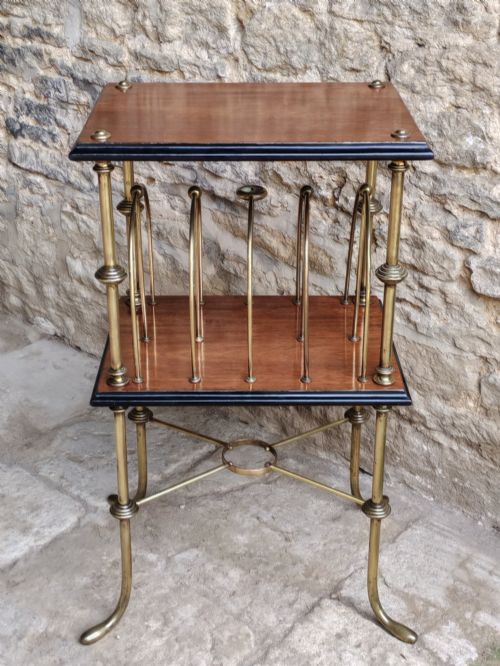
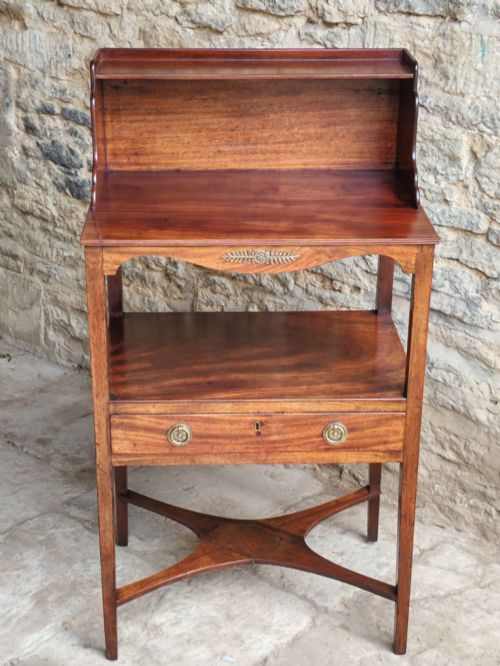
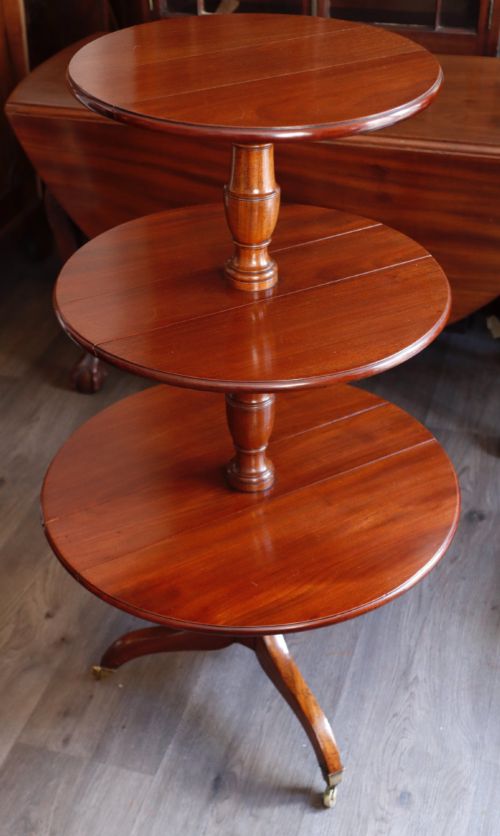
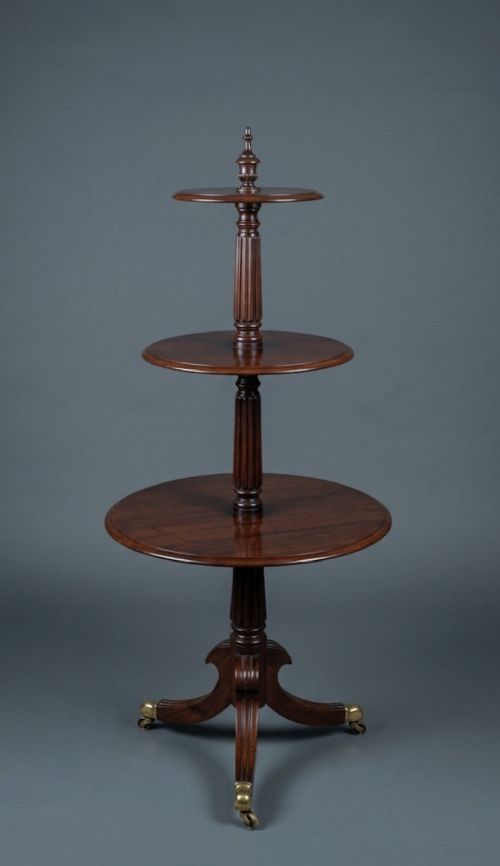
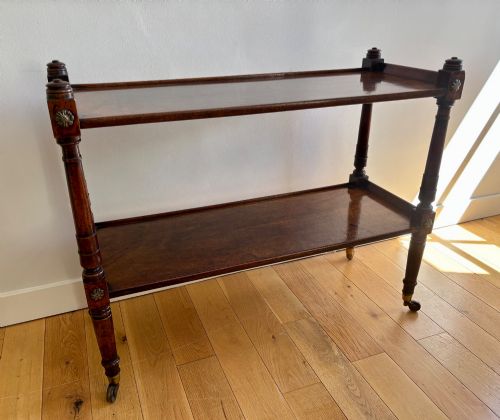


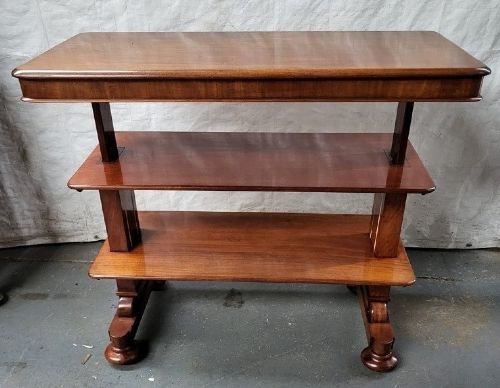

Regency Mahogany Tier Table
These regency mahogany tier tables combine layered surfaces with rich timber, offering practical utility and classic design.
Regency Mahogany Tier Table
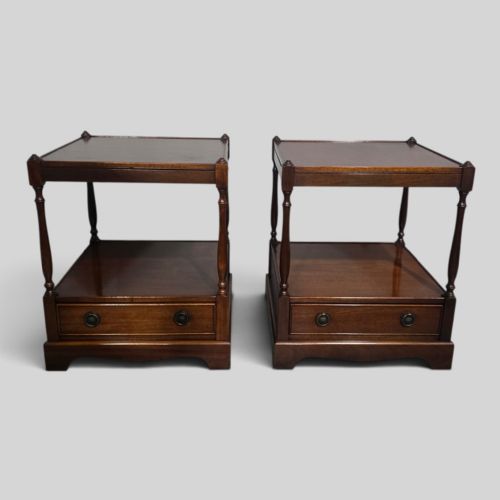
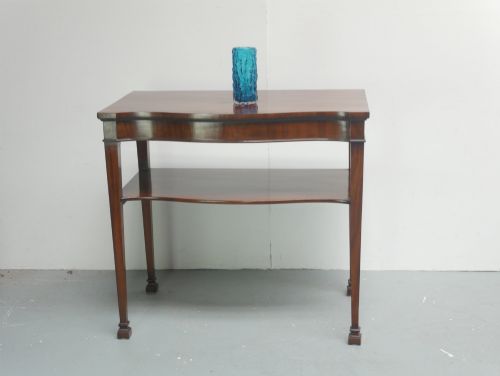
A regency mahogany tier table brings multiple stacked surfaces into domestic spaces, serving varied roles from bedside placement to serving food. Buyers searching this phrase encounter diverse multi-level forms originating primarily from the Regency, Georgian, and William IV periods, alongside later revival pieces.
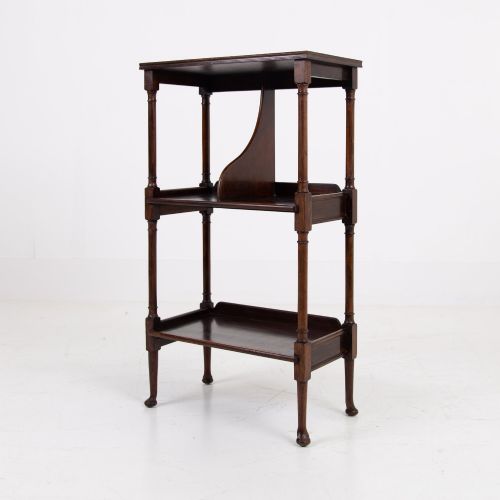
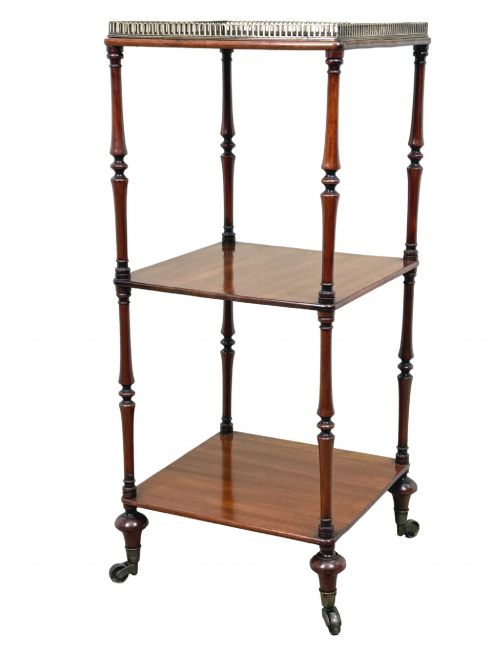
The most common formats on this page include tiered dumb waiters, multi-level whatnots, etageres, and two-tier side tables. These pieces utilise stacking to maximise display and storage space without claiming excessive floor area in a room.
How they were made
Cabinet makers constructed these pieces predominantly using solid mahogany and figured timber veneers, often incorporating secondary woods for internal structures. Selected examples integrate brass fittings, leather inserts, marble tops, or boxwood stringing to accent the primary dark grain.
Joinery techniques relied on traditional framing and turning methods to support multiple tiers securely, whether fixed on columns or designed to revolve. Workshops also employed drop flaps and rise-and-fall mechanisms on specialised reading or buffet tables.
Listings feature mahogany predominantly, complemented by rosewood, marble, brass, and leather across various nineteenth-century periods.
What varies in quality
Quality differences emerge in the selection of the timber grain, such as the use of fiddleback mahogany versus plain stock, and the crispness of turned columns or carved details. Finer items demonstrate superior joinery stability across multiple tiers and thoughtful proportion in smaller formats.
The presence of secondary materials like ormolu mounts, fine brass castors, or well-executed leather writing surfaces distinguishes standard production from exceptional workshop output. Original turning and uncompromised structural integrity set higher-tier examples apart.
Gillows
The Regency Mahogany Tier Table Glossary
- Tier table
- A multi-level table featuring two or more stacked horizontal surfaces supported by columns or legs. This term covers various serving and display furniture.
- Dumb waiter
- A tiered stand traditionally used for holding food or utensils near a dining table without servant assistance. Many examples feature revolving circular shelves.
- Whatnot
- An open set of shelves used for displaying ornaments, books, or small objects. These multi-tiered pieces date frequently from the Regency and Victorian eras.
- Étagère
- A French term for a piece of furniture with open shelves for display. These stacked stands appear in various timber types.
- Fiddleback mahogany
- A figure in mahogany timber showing a wavy, undulating grain pattern resembling the back of a violin. Cabinet makers utilised this timber for decorative effect on prominent surfaces.
Regency Mahogany Tier Table: Frequently Asked Questions
What is a regency mahogany tier table used for?
These tables provide stacked surfaces for serving, displaying objects, or holding bedside items in a room. Their multi-level design offers functional storage while maintaining a compact footprint.
Historically, specific versions like dumb waiters assisted with dining arrangements, while others functioned as book stands or plant tables.
How do I identify a Regency period piece?
Regency furniture typically dates from the early nineteenth century, displaying classical proportions, dark mahogany timber, and restrained brass or turned details. Look for construction methods and timber ageing consistent with that era.
Revival pieces from later decades often imitate these characteristics, so examining the internal wood and joint construction helps determine the true age.
What is the difference between a whatnot and a dumb waiter?
A whatnot is primarily designed for displaying books, ornaments, or small decorative items across several open shelves. They remain stationary and sit neatly against walls or in corners.
Dumb waiters often feature revolving circular tiers intended for serving food and beverages, though both forms share a multi-level mahogany construction.
How do I care for mahogany tiered furniture?
Protect the polished mahogany surfaces from direct sunlight, excessive moisture, and rapid temperature changes to prevent timber warping or fading. Regular dusting with a soft, dry cloth maintains the finish.
Avoid placing hot or wet items directly onto the wood or leather inserts to preserve the original condition of each tier.