


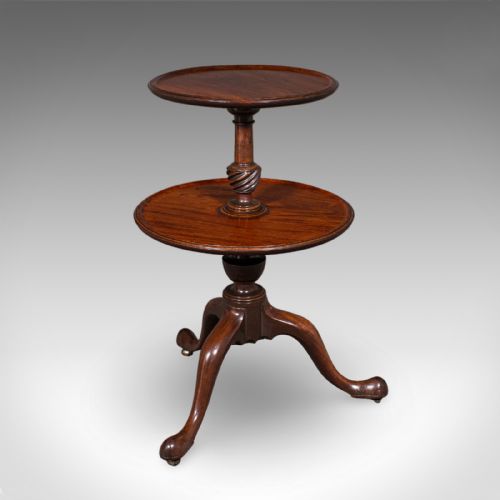


Tiered Serving Stand
A tiered serving stand brings tiered wood, brass or marble surfaces to a dining room or parlour for practical display.
Tiered Serving Stand
A tiered serving stand encompasses antique dumb waiters, trolleys, etageres and buffet stands designed to hold food or objects across multiple levels. When searching for a tiered serving stand, buyers encounter pieces spanning the eighteenth century through the early twentieth century, including Georgian, Regency and Victorian eras.
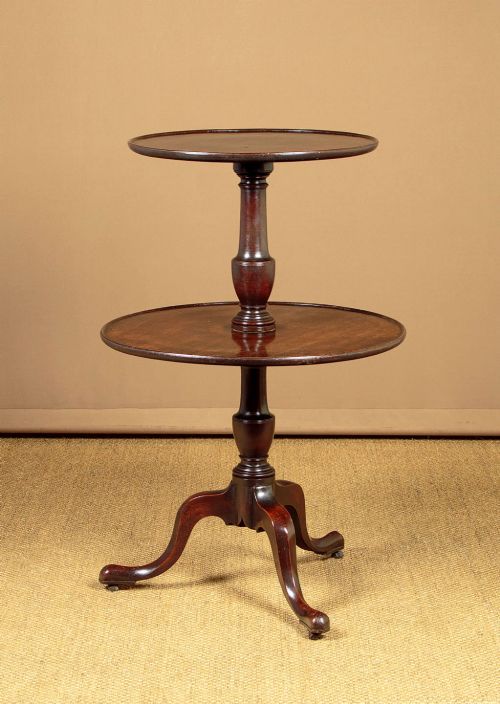
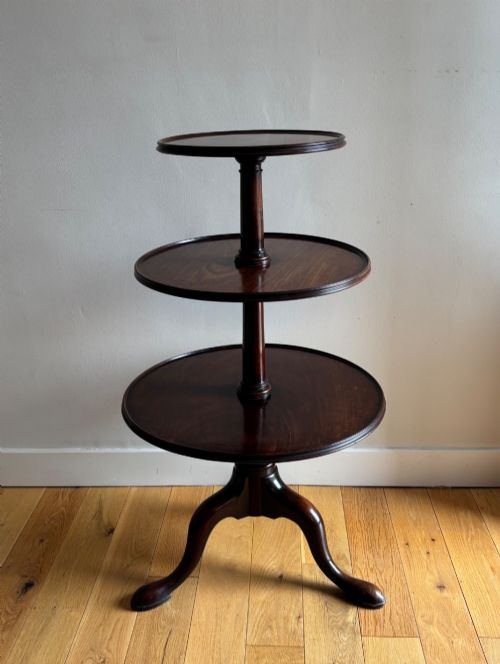
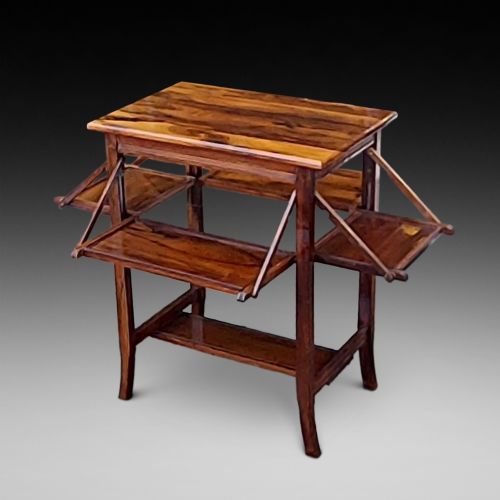
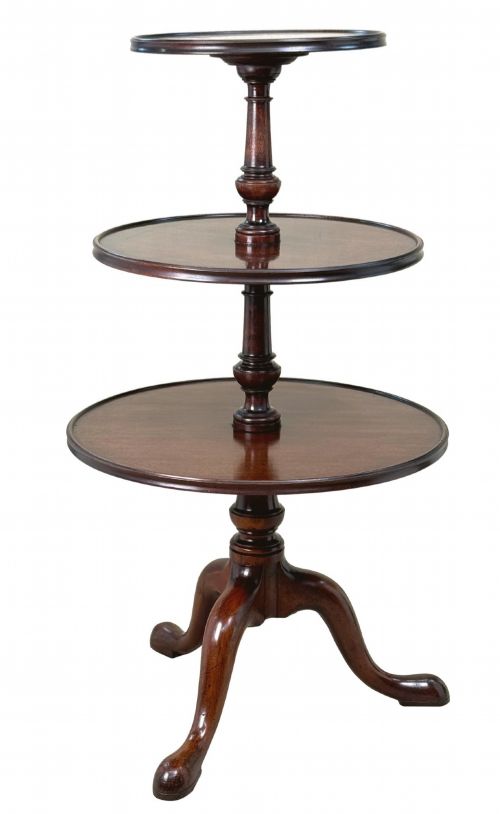
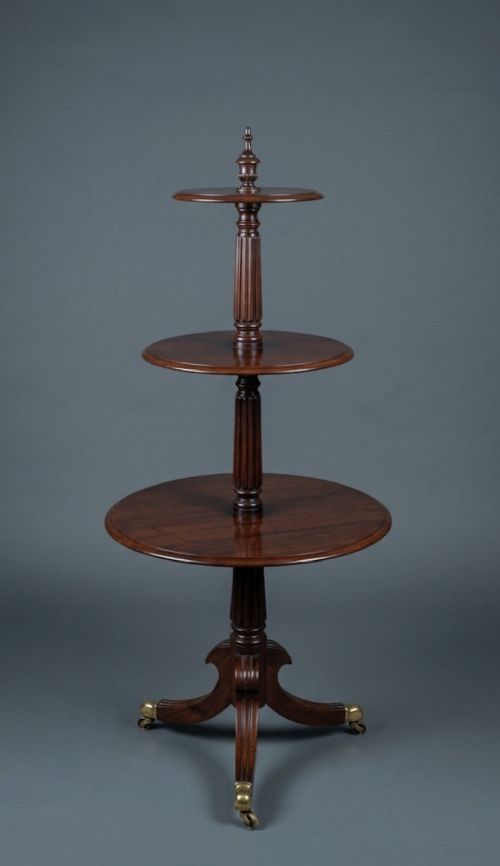
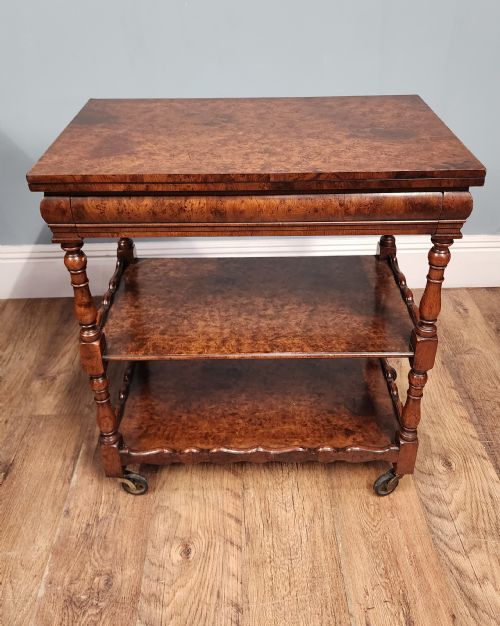
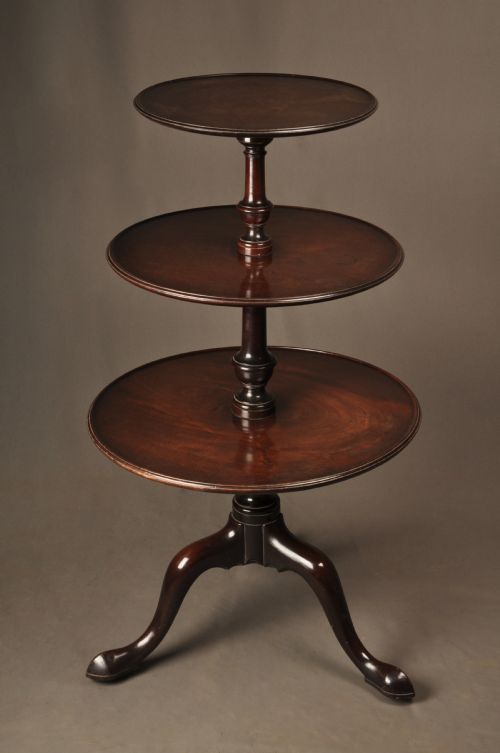
The most common version met on this page is the multi-tiered mahogany dumb waiter originating from the Georgian and Regency periods. These forms often feature two or three graduated circular trays mounted on a central pillar with tripod legs, alongside rectangular drop-leaf and folding variants.
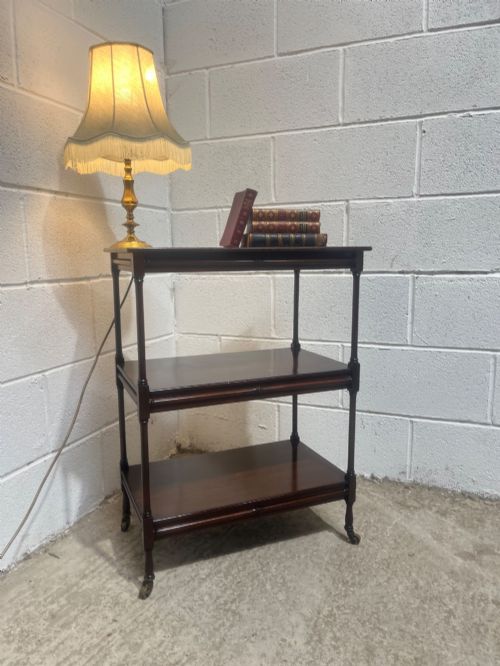
Beyond standard dumb waiters, the selection includes side tables, butler trolleys, whatnots and cake serving tables in rosewood, walnut and brass. Origins range from English workshops to Anglo-Indian and French makers, offering diverse timber grains and decorative details.
Materials and construction techniques
Cabinet makers utilised dense hardwoods primarily, selecting solid mahogany, rosewood and walnut for structural stability and rich grain. Veneers such as burr walnut and amboyna appear on later nineteenth-century surfaces, matched with brass castors and gallery rails.
Turned central pillars support graduated tiers, joined using traditional cabinet-making joints and metal pivoting mechanisms on revolving or folding examples. Carved details and turned supports define the execution, alongside occasional marble inset tops.
Several stands include clever folding actions designed so Victorian diners could tuck the service away flat against the dining room wall.
Distinctions in craftsmanship and materials
Quality rests in the selection of timber figures, such as highly figured mahogany or burr walnut veneers, paired with crisp hand-carving on the pillar and legs. Superior examples show seamless movement in revolving or folding mechanisms and solid brass fittings rather than plated base metals.
Proportion and stability separate finer pieces from heavier utilitarian items, with well-balanced tripod bases ensuring the tiers remain steady under weight. The crispness of the turning on the central column and the tightness of the joints dictate the standing of the piece.
The Tiered Serving Stand Glossary
- Dumb waiter
- A freestanding piece of dining room furniture with multiple stacked tiers used for serving food or holding tableware without servants present. These typically feature two or three circular trays on a central column.
- Etagere
- A piece of furniture consisting of a set of open shelves for displaying small objects or ornaments. It shares the tiered structure of serving stands but focuses on display rather than dining utility.
- Whatnot
- A multi-shelved stand used for displaying ornaments, books or serving items. Victorian examples often incorporate castors and lower cabinet space.
- Drop-leaf
- A tabletop design with hinged flaps on the sides that fold down to save space when not in use. This mechanism appears on several Georgian and Regency serving stands.
- Veneer
- A thin layer of finely figured wood applied to a secondary timber base to provide decorative grain patterns. Burr walnut and amboyna veneers are typical examples found on these stands.
Tiered Serving Stand: Frequently Asked Questions
What is a tiered serving stand used for?
These pieces served originally to hold dishes, wine bottles and tableware beside the dining table during formal meals. They allowed diners to help themselves without domestic staff present.
Today, they function as versatile display furniture in living rooms, dining spaces and hallways for plants, books or decorative objects.
How do I identify a Georgian tiered stand?
Georgian stands typically feature solid mahogany timber, turned central pillars and tripod pad or spade foot bases. They often employ revolving trays rather than folding mechanisms.
Earlier eighteenth-century versions display understated turning and dense timber weight compared to later nineteenth-century interpretations.
Were these stands always made of mahogany?
Mahogany dominated English production through the Georgian and Regency periods due to its strength and rich red-brown colour. Cabinet makers turned to alternative timbers as fashions shifted.
Victorian and Edwardian pieces introduced walnut, rosewood, amboyna veneer, pollard oak and brass-framed structures alongside traditional mahogany.
How do revolving tiers work on antique stands?
Revolving trays sit upon a central wooden or brass spindle mechanism built into the top of the pillar. This allows diners to spin the tiers to reach items without leaving their seats.
Fittings require careful alignment to ensure smooth rotation without tipping the balanced load on upper shelves.